
Anaxyrus canorus
The Yosemite toad (Anaxyrus canorus) is a species of true toad endemic to the high-elevation Sierra Nevada mountains of California. It is distinguished by its striking sexual dichromatism, with females displaying bold blotches on a tan background and males exhibiting more uniform coloration. This species is adapted to a montane and subalpine lifestyle, breeding in wet meadows and utilizing rodent burrows for shelter.
Key Facts
- ›Found in montane to subalpine elevations of the Sierra Nevada, California.
- ›Exhibits significant sexual dichromatism in adult coloration.
- ›Males possess a vocal sac and produce a flute-like trill to attract females.
- ›Breeds in shallow snowmelt ponds and flooded meadows in late spring.
- ›Adapted to high-elevation life with diurnal activity and adaptations for cold temperatures.
- ›Listed as Vulnerable by the IUCN due to declines in distribution and abundance.
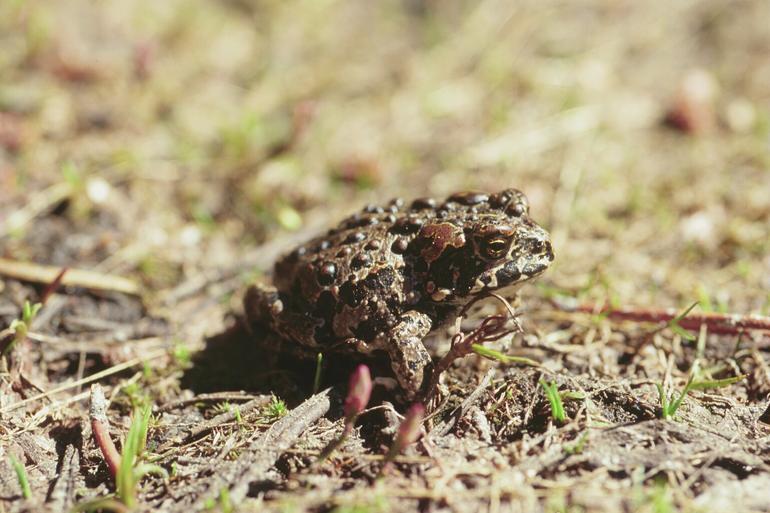
Yosemite Toad
Montane Meadows, Subalpine Meadows, Wetlands, Riparian Areas, Forest Clearings
California
- Https://Upload.Wikimedia.Org/Wikipedia/Commons/Thumb/B/Ba/Anaxyrus_canorus_male_and_female.Jpg/1024px-Anaxyrus_canorus_male_and_female.Jpg
- Https://Upload.Wikimedia.Org/Wikipedia/Commons/Thumb/4/4d/Anaxyrus_canorus_female.Jpg/1024px-Anaxyrus_canorus_female.Jpg
- Https://Upload.Wikimedia.Org/Wikipedia/Commons/Thumb/E/E9/Anaxyrus_canorus_male.Jpg/1024px-Anaxyrus_canorus_male.Jpg
- Https://Upload.Wikimedia.Org/Wikipedia/Commons/Thumb/F/F5/Yosemite_toad_tadpoles.Jpg/1024px-Yosemite_toad_tadpoles.Jpg
- Striking Sexual Dichromatism: Females Are Blotched, Males Are Uniform.
- Large, Narrowly Spaced, Irregularly Shaped Parotoid Glands.
- Males Produce A Distinctive High-Pitched, Flute-Like Trill.
- Lack of A Prominent Mid-Dorsal Stripe In Adults .
- Smooth Dorsal Skin Between Large Warts.
About Anaxyrus canorus
Anaxyrus canorus: The Yosemite Toad
The Yosemite toad, scientifically known as Anaxyrus canorus (formerly Bufo canorus), is a distinct species of true toad found exclusively in the high-elevation montane and subalpine zones of the Sierra Nevada mountain range in California. This species is renowned for its striking sexual dichromatism, a characteristic that sets it apart from many other North American anurans. Adult females typically display bold black blotches with contrasting white or cream borders against a tan, copper, or ruddy background, while adult males exhibit more uniform coloration, ranging from yellow-green to olive drab or greenish-brown, sometimes with subtle black flecks.
Habitat and Lifestyle
Yosemite toads are adapted to a life at high altitudes, inhabiting elevations from approximately 1,950 to 3,445 meters (6,398 to 11,302 feet). Their habitat primarily consists of wet meadows, which they utilize for breeding, along with ephemeral ponds, lake margins, and other riparian areas. They show a preference for flatter, southwesterly-facing meadows that receive ample precipitation and have warmer waters. During breeding, they favor shallow snowmelt ponds or flooded areas, depositing their eggs in water less than 5 centimeters deep. Beyond the breeding season, adults and subadults forage in upland riparian areas and utilize rodent burrows, willow thickets, logs, and rocks for shelter and overwintering.
Breeding and Vocalization
As "explosive breeders," Yosemite toads engage in concentrated breeding activities in late spring, often while snowbanks still persist. Males arrive at breeding sites first and use a distinctive, high-pitched, flute-like trill to attract females. This vocalization, which contains 26–51 evenly spaced notes and lasts an average of 2.6 seconds, is the source of the species' specific epithet, "canorus," meaning tuneful. Females lay clutches of 1,000 to 2,000 eggs in shallow water, with hatching occurring within one to two weeks, heavily influenced by ambient temperatures. While females typically breed only once per season, males may remain at breeding sites for longer periods.
Adaptations and Conservation
The Yosemite toad exhibits several adaptations for its high-elevation environment, including diurnal activity patterns to take advantage of solar warmth for thermoregulation and biosynthesis. Its longevity, with males living at least 12 years and females at least 15 years, likely aids in surviving years with unfavorable breeding conditions. The species is listed as "Vulnerable" by the International Union for Conservation of Nature (IUCN) due to significant declines in its distribution and abundance. The primary threats identified are drought, exacerbated by climate change, and disease, particularly chytridiomycosis. These factors, sometimes interacting, pose substantial challenges to the long-term persistence of the Yosemite toad.
Source: Wikipedia ↗
Frequently Asked Questions
What is the scientific name for the Yosemite toad?
The scientific name for the Yosemite toad is Anaxyrus canorus. It was formerly classified under the genus Bufo, with the scientific name Bufo canorus.
Where is the Yosemite toad found?
The Yosemite toad is endemic to the Sierra Nevada mountain range in California, United States. Its range extends across Alpine County to Fresno County, specifically in montane to subalpine elevational zones.
What makes the Yosemite toad sexually dichromatic?
Yosemite toads are highly sexually dichromatic, meaning males and females have strikingly different appearances at maturity. Females typically have black blotches with white borders on a tan, copper, or ruddy background, while males are more uniformly colored, ranging from yellow-green to greenish-brown.
What is the breeding behavior of the Yosemite toad?
Yosemite toads are explosive breeders that migrate to breeding pools and flooded areas in late spring. Males arrive synchronously and produce a high-pitched, flute-like trill to attract females. Females lay clutches of 1,000–2,000 eggs in shallow water, which hatch within one to two weeks.
What are the main threats to the Yosemite toad?
The primary threats to the Yosemite toad are drought, which is exacerbated by climate change, and disease, particularly chytridiomycosis. These factors contribute to substantial declines in the species' distribution and abundance.
Related Frogs

Agalychnis annae
The blue-sided leaf frog (Agalychnis annae), also known as the orange-eyed leaf frog, is a vulnerable species of tree frog native to the tropical rainforests of Costa Rica and Panama. Named in honor of Ann S. Duellman, it is distinguished by its striking coloration and its habitat in the montane rainforests of Central America. Much of its habitat has been fragmented by human development, leading to its vulnerable conservation status.
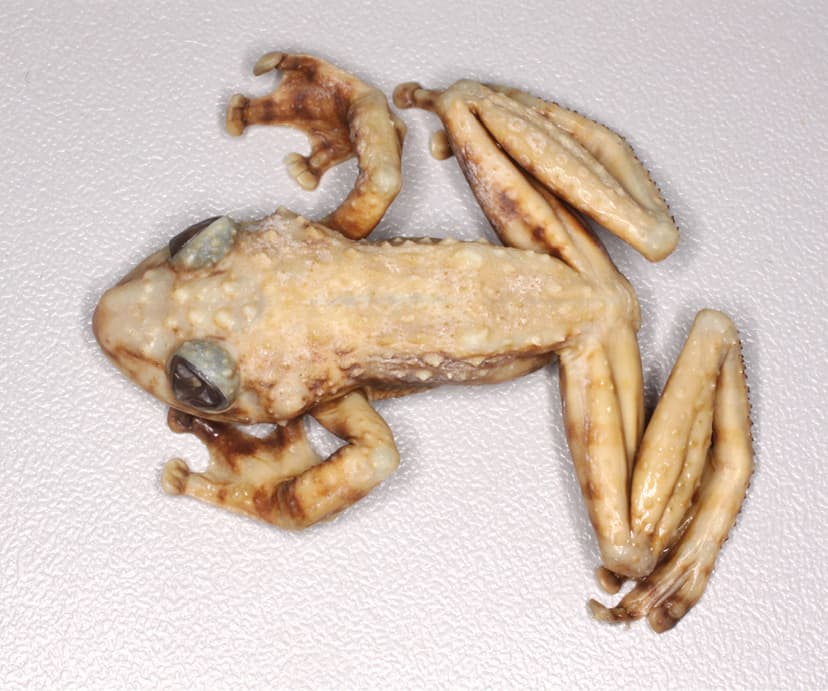
Acanthixalus spinosus
Acanthixalus spinosus, commonly known as the African wart frog, is a species of frog native to Africa, found from southeastern Nigeria to Gabon and the Democratic Republic of the Congo. It is distinctive for its warty, black or brownish-to-olive dorsum with an hourglass pattern, and the males' unique possession of strong tarsal spines and larger digital discs. This species primarily inhabits lowland rainforests, dwelling in water-filled tree holes and exhibiting predominantly aquatic behavior.
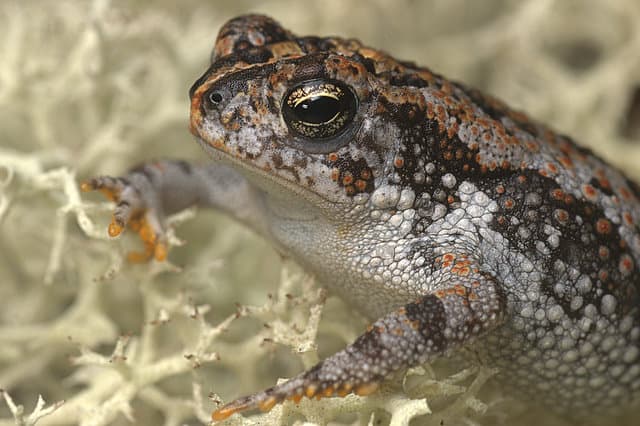
Anaxyrus quercicus
The oak toad (Anaxyrus quercicus) is the smallest toad species in North America, endemic to the coastal regions of the southeastern United States. It is distinguished by its light mid-dorsal stripe, variable spots, and large parotoid glands, and it primarily inhabits sandy pine flatwoods and oak scrub. This species is mostly diurnal and known for its burrowing behavior and a distinctive chirping call produced by males during the breeding season.