
Anaxyrus debilis
The North American green toad (Anaxyrus debilis) is a species of toad found in the southwestern United States and northern Mexico. Characterized by its bright to pale green coloration with black spotting, this toad prefers semi-arid and dry habitats and is often found during or after rainfall. It is known for its relatively small size and distinctive black spotting.
Key Facts
- ›Found in the southwestern United States (Arizona, New Mexico, Colorado, Kansas, Oklahoma, Texas) and northern Mexico (Tamaulipas, San Luis Potosí, Durango, Zacatecas).
- ›Adult males range from 37–46 MM and females from 44–54 MM in snout-to-vent length.
- ›Typically bright to pale green with black spotting.
- ›Inhabits semi-arid and dry environments, often appearing during or after rainfall.
- ›Breeding occurs from late March to August, triggered by summer rains.
- ›Tadpoles and adults are preyed upon by various snake species and American bullfrogs.
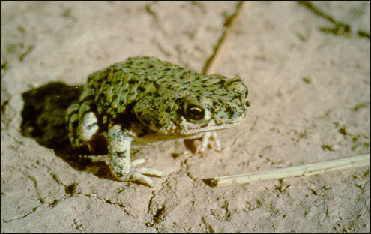
Green Toad, North American Green Toad
Semi-Arid, Dry Habitats, Aquatic Breeding Sites
Arizona, New Mexico, Colorado, Kansas, Oklahoma, Texas
Black-Necked Garter Snakes, Gopher Snakes, Checkered Garter Snakes, Plains Garter Snakes, Western Hog-Nosed Snakes, American Bullfrogs
Bright To Pale Green Coloration, Black Spotting, Relatively Small Size
About Anaxyrus debilis
Anaxyrus debilis: The North American Green Toad
The North American green toad, scientifically known as Anaxyrus debilis, is a distinctive amphibian species found across the southwestern United States and into northern Mexico. It is characterized by its striking bright to pale green coloration, often accentuated by black spotting, making it a visually recognizable inhabitant of its arid and semi-arid environment.
Habitat and Distribution
This toad is relatively widespread and can be locally common, preferring dry and semi-arid habitats. It is particularly elusive, typically appearing during or after periods of rainfall. Its geographical range encompasses the U.S. states of Arizona, New Mexico, Colorado, Kansas, Oklahoma, and Texas, extending south into the Mexican states of Tamaulipas, San Luis Potosí, Durango, and Zacatecas.
Description and Size
Anaxyrus debilis is not a large toad. Adult males typically measure between 37 and 46 millimeters in snout-to-vent length, while females are slightly larger, ranging from 44 to 54 millimeters. The toad's skin is generally green with prominent black spots, a key feature for identification.
Reproduction and Behavior
Breeding for the North American green toad is a seasonal event, occurring from late March through August, and is initiated by the arrival of summer rains. Males are known to migrate from drier terrestrial areas to aquatic breeding sites where they congregate and vocalize to attract females. These breeding aggregations are transient, usually lasting only a few days before the toads disperse.
Diet and Predation
While specific dietary preferences are not detailed, toads of this genus typically consume a variety of small invertebrates. The North American green toad faces numerous predators throughout its life cycle. Its tadpoles and adults are preyed upon by species such as black-necked garter snakes, gopher snakes, checkered garter snakes, plains garter snakes, western hog-nosed snakes, and American bullfrogs.
Source: Wikipedia ↗
Frequently Asked Questions
What is the North American green toad?
The North American green toad is a species of toad native to the southwestern United States and northern Mexico. It is known for its distinctive green color with black spots and its preference for semi-arid habitats.
What does the North American green toad look like?
These toads are typically bright to pale green and are marked with black spotting. They are not considered large toads, with adults measuring between 37 and 54 mm in snout-to-vent length depending on sex.
Where can the North American green toad be found?
Its distribution includes the southwestern United States, specifically Arizona, New Mexico, Colorado, Kansas, Oklahoma, and Texas. It is also found in northern Mexico in the states of Tamaulipas, San Luis Potosí, Durango, and Zacatecas.
What is the habitat of the North American green toad?
The green toad is found in semi-arid and dry habitats. They are elusive and typically appear during or after rainfall in these environments.
When does the North American green toad breed?
Breeding for this species occurs from late March to August, and is stimulated by summer rains. Males gather at aquatic breeding sites, and females are attracted to their calls.
What are the predators of the North American green toad?
Both tadpoles and adult green toads are preyed upon by several animals. Known predators include black-necked garter snakes, gopher snakes, checkered garter snakes, plains garter snakes, western hog-nosed snakes, and American bullfrogs.
Related Frogs
Anaxyrus americanus
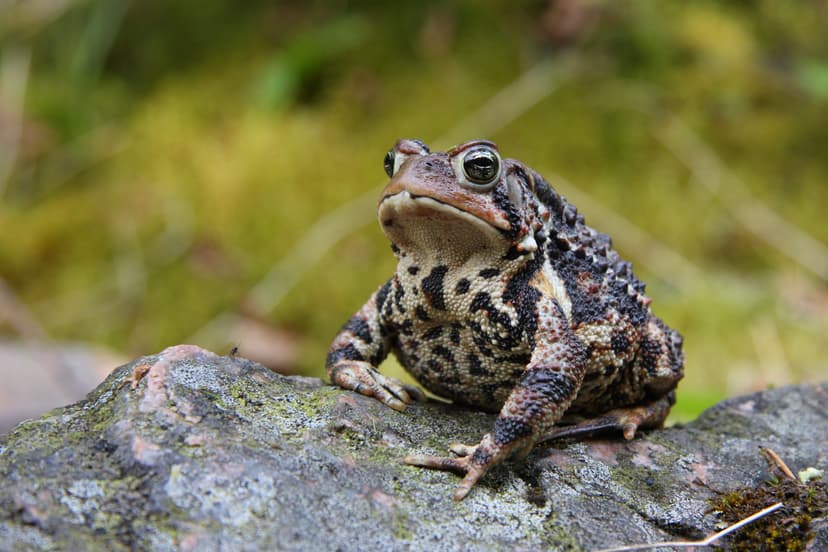
The American toad (Anaxyrus americanus) is a widely distributed amphibian found across eastern Canada and the United States. It is characterized by its variable coloration, which can shift based on environmental factors, and its distinctive trilling vocalization during breeding season. This species is known for its ability to burrow for hibernation and its mild bufotoxin.

Adelophryne baturitensis
Adelophryne baturitensis is a small frog species endemic to the Serra de Baturité region in north-eastern Brazil. It is characterized by its brown dorsal coloration with darker patterns and cross-bands on its limbs, and its small size, with adults measuring between 12 and 16 mm in snout-to-vent length. This species inhabits leaf litter within well-preserved forests and shaded coffee plantations.

Allobates talamancae
The Allobates talamancae, also known as the Talamanca rocket frog, is a small, non-toxic amphibian native to northwestern Ecuador, western Colombia, Panama, Costa Rica, and southern Nicaragua. It is distinguished by its dark brown dorsum, black flanks bordered by tan/bronze and white lines, and unwebbed fingers and toes. Both parents participate in raising their young, carrying tadpoles to streams for development.