
Annam tree frog
Hyla
The Annam tree frog, scientifically known as Hyla simplex, is a species of tree frog found in southern China, Vietnam, and Laos. It is characterized by its arboreal lifestyle, inhabiting montane areas like fields, bamboo forests, and shrubland, and breeds in rice paddies and permanent pools. A subspecies, the Hainan tree toad (H. s. hainanensis), is found on Hainan Island.
Key Facts
- ›Found in southern China, Vietnam, and Laos.
- ›Males reach approximately 37 MM snout-vent length, females up to 40 MM.
- ›Commonly inhabits montane areas, including fields, bamboo forests, and shrubland.
- ›Breeding occurs in rice paddies and permanent pools.
- ›Potentially threatened by habitat degradation.
- ›Includes a subspecies, the Hainan tree toad (H. s. hainanensis).
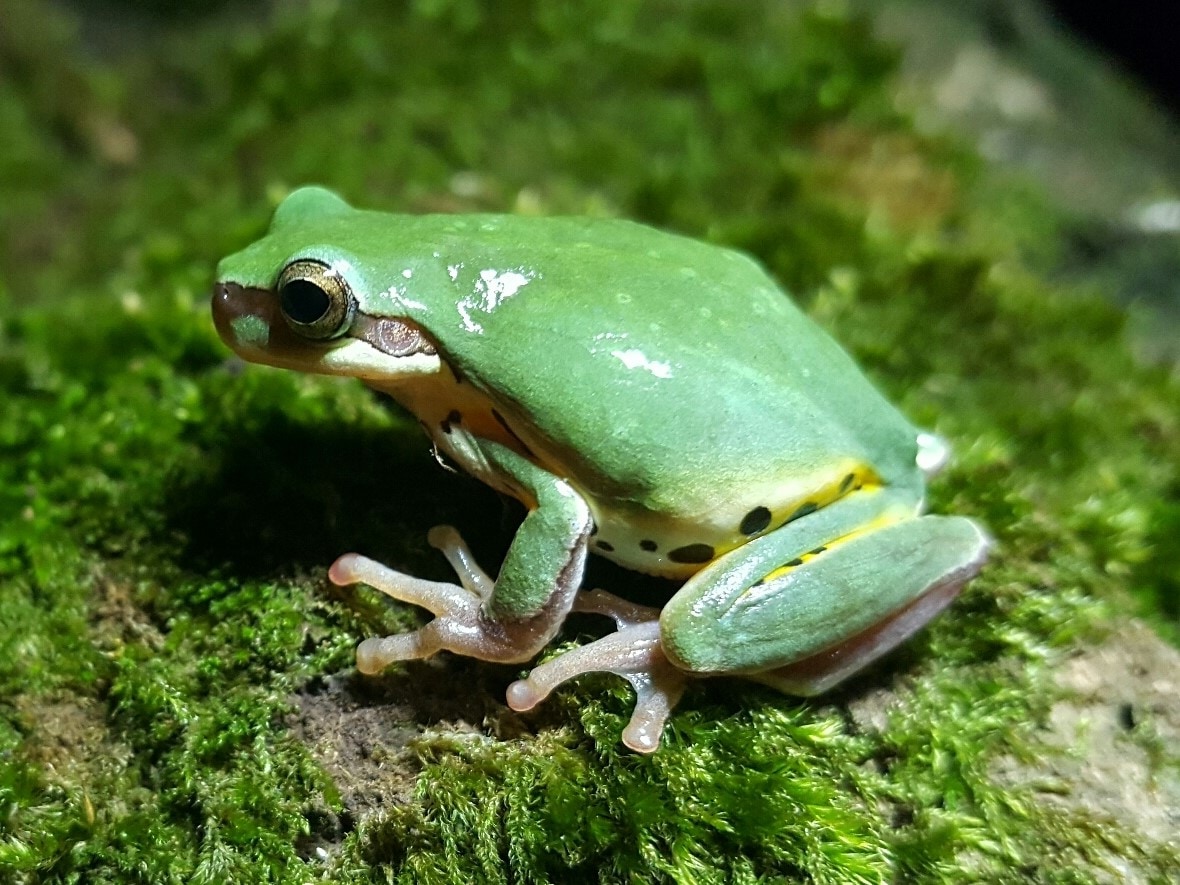
South China Tree Toad
Montane Areas, Fields, Bamboo Forests, Shrubland, Rice Paddies, Permanent Pools
Arboreal Lifestyle, Inhabits Montane Areas
About Annam tree frog
The Annam tree frog, scientifically classified as Hyla simplex, is a species of frog belonging to the Hylidae family. This amphibian is native to southern China, Vietnam, and Laos. A distinct subspecies, known as the Hainan tree toad (H. s. hainanensis), is found specifically on Hainan Island.
Habitat and Lifestyle
Annam tree frogs are commonly found in montane environments. They lead an arboreal existence, meaning they spend a significant amount of time in trees and other elevated vegetations. Their preferred habitats include open fields, bamboo forests, and shrubland areas. This species is known to utilize rice paddies and permanent pools for breeding, indicating a dependence on both terrestrial and aquatic environments throughout its life cycle.
Physical Characteristics and Reproduction
Adult male Annam tree frogs typically reach a snout-to-vent length of approximately 37 mm (about 1.5 inches). Females are slightly larger, with measurements up to 40 mm (about 1.6 inches) for the same body length. The tadpoles of this species can grow to a length of up to 32 mm (about 1.3 inches).
Conservation Concerns
While considered common in its natural range, the Annam tree frog faces potential threats from habitat degradation. The ongoing loss or alteration of its natural environments poses a risk to the long-term survival of the species.
Source: Wikipedia ↗
Frequently Asked Questions
What is the scientific name of the Annam tree frog?
The scientific name of the Annam tree frog is Hyla simplex. It is also sometimes referred to as the South China tree toad.
Where can the Annam tree frog be found?
The Annam tree frog is distributed across southern China, Vietnam, and Laos. A specific subspecies is found on Hainan Island.
What is the typical size of an Annam tree frog?
Male Annam tree frogs typically grow to a snout-vent length of about 37 mm (1.5 inches), while females can reach up to 40 mm (1.6 inches). Their tadpoles can be up to 32 mm (1.3 inches) in length.
What kind of habitat does the Annam tree frog prefer?
Annam tree frogs are common and arboreal, preferring montane areas. Their habitats include fields, bamboo forests, and shrubland.
Where do Annam tree frogs breed?
Breeding for the Annam tree frog takes place in rice paddies and in permanent pools, indicating a need for aquatic environments for reproduction.
Related Frogs

Agalychnis annae
The blue-sided leaf frog (Agalychnis annae), also known as the orange-eyed leaf frog, is a vulnerable species of tree frog native to the tropical rainforests of Costa Rica and Panama. Named in honor of Ann S. Duellman, it is distinguished by its striking coloration and its habitat in the montane rainforests of Central America. Much of its habitat has been fragmented by human development, leading to its vulnerable conservation status.
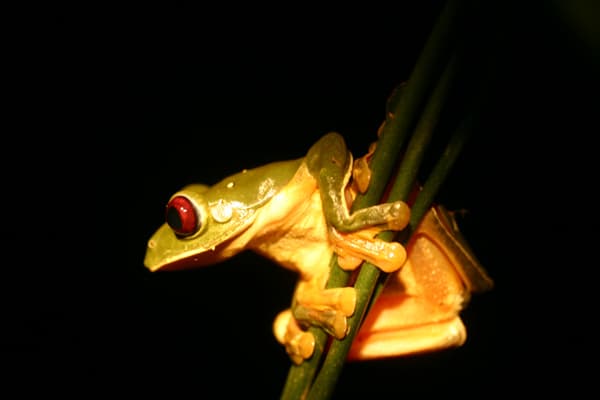
Agalychnis saltator
Agalychnis saltator, also known as the parachuting red-eyed leaf frog or misfit leaf frog, is a species of frog found in the humid and wet forests of Central America, from Honduras to Costa Rica. This arboreal and nocturnal species is distinctive for its bright red eyes with vertical pupils and its ability to 'parachute' by spreading webbing between its limbs and toes to glide between trees.
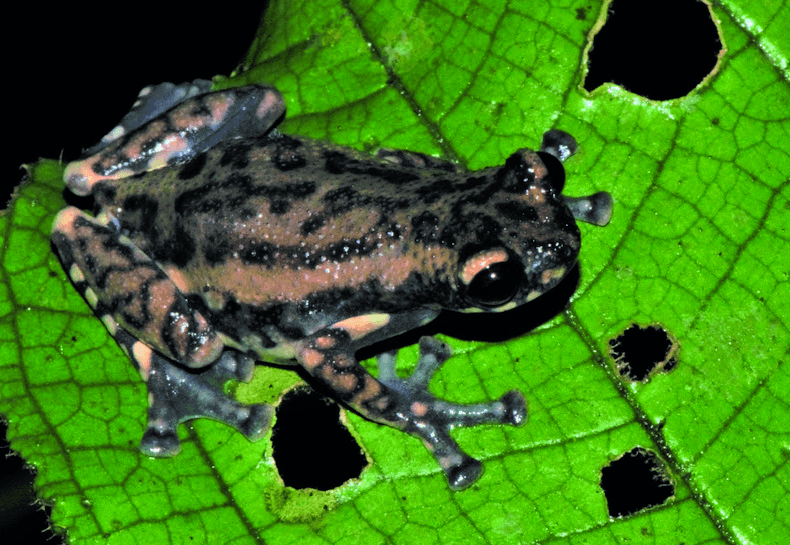
Allophryne ruthveni
The Tukeit Hill frog, scientifically known as Allophryne ruthveni, is a small amphibian found in several South American countries including Guyana, Venezuela, Suriname, Brazil, and Bolivia. It is distinguished by its variable coloration, flat body and head, and enlarged toe pads, and its evolutionary relationship has been a subject of scientific interest, now placed in its own family, Allophrynidae.