
Anodonthyla jeanbai
Anodonthyla jeanbai is a highly polychromatic, arboreal frog species belonging to the family Microhylidae. It is found exclusively in a small, high-elevation area of Madagascar and is notable for its isolated phylogenetic position within the genus Anodonthyla. Its distinctive features include yellowish ventral coloration and a narrow middorsal line.
Key Facts
- ›Found only in a single surveyed site at high elevation in Andohahela National Park, Madagascar.
- ›Highly polychromatic with a light brown dorsum and reddish-brown arms and legs.
- ›Possesses yellowish coloration on ventral surfaces, which can extend over the entire venter in some specimens.
- ›Has a narrow middorsal line running from the snout to the cloaca.
- ›Tympanum is often less clearly visible compared to other species in the genus.
- ›Its phylogenetic position is extremely isolated, with no clear relationships to other Anodonthyla species.
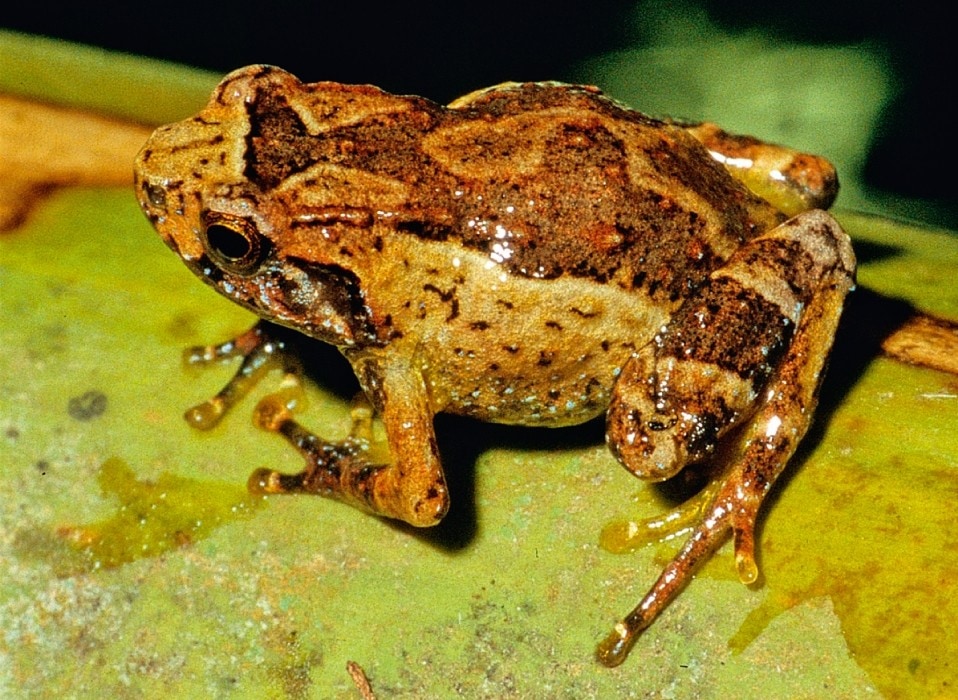
Forest, Bamboo Forest
Toliara Province
Yellowish Coloration On Ventral Surfaces, Narrow Middorsal Line, Less Visible Tympanum, Two Black Spots In the Inguinal Region, Dark Crossbands On Hindlegs, Highly Polychromatic
About Anodonthyla jeanbai
Anodonthyla jeanbai is a unique and highly polychromatic arboreal frog species belonging to the family Microhylidae. It is distinguished by its extremely isolated phylogenetic position within the genus Anodonthyla, showing no clear relationships to other members. This species is found exclusively in a small, high-elevation area in Madagascar, specifically within the Andohahela National Park.
Description and Characteristics
The appearance of Anodonthyla jeanbai is highly variable due to its polychromatic nature. However, key distinguishing features include yellowish coloration on the ventral surfaces, which in some individuals, extends entirely over the venter. The dorsum and posterior head are generally a uniform brown, transitioning to a lighter shade on the anterior head. A narrow middorsal line runs from the snout to the cloaca, and two black spots are present in the inguinal region. The tympanum is often less clearly visible compared to other species within the genus. While forelimbs lack distinct dark crossbands, hindlimbs display them. The cloacal region is blackish, with the chest, ventral parts of the limbs, and throat presenting a dirty yellowish hue, and the belly being more grayish. Dorsal surfaces of the arms and legs are a light reddish-brown with indistinct darker markings, and some specimens feature a dark 'hourglass' pattern on the scapular region along with scattered small reddish-brown tubercles.
Habitat and Distribution
This species inhabits higher elevations within forests characterized by a significant bamboo density. Observations indicate they are typically found at night, perched 1 to 2 meters high on bamboo trunks. Anodonthyla jeanbai has been documented at a single surveyed site within the Andohahela National Park, located in the southern Toliara Province of Madagascar.
Scientific Significance
Phylogenetically, Anodonthyla jeanbai is notably isolated, with genetic analyses revealing a significant divergence from other species in its genus. This isolation makes it a subject of interest for understanding amphibian evolution and speciation within Madagascar. The species is named in honor of the Malagasy herpetologist Jean Baptiste (Jean-Ba) Ramanamanjato, whose logistical contributions were vital to the expedition that discovered it in the Andohahela National Park.
Source: Wikipedia ↗
Frequently Asked Questions
What makes Anodonthyla jeanbai distinctive?
Anodonthyla jeanbai is distinguished by its high degree of polychromatism, meaning it exhibits a wide range of colors and patterns. It also has a unique yellowish coloration on its ventral surfaces and an isolated phylogenetic position within its genus.
Where is Anodonthyla jeanbai found?
This species is found only in a small, high-elevation area within the Andohahela National Park in the southern part of Madagascar. It is specifically associated with forests that have a high density of bamboo.
What does Anodonthyla jeanbai look like?
Anodonthyla jeanbai typically has a light brown dorsum and a lighter shade of brown on its anterior head. The posterior head and dorsum are nearly uniformly brown, with a narrow middorsal line. Its ventral surfaces, including the chest, throat, and limbs, are a dirty yellowish color, with the belly being more grayish. The legs often display indistinct darker markings and crossbands.
What is the habitat of Anodonthyla jeanbai?
This arboreal frog inhabits higher elevations in forests characterized by a high density of bamboo. They are typically observed at night resting on bamboo trunks at heights of 1 to 2 meters.
Is Anodonthyla jeanbai related to other frogs?
Anodonthyla jeanbai holds a very isolated position phylogenetically, meaning it does not show clear relationships to any other members of the genus Anodonthyla. Genetic analysis shows significant divergence from other species in its genus.
Related Frogs
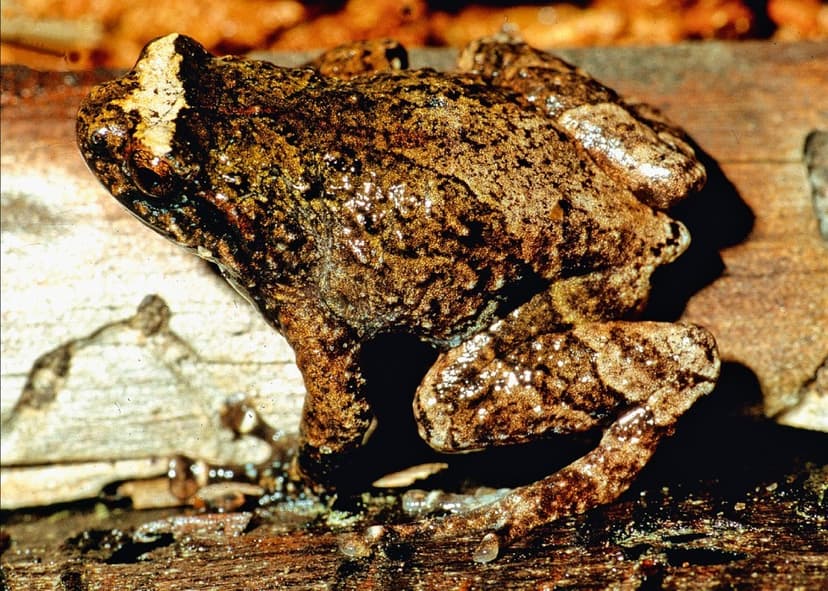
Anodonthyla vallani
Anodonthyla vallani is a species of microhylid frog discovered in the Réserve Spéciale d’Ambohitantely in the central highlands of Madagascar. Previously confused with another species, it is distinguished by its presence exclusively in high-elevation forests. This narrow-mouthed frog was named in honor of Denis Vallan.
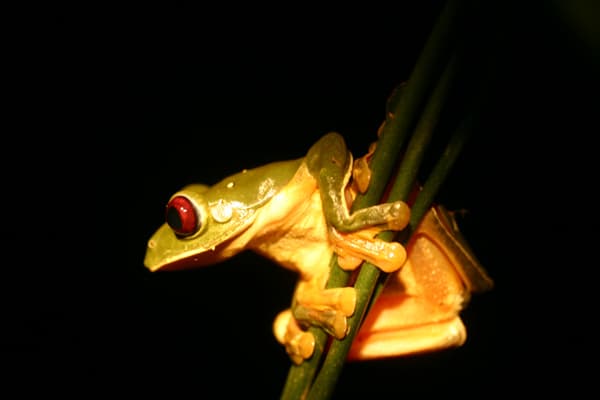
Agalychnis saltator
Agalychnis saltator, also known as the parachuting red-eyed leaf frog or misfit leaf frog, is a species of frog found in the humid and wet forests of Central America, from Honduras to Costa Rica. This arboreal and nocturnal species is distinctive for its bright red eyes with vertical pupils and its ability to 'parachute' by spreading webbing between its limbs and toes to glide between trees.
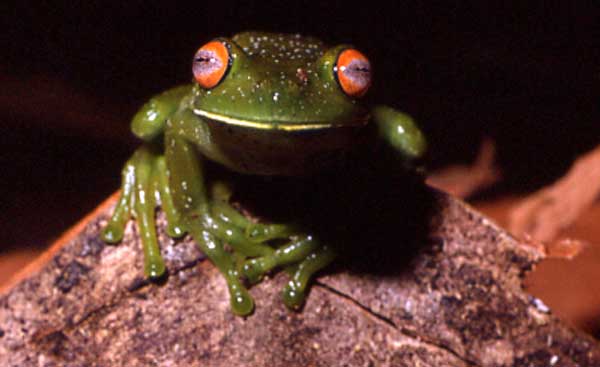
Aplastodiscus callipygius
Aplastodiscus albosignatus, commonly known as the Bocaina treefrog, is a species of frog endemic to Brazil. This arboreal amphibian is distinguished by its green coloration, including its muscles and bones, and unique granulations near its cloacal vent. It inhabits subtropical and tropical moist forests, particularly near mountain streams, and is currently listed as Least Concern by the IUCN.