
Aplastodiscus callipygius
Aplastodiscus albosignatus, commonly known as the Bocaina treefrog, is a species of frog endemic to Brazil. This arboreal amphibian is distinguished by its green coloration, including its muscles and bones, and unique granulations near its cloacal vent. It inhabits subtropical and tropical moist forests, particularly near mountain streams, and is currently listed as Least Concern by the IUCN.
Key Facts
- ›Endemic to Brazil, found in mountainous southeastern regions.
- ›Distinctive green coloration extends to muscles and bones.
- ›Possesses large granulations around the cloacal vent for identification.
- ›Breeds between September and February, laying eggs in underground nests.
- ›Habitat includes subtropical/tropical moist lowland and montane forests.
- ›Listed as Least Concern on the IUCN Red List.
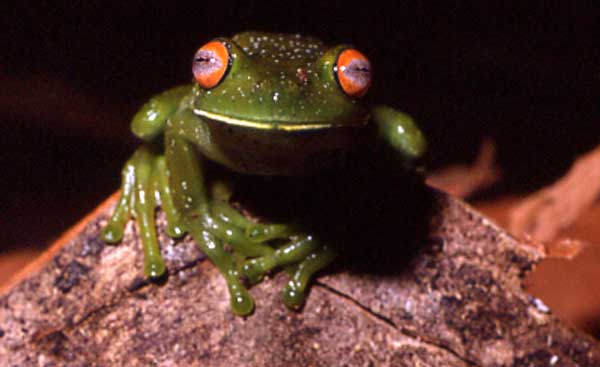
Bocaina Treefrog
Subtropical/Tropical Moist Lowland Forest, Subtropical/Tropical Moist Montane Forest, Rivers
Brazil
- Green Coloration of Muscles and Bones
- Large Granulations Near the Cloacal Vent
- Large, Bulging Eyes With Golden Irises and Horizontal Slit Pupils
About Aplastodiscus callipygius
Aplastodiscus albosignatus: The Bocaina Treefrog
The Bocaina treefrog, scientifically known as Aplastodiscus albosignatus, is a distinctive amphibian species endemic to Brazil. This treefrog is notable for its striking green coloration, which extends not only to its external skin but also to its muscles and bones, a rare trait among amphibians. It is primarily found in the mountainous regions of southeastern Brazil, preferring the humid environments of subtropical and tropical moist lowland and montane forests.
Description and Identification
Adult Bocaina treefrogs typically measure around 5 cm (2.0 inches) in snout-to-vent length. They possess a broad head and a pointed snout, with vomerine teeth located on the roof of their mouths. Their eyes are large and prominent, featuring golden irises and a characteristic horizontal slit pupil, while the tympanum is easily discernible. A single vocal sac is present in the throat. Perhaps the most unique physical characteristic, aiding in its identification, is the presence of large granulations around its cloacal vent, setting it apart from closely related species.
Habitat and Distribution
This arboreal species is found in undisturbed habitats, typically at elevations up to 1,800 meters (5,900 feet) above sea level. Its natural range includes both pristine old-growth forests and secondary growth forests, particularly in proximity to mountain streams. The Bocaina treefrog is known to inhabit areas within national parks, such as the Serra da Bocaina National Park, from which it was first described. Critically, it generally avoids agricultural areas and human settlements, indicating a reliance on intact forest ecosystems.
Reproduction and Life Cycle
Breeding activities for the Bocaina treefrog commence between September and February. During this period, males can be heard calling at night, typically from rocky outcrops or the edges of forest streams. The reproductive strategy involves the female laying eggs in underground nests constructed within the muddy banks of these watercourses. The tadpoles develop within these nests and then inhabit the bottom of the stream. They undergo metamorphosis into juvenile frogs when they reach approximately 21 mm (0.83 inches) in length.
Conservation Status
The International Union for Conservation of Nature (IUCN) Red List classifies Aplastodiscus albosignatus as Least Concern. While population declines have been observed, they have not occurred at a rate deemed sufficient to warrant a higher threat categorization. Its presence within protected areas likely contributes to its current status, though habitat loss remains a general threat to amphibians in the region.
Source: Wikipedia ↗
Frequently Asked Questions
What is the Bocaina treefrog?
The Bocaina treefrog, scientifically known as Aplastodiscus albosignatus, is a species of frog found exclusively in Brazil. It is recognized for its vibrant green coloration, which surprisingly includes its muscles and bones.
Where does the Bocaina treefrog live?
This species is endemic to the mountainous regions of southeastern Brazil, typically found in subtropical or tropical moist lowland and montane forests. It prefers habitats near mountain streams and is often found within national parks.
What are the distinctive features of the Bocaina treefrog?
The Bocaina treefrog is identifiable by its overall green color, including its internal tissues. It also has large granulations in the area of its cloacal vent, which helps differentiate it from similar species.
When does the Bocaina treefrog breed?
Breeding for the Bocaina treefrog occurs during the warmer months, specifically between September and February. Males call at night from rocky areas or stream banks to attract mates.
What is the conservation status of the Bocaina treefrog?
The Bocaina treefrog is currently listed as Least Concern on the IUCN Red List of Threatened Species. While its population is thought to be declining, the rate is not considered severe enough to warrant a higher threat category.
Related Frogs
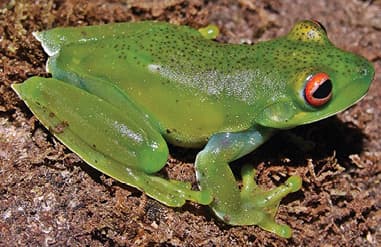
Aplastodiscus ibirapitanga
Aplastodiscus ibirapitanga is a species of frog belonging to the Hylidae family. It is found in subtropical and tropical moist forests, as well as along rivers. The species is notable for tolerating some habitat modification and is not currently considered threatened.
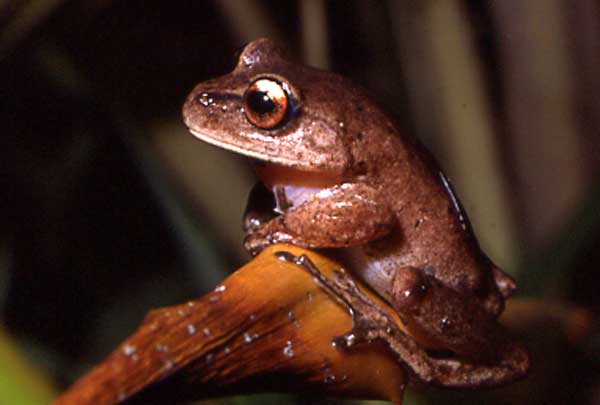
Aplastodiscus cochranae
Aplastodiscus cochranae, also known as the canebrake treefrog, is a species of frog found in the coastal mountains of Santa Catarina, Brazil. This frog is characterized by its robust appearance, distinct coloration, and specific breeding habits.

Aplastodiscus cavicola
Aplastodiscus cavicola, commonly known as Cruz's treefrog, is a species of frog native to Brazil. It inhabits subtropical or tropical moist lowland forests and rivers, but is currently threatened by habitat loss.