
Ansonia minuta
Ansonia minuta, also known as the tiny stream toad, is a small amphibian endemic to the island of Borneo. Described in 1960 from the forests of Sarawak, this species is characterized by its slender build and is found in tropical moist lowland rainforests. It is currently listed as Near Threatened due to significant habitat loss.
Key Facts
- ›Endemic to Borneo, found in both Malaysian and Indonesian territories.
- ›Males range from 20-24 MM, females up to 30 MM in snout-vent length.
- ›Inhabits tropical moist lowland rainforests, specifically near small, rocky streams.
- ›Breeds in clear, flowing streams where larvae develop.
- ›Threatened by habitat loss, particularly from logging activities.
- ›Listed as near Threatened by the IUCN.
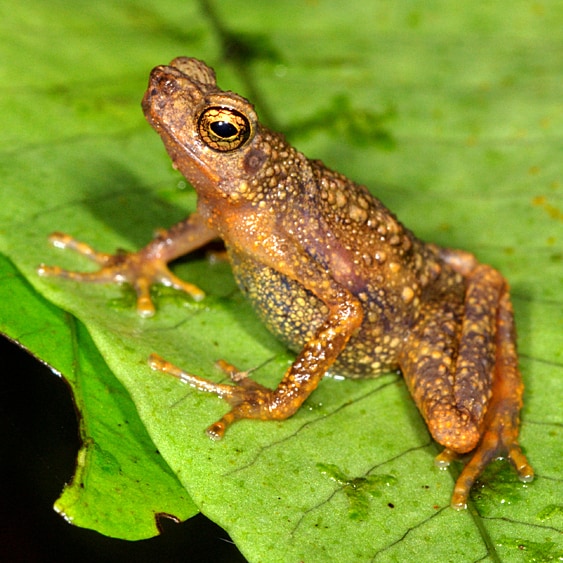
Tiny Stream Toad, Dwarf Slender Toad, Minute Slender Toad
Rainforest, Lowland Forest, Freshwater Streams
Sarawak, Sabah, Kalimantan
- Slender Build
- Wide, Truncate Snout
- Visible Ear Tympani
- Rudimentary Webbing On Feet
- Tuberculate Skin On Back With Rounded Warts
- Finely Granulated Flanks and Throat
- Male Possesses A Left-Sided Vocal Sac With A Longitudinal Slit
About Ansonia minuta
Ansonia minuta: The Tiny Stream Toad
Ansonia minuta, commonly known as the tiny stream toad, dwarf slender toad, or minute slender toad, is a diminutive amphibian species native to the island of Borneo. First described in 1960 from the forests of Sarawak, this toad is a member of the Bufonidae family. It is characterized by its slender body, a wide and truncate snout, and a size that typically ranges from 20-24 mm for males and up to 30 mm for females in snout-vent length.
Distribution and Habitat
The species is endemic to Borneo, with its range extending across western and central Sarawak and Sabah in Malaysia, and into adjacent western Kalimantan in Indonesia. Ansonia minuta inhabits tropical moist lowland rainforests, typically found at elevations between 200 and 1,000 meters. It leads a terrestrial existence within these forests but has a specific dependency on small, rocky streams with clear, flowing water for its reproductive cycle. The larvae of Ansonia minuta develop within these stream environments.
Conservation Status
Ansonia minuta is currently listed as Near Threatened by the International Union for Conservation of Nature (IUCN). The primary threat to its survival is habitat loss, largely driven by logging activities. The species is sensitive to environmental disturbances and does not thrive in habitats that have been altered or degraded.
Description and Characteristics
Physically, Ansonia minuta is a notably small and slender toad. Its skin on the back features tuberculate surfaces with rounded warts, while its flanks and throat are more finely granulated. The feet exhibit rudimentary webbing. Males possess a distinct vocal sac with a longitudinal slit located on the left side of the mouth, indicating their role in vocal communication during breeding periods. The larvae of this species have been recorded to reach lengths of up to 17.2 mm.
Source: Wikipedia ↗
Frequently Asked Questions
What is Ansonia minuta?
Ansonia minuta is a species of toad belonging to the Bufonidae family, commonly known as the tiny stream toad or dwarf slender toad. It is a small amphibian found exclusively on the island of Borneo.
Where is Ansonia minuta found?
This species is endemic to Borneo, with known populations in western and central Sarawak and Sabah in Malaysia, as well as adjacent western Kalimantan in Indonesia. It typically resides in lowland rainforests.
What are the physical characteristics of Ansonia minuta?
Ansonia minuta is a slender toad, with males measuring between 20-24 mm and females up to 30 mm in snout-vent length. It has a wide, truncate snout, visible ear tympani, and rudimentary webbing on its feet. The back skin is tuberculate with rounded warts, while the flanks and throat are more finely granulated.
What is the habitat of Ansonia minuta?
The species inhabits tropical moist lowland rainforests, typically found at elevations between 200 and 1,000 meters. It has a terrestrial lifestyle and specifically breeds in small, rocky streams with clear, flowing water.
What is the conservation status of Ansonia minuta?
Ansonia minuta is currently classified as Near Threatened by the IUCN. This status is due to ongoing habitat loss, primarily caused by logging, which the species is unable to tolerate in disturbed environments.
How does Ansonia minuta reproduce?
Ansonia minuta breeds in small, rocky streams with clear, flowing water. The larvae develop within these streams, indicating an aquatic component to their reproductive cycle.
Related Frogs
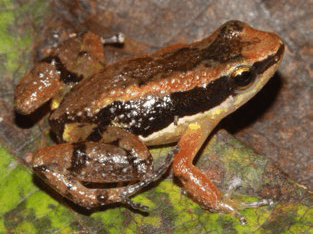
Allobates goianus
Allobates goianus, also known as the Goias rocket frog or Cerrado rocket frog, is a species of frog endemic to the Goiás state of Brazil. This species is distinguished by its breeding behavior, where eggs are laid on land and tadpoles are transported by parents to streams for larval development. It inhabits the leaf litter of humid deciduous forests and gallery forests at elevations between 700 and 1,700 meters.

Ansonia albomaculata
Ansonia albomaculata, also known as the white-lipped slender toad or whitebelly stream toad, is a toad species endemic to the island of Borneo. This slender toad is characterized by its dark brown, warty dorsum and is found in lowland rainforests, breeding in clear, rocky-bottomed streams where its tadpoles cling to rocks.

Ansonia hanitschi
Ansonia hanitschi, commonly known as the Kadamaian stream toad, is a species of toad endemic to the mountains of Borneo. This amphibian is found in both Malaysian and Indonesian Borneo, inhabiting submontane and montane forests, typically on the forest floor. Its breeding is closely tied to clear, rocky mountain streams.