
Aplastodiscus cochranae
Aplastodiscus·Not specified in the text
Aplastodiscus cochranae, also known as the canebrake treefrog, is a species of frog found in the coastal mountains of Santa Catarina, Brazil. This frog is characterized by its robust appearance, distinct coloration, and specific breeding habits.
Key Facts
- ›Endemic to the coastal mountains of Santa Catarina, Brazil.
- ›Adult males range from 41–46 MM and females from 45–50 MM in snout-vent length.
- ›Dorsal coloration is cream-rosy to reddish-brown with a black line from nostril to eye.
- ›Breeding occurs in small, water-filled holes in the ground.
- ›The major threat to the species is cattle-related water pollution and vegetation trampling.
- ›It is considered an abundant species with a stable population.
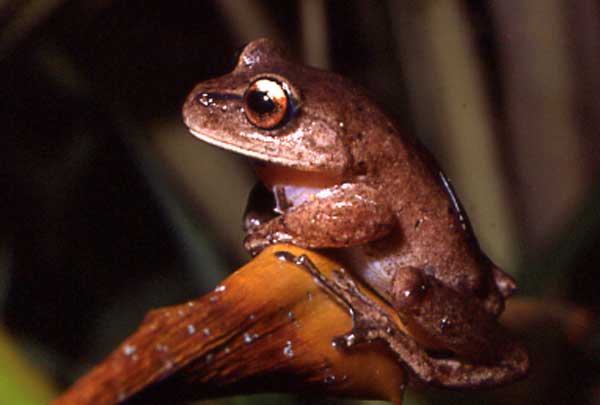
Canebrake Treefrog
Rainforest, Forest Edge
Santa Catarina
- Robust Appearance
- Cream-Rosy To Reddish-Brown Dorsal Coloration With Scattered Melanophores
- Black Line From Nostril To Eye
- Light Pink Ventral Coloration With Violet Tones On Flanks and Joints
- Large Finger Discs
- Single Subgular Vocal Sac In Males
About Aplastodiscus cochranae
Aplastodiscus cochranae: The Canebrake Treefrog
Aplastodiscus cochranae, commonly known as the canebrake treefrog, is a species of frog endemic to the coastal mountains of Santa Catarina, Brazil. Named in honor of American herpetologist Doris Mable Cochran, this frog is recognized for its robust physical characteristics and distinct coloration.
Description and Habitat
Adult males typically measure between 41–46 mm and females between 45–50 mm in snout-vent length. The frog's appearance is robust, with a rounded snout and visible tympanum. Dorsally, it displays a cream-rosy to reddish-brown hue marked by scattered melanophores and a prominent black line extending from the nostril to the eye. The ventral side is light pink, complemented by violet tones on the flanks and joints. Males possess a single subgular vocal sac. Aplastodiscus cochranae inhabits the understorey vegetation at the edges of rainforests, typically at elevations between 500 and 800 meters above sea level.
Reproduction and Conservation
The breeding behavior of Aplastodiscus cochranae involves small, water-filled holes found in the ground. Despite being described as an abundant species with a stable population, the canebrake treefrog faces threats, primarily from cattle. The presence of cattle can lead to the trampling of vegetation and water pollution, negatively impacting the species' habitat. The frog is found within protected areas such as the Serra do Tabuleiro State Park and several private reserves.
Source: Wikipedia ↗
Frequently Asked Questions
What is the scientific name of the canebrake treefrog?
The scientific name for the canebrake treefrog is Aplastodiscus cochranae. This binomial nomenclature is used to classify the species within the scientific community.
Where is Aplastodiscus cochranae found?
Aplastodiscus cochranae is endemic to the coastal mountains of Santa Catarina, Brazil. It inhabits the understorey vegetation at the edge of rainforests.
What are the physical characteristics of Aplastodiscus cochranae?
Adult Aplastodiscus cochranae have a robust appearance. Their dorsal coloration ranges from cream-rosy to reddish-brown, with a distinctive black line extending from the nostril to the eye. The lower parts are light pink, and flanks and joints often display violet tones.
How does Aplastodiscus cochranae reproduce?
Breeding for Aplastodiscus cochranae takes place in small water-filled holes found in the ground. This specific breeding site is crucial for the species' reproductive cycle.
What are the main threats to Aplastodiscus cochranae?
The primary threat to Aplastodiscus cochranae is cattle. These animals can trample vegetation and cause water pollution, negatively impacting the frog's habitat and survival.
Related Frogs
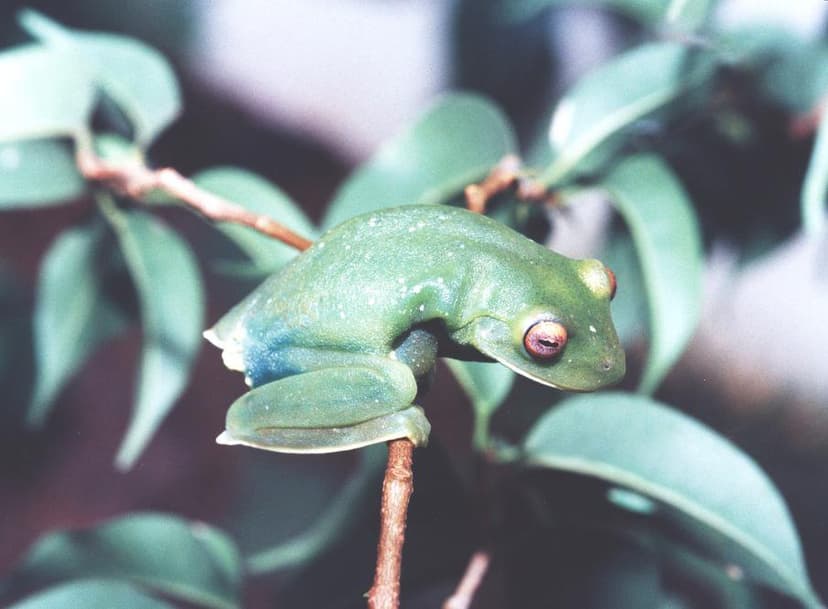
Aplastodiscus leucopygius
Aplastodiscus leucopygius is a medium-sized frog species endemic to the mountainous regions of southeastern Brazil. Distinctive for its golden iris, green dorsal surface with white spots, and a white ridge above the vent, this arboreal frog plays a role in its forest ecosystem.
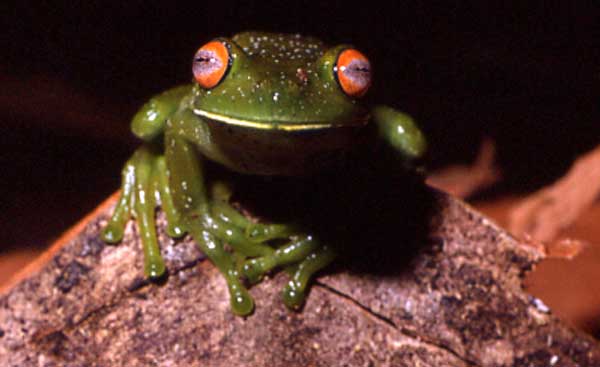
Aplastodiscus callipygius
Aplastodiscus albosignatus, commonly known as the Bocaina treefrog, is a species of frog endemic to Brazil. This arboreal amphibian is distinguished by its green coloration, including its muscles and bones, and unique granulations near its cloacal vent. It inhabits subtropical and tropical moist forests, particularly near mountain streams, and is currently listed as Least Concern by the IUCN.

Aplastodiscus cavicola
Aplastodiscus cavicola, commonly known as Cruz's treefrog, is a species of frog native to Brazil. It inhabits subtropical or tropical moist lowland forests and rivers, but is currently threatened by habitat loss.