
Aplastodiscus leucopygius
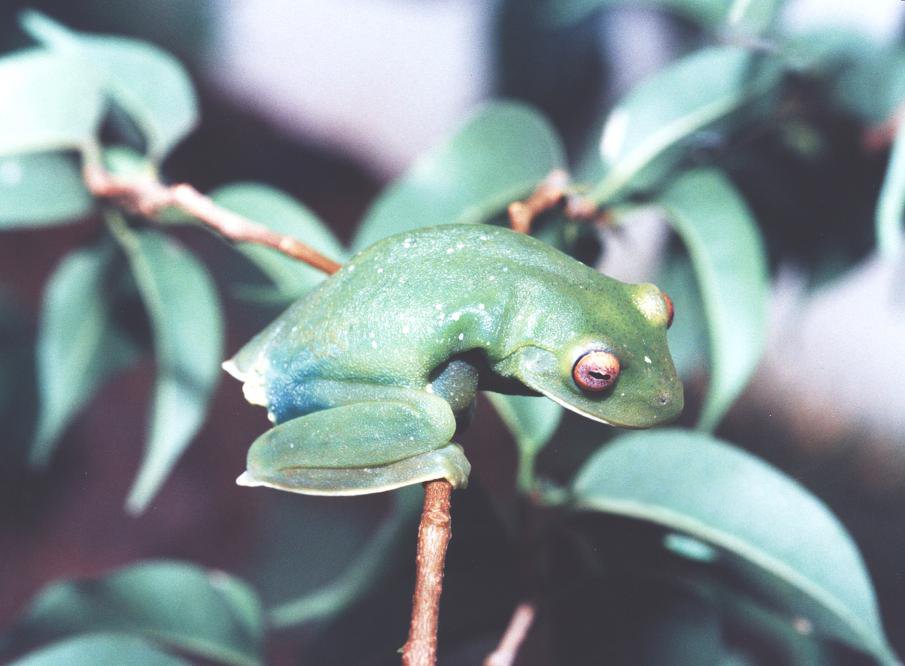
Aplastodiscus leucopygius is a medium-sized frog species endemic to the mountainous regions of southeastern Brazil. Distinctive for its golden iris, green dorsal surface with white spots, and a white ridge above the vent, this arboreal frog plays a role in its forest ecosystem.
Key Facts
- ›Endemic to southeastern Brazil, found in mountainous forested areas.
- ›Medium-sized frog, reaching approximately 4 CM in length.
- ›Characterized by a smooth green back with white spots and a cream-colored, flecked belly.
- ›Possesses large adhesive discs on its fingers and toes for climbing.
- ›Breeds during the rainy season, with males calling from trees near water.
- ›Listed as 'Least Concern' by the IUCN due to its commonality and stable population.
Forest, Wetlands
Brazil
- Golden Iris With Orange Tinge
- Smooth Green Dorsal Surface With White Spots
- Granular Cream-Colored Ventral Surface With White Flecks
- Short, White Ridge Above the Vent
- Large Adhesive Discs On Fingers and Toes
About Aplastodiscus leucopygius
Aplastodiscus leucopygius is a species of frog belonging to the family Hylidae, and it is endemic to Brazil. This medium-sized amphibian is characterized by its arboreal lifestyle and its specific habitat requirements within the mountainous regions of southeastern Brazil.
Description and Characteristics
Aplastodiscus leucopygius typically grows to a length of about 4 cm (1.6 inches). It possesses a rounded snout and a single vocal sac on its throat. The frog's iris is a notable golden color, edged with orange, and its tympanum is clearly visible. A key adaptation for its arboreal nature are the large discs present on the tips of its fingers and toes, which provide excellent grip for climbing. The dorsal surface is smooth and green, often featuring scattered white spots, while the ventral surface is granular and cream-colored, marked with white flecks. A distinctive physical trait is a short, white ridge ornamenting the skin above the vent.
Distribution and Habitat
This species is found exclusively in Brazil, inhabiting mountainous areas near the southeastern coast. It thrives at altitudes ranging from 800 to 1,600 meters (2,600 to 5,200 feet) above sea level. Aplastodiscus leucopygius is predominantly found in forested environments, particularly in areas adjacent to streams or temporary pools, which are crucial for its life cycle.
Reproduction
The breeding season for Aplastodiscus leucopygius occurs during the rainy months, from December to February. Males actively call from trees close to water bodies to attract females, and their calls often form choruses with other males. Courtship is an elaborate process, after which the female inspects an underground nesting chamber that the male has prepared in a wet, muddy location. If the chamber meets her approval, mating occurs, and a raft of eggs is laid within it. The tadpoles remain in this protected nest until they are released by flooding, after which they continue their development in shallow streams.
Conservation Status
Aplastodiscus leucopygius is currently listed as 'Least Concern' by the IUCN Red List of Threatened Species. This classification is due to its common presence within its extensive range and the apparent stability of its population. The species plays a role in its native ecosystem as both predator and prey within the complex food web of the Brazilian forests.
Source: Wikipedia ↗
Frequently Asked Questions
What does Aplastodiscus leucopygius look like?
Aplastodiscus leucopygius is a green frog with white spots on its back and white flecks on its cream-colored belly. It has a rounded snout, a golden iris tinged with orange at the edge, and large discs on its fingers and toes for climbing. A distinguishing feature is a short, white ridge above its vent.
Where does Aplastodiscus leucopygius live?
This frog is found in Brazil, specifically in the mountainous areas near the southeastern coast. It inhabits forested environments at altitudes between 800 and 1,600 meters, typically near streams or temporary pools.
How does Aplastodiscus leucopygius reproduce?
Breeding occurs during the rainy season, from December to February. Males call from trees to attract females, and a courtship ritual precedes mating. Females inspect an underground nesting chamber prepared by the male in a wet, muddy area before laying a raft of eggs.
What is the conservation status of Aplastodiscus leucopygius?
Aplastodiscus leucopygius is classified as 'Least Concern' on the IUCN Red List of Threatened Species. It is considered a common species with a wide distribution and a stable population.
What are the key physical characteristics of Aplastodiscus leucopygius?
Key features include its medium size (around 4 cm), smooth green dorsal surface with white spots, and a granular cream-colored ventral surface with white flecks. The golden iris and large adhesive discs on its digits are also notable characteristics, along with a unique white ridge above the vent.
Related Frogs
Aplastodiscus callipygius
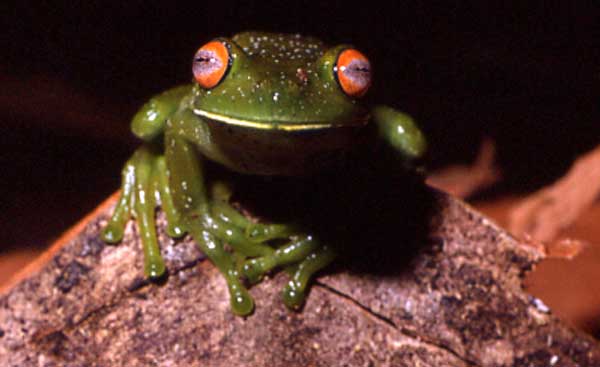
Aplastodiscus albosignatus, commonly known as the Bocaina treefrog, is a species of frog endemic to Brazil. This arboreal amphibian is distinguished by its green coloration, including its muscles and bones, and unique granulations near its cloacal vent. It inhabits subtropical and tropical moist forests, particularly near mountain streams, and is currently listed as Least Concern by the IUCN.
Aplastodiscus arildae
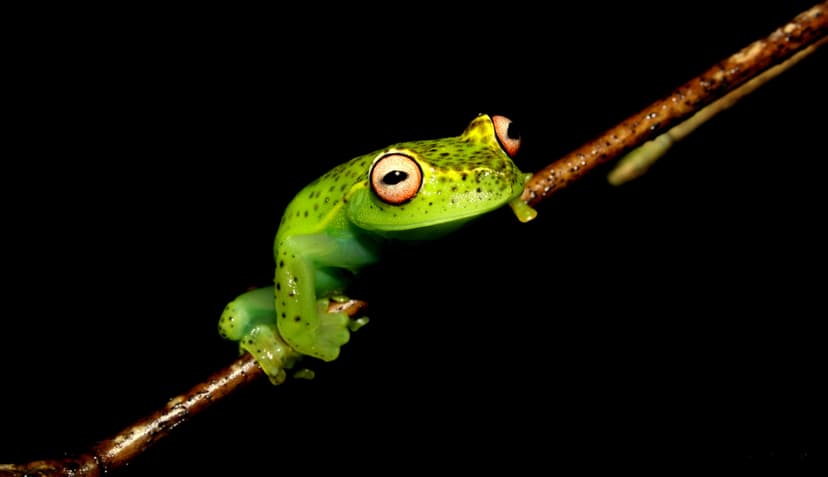
Aplastodiscus arildae is a frog species endemic to southeastern Brazil, found in mountainous regions like the Serra do Mar and Serra da Mantiqueira. It is distinguished by its slender, green coloration with a distinctive yellowish line along its head and its varied vocalizations, including advertisement, courtship, and territorial calls.
Aplastodiscus ibirapitanga
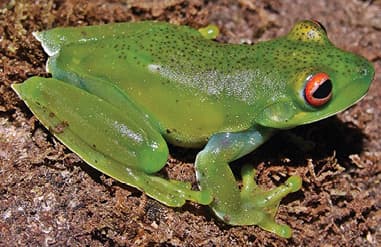
Aplastodiscus ibirapitanga is a species of frog belonging to the Hylidae family. It is found in subtropical and tropical moist forests, as well as along rivers. The species is notable for tolerating some habitat modification and is not currently considered threatened.