
Asian bullfrog
Hoplobatrachus·Not Specified
The Asian bullfrog, scientifically known as Hoplobatrachus tigerinus and also called the Indian bullfrog, is a large frog species native to South and Southeast Asia. It is characterized by its green or brown coloration with dark spots, and males develop yellow coloration and blue vocal sacs during the breeding season. This species is notable for its invasive potential, with both adults and tadpoles capable of significantly impacting native frog populations and local economies when introduced to new environments.
Key Facts
- ›Adults can grow up to 170 MM (6.7 inches) in snout-to-vent length.
- ›Normally green or brown with dark spots, males turn yellow during the breeding season.
- ›Native to mainland Afghanistan, Bangladesh, India, Myanmar, Nepal, and Pakistan.
- ›Known to be an invasive species in the Andaman Islands and Madagascar, where it harms native fauna and local economies.
- ›Tadpoles are carnivorous and can aggressively prey on the tadpoles of native species.
- ›Adults feed on invertebrates, small mammals, and birds, while tadpoles consume mosquito larvae.

Indian Bullfrog
Wetlands, Freshwater Environments, Paddy Fields
- Large Size
- Green Or Brown Coloration With Dark Spots
- Males Turn Yellow During Breeding Season
- Dual Blue Vocal Sacs In Males
- Nuptial Pads On Males' First Finger
- Tympanum Wider Than the Eye In Males, Eye Wider Than Tympanum In Females
About Asian bullfrog
What is the Asian Bullfrog?
The Asian bullfrog, scientifically classified as Hoplobatrachus tigerinus and commonly known as the Indian bullfrog, is a large species of frog native to South and Southeast Asia. It is characterized by its size, typically green or brown coloration with dark spots, and significant sexual dimorphism. Males develop yellow coloration and distinctive blue vocal sacs during the breeding season. While a natural inhabitant of its native range, it is also recognized as a rapidly-spreading invasive species when introduced elsewhere, posing threats to native ecosystems.
Description and Characteristics
Adult Asian bullfrogs can reach lengths of up to 170 millimeters (6.7 inches). Their heads are generally longer than they are wide, though older individuals may have broader heads. The typical coloration is green or brown with dark spots, often featuring a yellow streak along the spinal region. Males are further identified by their yellow breeding season hue, nuptial pads on their first finger, and dual blue vocal sacs. Females are typically larger and heavier than males. Notably, the tympanum is wider than the eye in males, while the opposite is true for females. There can be considerable variation in color and size among different populations, potentially influenced by environmental factors such as food and water quality.
Habitat and Distribution
This species is predominantly found in freshwater environments, with a strong preference for wetlands, particularly paddy fields. It is generally not found in forest or coastal areas. The native range of the Asian bullfrog includes mainland Afghanistan, Bangladesh, India, Myanmar, Nepal, and Pakistan, with possible occurrences in Bhutan and China. Outside of its native range, it has been introduced to the Maldives, Madagascar, and India's Andaman Islands, where it has become a significant invasive species.
Diet and Ecology
Adult Asian bullfrogs are carnivorous, consuming a diet that includes invertebrates, small mammals, and birds. Their tadpoles are also predatory, known to feed on mosquito larvae, making them a subject of research for mosquito control. The carnivorous nature of the tadpoles is a key factor in their invasive success, as they can aggressively prey on the tadpoles of native frog species.
Reproduction and Life Cycle
Reproduction in Hoplobatrachus tigerinus occurs during the monsoon season, with breeding taking place in pools of rainwater. Females lay a large number of eggs, but mortality rates are high, with many tadpoles not surviving to adulthood. In the wild, they can live for over seven years.
Invasive Species and Conservation
The Asian bullfrog's introduction to new areas has led to its status as a problematic invasive species. In places like the Andaman Islands and Madagascar, it poses a severe threat to native fauna, preying on native frogs, reptiles, and other small animals. It can also negatively impact local economies by killing livestock and poultry. Research has explored their potential in mosquito population control, but their invasive nature requires careful management. The conservation status of the species is not specified in available records.
Source: Wikipedia ↗
Frequently Asked Questions
What is the scientific name of the Asian bullfrog?
The scientific name of the Asian bullfrog is Hoplobatrachus tigerinus. It was first described by François-Marie Daudin in 1802 and later transferred to the genus Hoplobatrachus in 1992.
Where is the Asian bullfrog native to?
The Asian bullfrog is native to mainland Afghanistan, Bangladesh, India, Myanmar, Nepal, and Pakistan. Its presence in Bhutan and China is uncertain.
What are the physical characteristics of the Asian bullfrog?
Asian bullfrogs are large, typically green or brown with dark spots, and can grow up to 170 mm. Males develop yellow coloration during the breeding season and possess dual blue vocal sacs. Their hands are unwebbed, and their feet are fully webbed.
What does the Asian bullfrog eat?
Adult Asian bullfrogs have a varied diet that includes invertebrates, small mammals, and birds. Their tadpoles are known to consume mosquito larvae.
Is the Asian bullfrog an invasive species?
Yes, Hoplobatrachus tigerinus is a rapidly-spreading invasive species outside of its native range. It has been introduced to the Maldives, Madagascar, and India's Andaman Islands, where it poses a significant threat to native species and local economies.
How does the Asian bullfrog reproduce?
Asian bullfrogs reproduce during the monsoon season in pools of rainwater. They produce a large number of eggs, but many tadpoles do not survive to adulthood.
Related Frogs
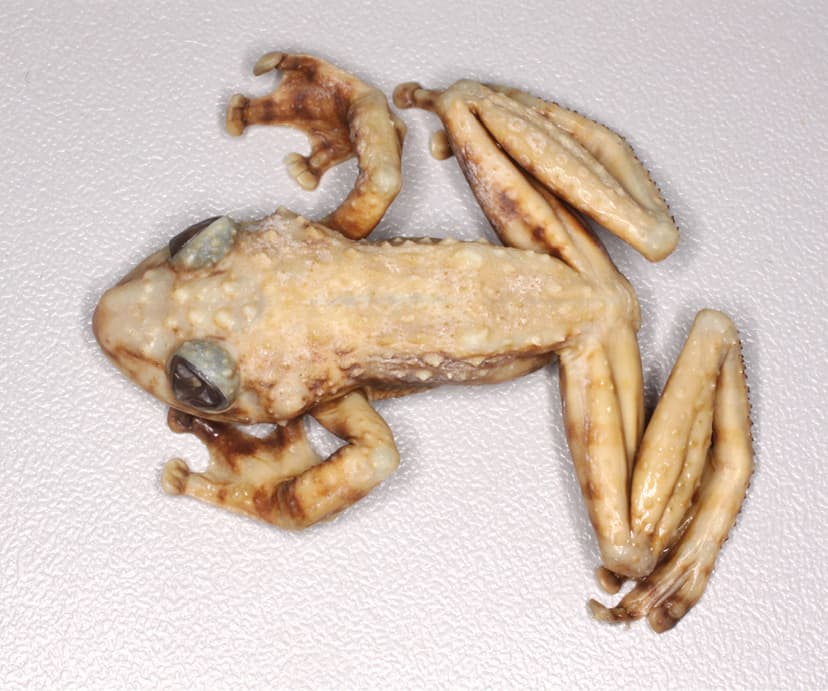
Acanthixalus
Acanthixalus, commonly known as African wart frogs, is a genus of frogs belonging to the family Hyperoliidae. These frogs are found in the rainforests of Western and Central Africa, spanning from Ivory Coast to Congo. They are distinctive for their habit of living in water-filled tree cavities and their apparent lack of vocalizations, possibly using olfactory cues for mating.
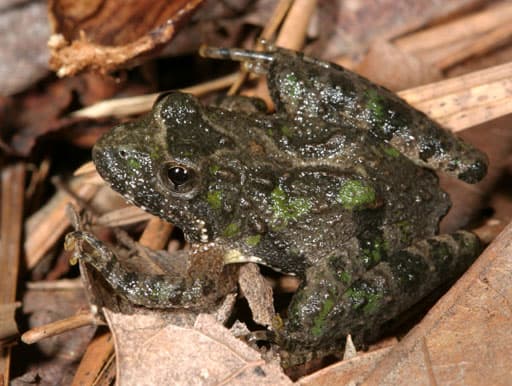
Acris crepitans
The northern cricket frog (Acris crepitans) is a small hylid frog native to the United States and northeastern Mexico. Despite being part of the tree frog family, they are terrestrial and prefer habitats near slow-moving water bodies with nearby shelter. They are distinguished by their small size, varied coloration, and a characteristic triangular mark on their head.

Adelophryne baturitensis
Adelophryne baturitensis is a small frog species endemic to the Serra de Baturité region in north-eastern Brazil. It is characterized by its brown dorsal coloration with darker patterns and cross-bands on its limbs, and its small size, with adults measuring between 12 and 16 mm in snout-to-vent length. This species inhabits leaf litter within well-preserved forests and shaded coffee plantations.