
Bombinatoridae
Bombinatoridae·Not specified
Bombinatoridae is a family of toads native to Eurasia, known for their flattened bodies and the striking bright colors on their undersides. When threatened, many species exhibit the 'unken reflex,' arching their backs to reveal these vibrant bellies as a warning to predators. Some members of this family possess potent toxins, adding to their defense mechanisms.
Key Facts
- ›Found throughout Eurasia and parts of Southeast Asia (Philippines and Borneo).
- ›Characterized by flattened bodies and warty skin.
- ›Many species display a bright, often red or yellow, underside.
- ›Exhibit the 'unken reflex' when disturbed, exposing their brightly colored bellies.
- ›Some species are highly toxic, serving as a deterrent to predators.
- ›Known for unusual vocalizations, with some calls produced during inhalation.
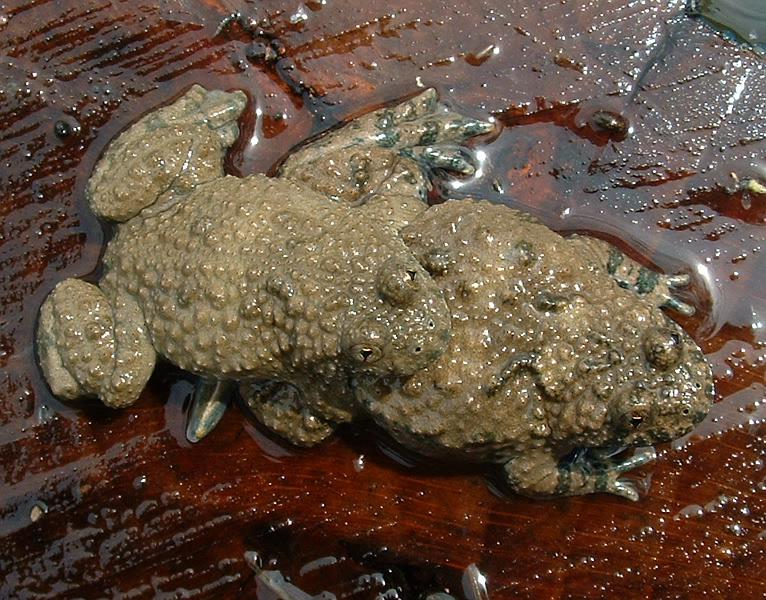
Bombinatoridae Toads
Wetlands, Ponds
Philippines, Borneo, Eurasia
Flattened Body Shape, Warty Skin, Brightly Colored Belly, Unken Reflex Display, Inhalation Vocalization
About Bombinatoridae
Quick Summary
The Bombinatoridae family comprises a group of toads primarily found across Eurasia, with some species extending into Southeast Asia. These amphibians are distinguished by their flattened bodies, warty skin, and strikingly colorful undersides. A key defensive behavior observed in many Bombinatoridae species is the 'unken reflex,' where the toad arches its back to reveal its vibrant belly, often serving as a warning to predators due to the presence of toxins in some species.
Taxonomy and Fossil Record
Fossil evidence indicates the presence of Bombinatoridae genera dating back to the Pliocene and Pleistocene epochs. Earlier fossil specimens, such as Eobarbourula from the Eocene of India and Hatzegobatrachus from the Late Cretaceous of Romania, suggest a deep evolutionary history. The genus Barbourula, known for its intermediate characteristics between Discoglossus and Bombina, was incorporated into the Bombinatoridae family when it was separated from the Discoglossidae.
Description and Defense Mechanisms
Species within the Bombinatoridae family are typically described as warty, aquatic toads, usually measuring around 7 cm (2.8 inches) in length. Their most notable feature is their bright bellies, often displaying vivid reds or yellows. This coloration plays a crucial role in their defense strategy. When threatened, they frequently perform the 'unken reflex,' arching their back and limbs to expose these bright undersides, a visual deterrent to potential predators. Furthermore, some species are known to possess potent toxins, enhancing their unpalatability and further protecting them from predation.
Distribution and Habitat
The geographical distribution of Bombinatoridae is divided between its genera. Species belonging to the genus Barbourula are found in the Philippine Islands and on the island of Borneo. In contrast, species of the genus Bombina are widespread throughout Eurasia. These toads are generally associated with aquatic environments, as evidenced by their habit of laying pigmented eggs in ponds. While specific habitat preferences can vary, access to water bodies is a common requirement for breeding and survival.
Vocalization and Reproduction
A unique aspect of some Bombinatoridae species is their vocalization. Certain Bombina species produce their calls during inhalation, a behavior that deviates from the typical exhalation vocalization seen in most other frog species. Reproduction involves laying pigmented eggs, with ponds serving as common breeding sites. However, detailed information on the specific breeding behaviors and reproductive cycles for all species within the family is not extensively documented.
Source: Wikipedia ↗
Frequently Asked Questions
What are the main characteristics of Bombinatoridae toads?
Bombinatoridae toads are typically warty and have flattened bodies. A distinctive feature is their brightly colored underside, which they reveal as a defense mechanism.
Where are Bombinatoridae toads found?
Species within the Bombinatoridae family are distributed across Eurasia. The genus Barbourula is found in the Philippines and Borneo, while the genus Bombina is widespread throughout Eurasia.
What is the 'unken reflex' in Bombinatoridae toads?
The 'unken reflex' is a defensive behavior where a toad arches its back and limbs to expose its bright underside. This display serves as a warning to potential predators about the toad's toxicity or unpalatability.
Are Bombinatoridae toads poisonous?
Yes, some species within the Bombinatoridae family are highly toxic. This toxicity is a significant defense mechanism against predators.
How do Bombinatoridae toads reproduce?
Bombinatoridae toads lay pigmented eggs, typically in ponds. Specific details about their breeding cycles are not extensively documented in all species.
Related Frogs
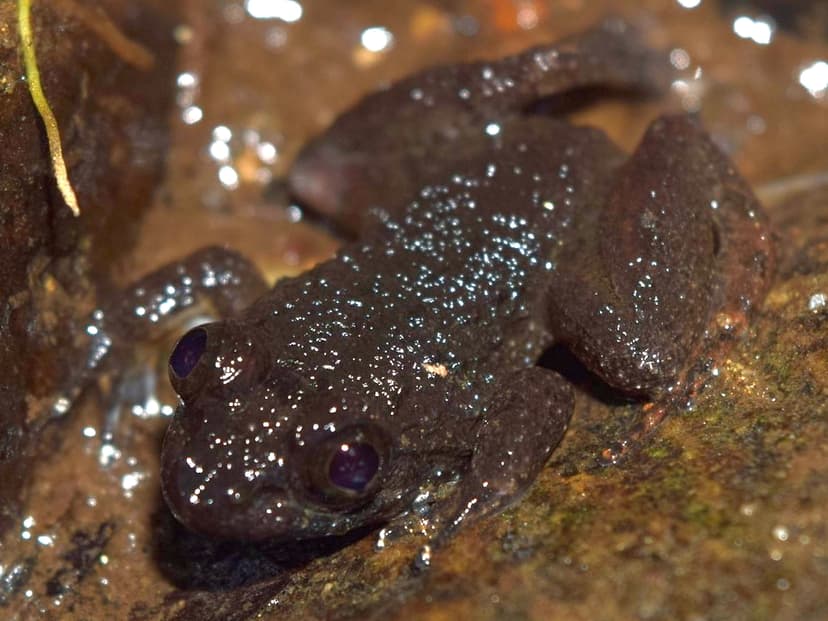
Alcalus rajae
Alcalus rajae, also known as the king dwarf mountain frog, is a species of frog endemic to the island of Borneo in Indonesia. This stocky amphibian is distinguished by its uniformly colored brown to blackish dorsal side, short limbs, and discs on its fingers and toes. It inhabits undisturbed and secondary forests near water sources within a specific altitudinal range.
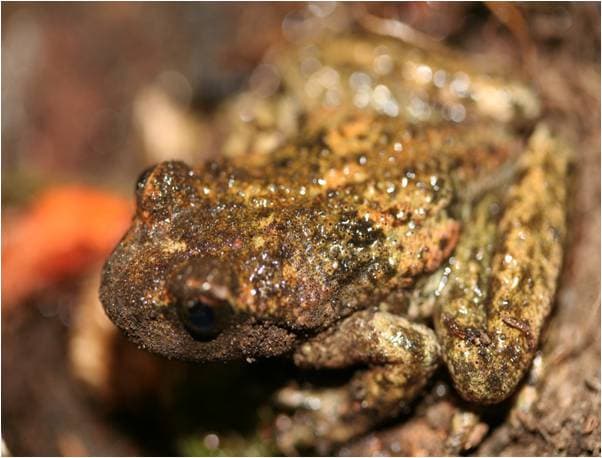
Ascaphus truei
Ascaphus truei, commonly known as the tailed frog, is a primitive frog species found in the fast-flowing streams of the northwestern United States and Canada. Its most distinctive features are the male's cloacal extension used for internal fertilization and the tadpoles' large oral sucker for attachment to rocks in turbulent water. These adaptations allow them to thrive in a habitat unsuitable for most other amphibians.

Asian common toad
The Asian common toad, also known by several other names including the Asian black-spined toad, is a widespread amphibian found across South and Southeast Asia. This species is distinguished by its warty, spiny dorsal side and prominent, toxin-secreting parotoid glands. It thrives in disturbed lowland habitats, often near human settlements, and breeds during the monsoon season.