
Brüggen Glacier
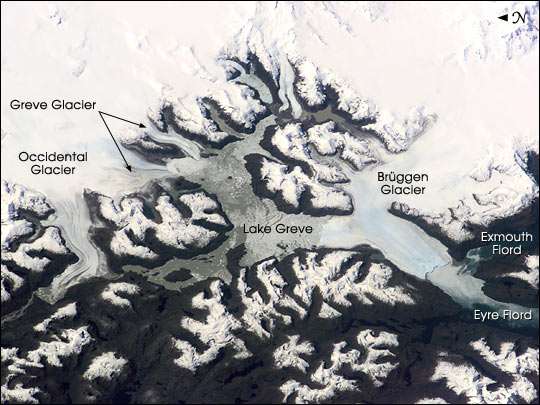
Brüggen Glacier, also known as Pío XI Glacier, is the largest western outflow from the Southern Patagonian Ice Field in southern Chile. It holds the distinction of being the longest glacier in the Southern Hemisphere outside of Antarctica, with a length of approximately 66 km. Notably, unlike many glaciers globally, Brüggen Glacier experienced significant advancement between 1945 and 1976, surging several kilometers and altering the local fjord landscape.
Key Facts
- ›Largest western outflow from the Southern Patagonian Ice Field.
- ›Approximately 66 km (41 MI) in length.
- ›Longest glacier in the Southern Hemisphere outside of Antarctica.
- ›Advanced significantly between 1945 and 1976, surging 5 km (3.1 MI).
- ›Cut off Lake Greve from the sea during its advance.
- ›Visited by expedition cruise ships.
Known For
- Its status as the longest glacier in the Southern Hemisphere outside Antarctica
- Its significant glacial advance between 1945 and 1976
Eyre Fjord, Lake Greve
About Brüggen Glacier
Brüggen Glacier, also recognized as Pío XI Glacier, is a prominent glacial feature located in southern Chile. It stands as the largest western outflow from the expansive Southern Patagonian Ice Field. With an approximate length of 66 km (41 mi), it holds the significant distinction of being the longest glacier in the Southern Hemisphere beyond the Antarctic continent. The glacier carries the name of German geologist Juan Brüggen Messtorff.
Glacial Dynamics and Impact
In contrast to the global trend of retreating glaciers, Brüggen Glacier exhibited a remarkable period of advancement from 1945 to 1976. During this time, it surged approximately 5 km (3.1 mi) across Eyre Fjord. This advance led to the glacier reaching the western shore of the fjord by 1962, effectively cutting off Lake Greve from the sea. The glacier continued to extend both northward and southward within the fjord, adding nearly 60 square kilometers of ice and reaching a position close to its current extent before stabilizing.
Accessibility and Observation
Brüggen Glacier is a destination for expedition cruise ships, which navigate up Eyre Fjord from the sea to reach the Pío XI terminus. This accessibility allows for direct observation of the glacier's impressive ice formations and its dynamic environment.
Source: Wikipedia ↗
Frequently Asked Questions
What is the Brüggen Glacier also known as?
The Brüggen Glacier is also known as Pío XI Glacier. Spanish explorers named it this in honor of a Pope.
Where is the Brüggen Glacier located?
The Brüggen Glacier is located in southern Chile, as a major outflow from the Southern Patagonian Ice Field.
How long is the Brüggen Glacier?
The Brüggen Glacier is approximately 66 km (41 mi) in length, making it the longest glacier in the Southern Hemisphere outside of Antarctica.
Did the Brüggen Glacier advance or retreat recently?
Unlike most glaciers worldwide, the Brüggen Glacier advanced significantly from 1945 to 1976, surging several kilometers.
What impact did the glacier's advance have on the local geography?
During its advance, the Brüggen Glacier surged across Eyre Fjord, reaching the western shore by 1962 and cutting off Lake Greve from the sea.
Is the Brüggen Glacier accessible to visitors?
Yes, expedition cruise ships visit the Pío XI terminus by sailing up the fjord from the sea.
Related Glaciers

Bernardo Glacier
Bernardo Glacier is a significant glacier situated within Bernardo O'Higgins National Park in Chile. It is one of the largest glaciers in the Southern Patagonian Ice Field and flows westward into Bernardo Fjord, making it a notable feature of the region's glacial landscape.
Grey Glacier
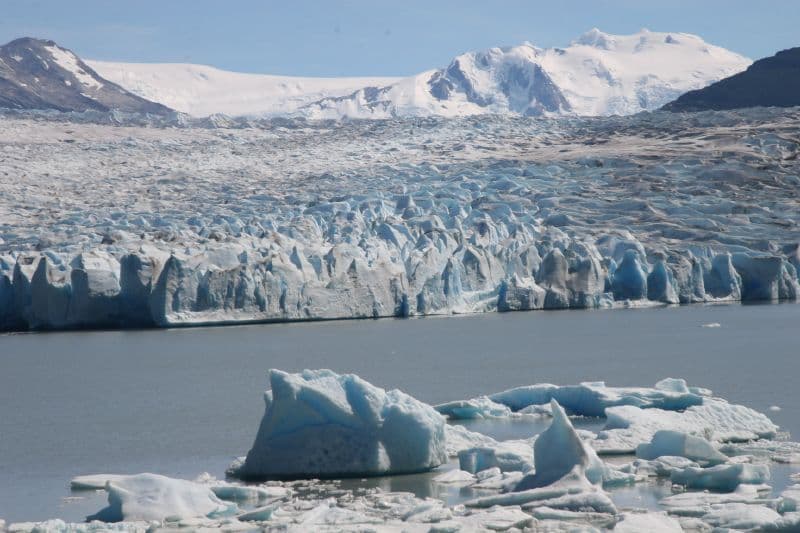
Grey Glacier is a significant glacier located in the Southern Patagonian Ice Field, west of the Cordillera del Paine. It flows southward into the lake of the same name, a process that can result in large icebergs calving off its front. The glacier is a notable feature within the Torres del Paine National Park, offering dramatic views for visitors.

Jorge Montt Glacier
Jorge Montt Glacier is a significant tidewater glacier located in Chile's Aisén Region, within Bernardo O'Higgins National Park. It is notable for its rapid thinning and substantial retreat, which has been linked to both climate warming and the unique bathymetry of its fjord. The glacier plays a role in the local environment, calving icebergs into the Baker Channel.