
Grey Glacier
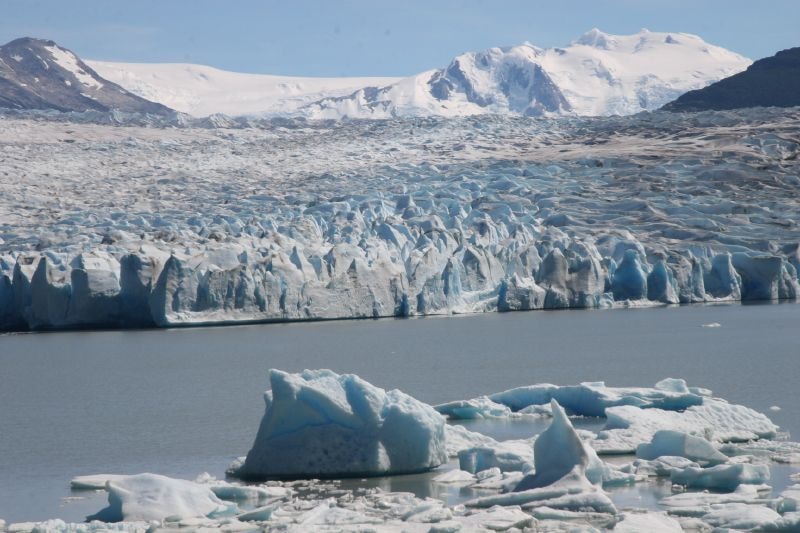
Grey Glacier is a significant glacier located in the Southern Patagonian Ice Field, west of the Cordillera del Paine. It flows southward into the lake of the same name, a process that can result in large icebergs calving off its front. The glacier is a notable feature within the Torres del Paine National Park, offering dramatic views for visitors.
Key Facts
- ›Located in the Southern Patagonian Ice Field, west of the Cordillera del Paine.
- ›Flows southward into Grey Lake.
- ›Was 6 kilometers wide and over 30 meters high at its front end in 1996.
- ›Occupied an area of 270 km² and had a length of 28 km in 1996.
- ›A large iceberg detached from the glacier in November 2017.
- ›Visible from John Garner Pass and the south shore of Grey Lake.
Known For
- Its dramatic calving events, such as a large iceberg detachment in 2017
- Its impressive size and flow into Grey Lake
- Being a prominent feature within Torres del Paine National Park
Front End Divides Before Entering Grey Lake
Torres Del Paine National Park
About Grey Glacier
Grey Glacier Overview
Grey Glacier is a significant glacial body situated in the Southern Patagonian Ice Field, located to the west of the prominent Cordillera del Paine mountain range. This extensive glacier flows southward, culminating its journey into a lake that shares its name, Grey Lake. The glacier's dynamic nature is evident as its front end often divides before reaching the lake, and it is known for calving large icebergs, with a notable instance occurring in November 2017.
Geographic Context and Observation
As part of the Southern Patagonia Ice Field's southern expanse, Grey Glacier is a key geographical feature. Visitors and researchers can observe the glacier from various vantage points. Following the popular 'big circuit' of the Paine Mountain Range, the glacier becomes visible when traversing John Garner Pass. Additionally, the south shore of Grey Lake provides another perspective, where the glacier can be seen in the background, often with fragments of ice floating in the water close to the shore. The glacier lies to the western side of the renowned Torres del Paine National Park.
Size and Dimensions
In 1996, Grey Glacier was documented as covering a total area of approximately 270 square kilometers, with a measured length of 28 kilometers. At its terminus before dividing, the glacier measured 6 kilometers in width and stood over 30 meters high. These dimensions highlight its considerable scale as a glacial feature in the region.
Source: Wikipedia ↗
Frequently Asked Questions
Where is Grey Glacier located?
Grey Glacier is situated in the Southern Patagonian Ice Field, just west of the Cordillera del Paine mountain range. It flows southward into a lake also named Grey.
How large is Grey Glacier?
In 1996, Grey Glacier had a total area of 270 square kilometers and a length of 28 kilometers. At its front end, it was 6 kilometers wide and over 30 meters high before dividing.
What notable events have occurred at Grey Glacier?
A significant event was the detachment of a large iceberg from Grey Glacier in November 2017. The glacier's front end is also known to divide as it flows into the lake.
Can Grey Glacier be seen by visitors?
Yes, Grey Glacier is visible from several points, including John Garner Pass on the 'big circuit' of the Paine Mountain Range. It can also be viewed from the south shore of Grey Lake, with ice fragments often seen near the shore.
Related Glaciers

Bernardo Glacier
Bernardo Glacier is a significant glacier situated within Bernardo O'Higgins National Park in Chile. It is one of the largest glaciers in the Southern Patagonian Ice Field and flows westward into Bernardo Fjord, making it a notable feature of the region's glacial landscape.
Brüggen Glacier
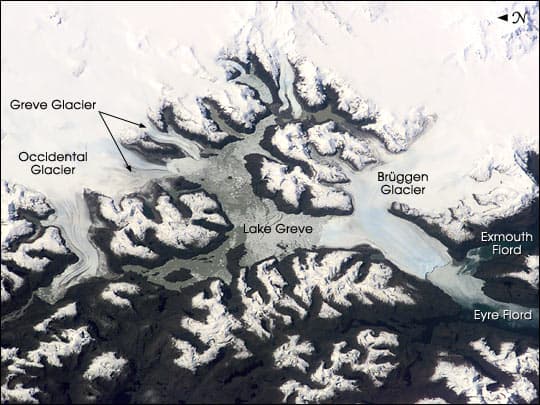
Brüggen Glacier, also known as Pío XI Glacier, is the largest western outflow from the Southern Patagonian Ice Field in southern Chile. It holds the distinction of being the longest glacier in the Southern Hemisphere outside of Antarctica, with a length of approximately 66 km. Notably, unlike many glaciers globally, Brüggen Glacier experienced significant advancement between 1945 and 1976, surging several kilometers and altering the local fjord landscape.

Jorge Montt Glacier
Jorge Montt Glacier is a significant tidewater glacier located in Chile's Aisén Region, within Bernardo O'Higgins National Park. It is notable for its rapid thinning and substantial retreat, which has been linked to both climate warming and the unique bathymetry of its fjord. The glacier plays a role in the local environment, calving icebergs into the Baker Channel.