
El Altar
El Altar, also known as Capac Urcu, is an extinct stratovolcano located in Sangay National Park, Ecuador. Its striking horseshoe-shaped ridge of nine peaks, surrounding a central crater lake, makes it a geologically significant and visually dramatic mountain. It is renowned as one of Ecuador's most technically challenging climbs, while also offering accessible hiking routes to its crater lake.
Key Facts
- ›El Altar is an extinct stratovolcano with a Pliocene-Pleistocene age.
- ›It features nine major peaks over 5,000 meters, forming a horseshoe-shaped ridge.
- ›A central basin contains Laguna Collanes (Laguna Amarilla), a crater lake at approximately 4,200 meters.
- ›The volcano is located within Sangay National Park in Ecuador.
- ›It is considered one of the most technically demanding climbs in Ecuador.
- ›Access to the crater lake is possible via a multi-hour hike from a ranger station.

Known For
- Technical climbing difficulty
- Dramatic horseshoe-shaped peak formation
- Crater lake (Laguna Collanes/Amarilla)
Nine Major Peaks Over 5,000 Meters, Caldera Breached To the West, Laguna Collanes
Sangay National Park
About El Altar
El Altar, also known by its Kichwa name Capac Urcu, is a significant extinct volcano located within Sangay National Park in Ecuador. Standing at a highest point of 5,319 meters (17,451 feet), it is approximately 170 kilometers south of Quito. The volcano is characterized by its striking geological formation, featuring a horseshoe-shaped ridge composed of nine major peaks, each exceeding 5,000 meters. These peaks encircle a central basin that holds the crater lake known as Laguna Collanes, or Laguna Amarilla, situated at an elevation of about 4,200 meters.
Geology and Formation
Geologically, El Altar is classified as a stratovolcano dating back to the Pliocene-Pleistocene epoch. Its caldera is considered to be ancient, despite Inca legends suggesting a summit collapse around 1460 after seven years of activity. The dramatic arrangement of its peaks and the presence of the crater lake are its most prominent geological features.
Access and Recreation
El Altar is renowned for being one of the most technically demanding climbing objectives in Ecuador, with routes like the one to the El Obispo summit graded as highly challenging. The optimal period for attempting ascents is typically between December and February. For those seeking a less strenuous experience, a hike to the caldera's lake is a popular option. This involves traveling from Riobamba to Candelaria, registering at the Sangay park ranger station, and undertaking a substantial hike, often through very muddy terrain, to a rented refuge. From the refuge, a further 1.5 to 2-hour trek leads to the picturesque crater lake.
Source: Wikipedia ↗
Frequently Asked Questions
What is El Altar known for?
El Altar is known for its dramatic geological formation, featuring nine distinct peaks arranged in a horseshoe shape around a central crater lake. It is also recognized as one of the most technically challenging mountains to climb in Ecuador, attracting experienced mountaineers.
Where is El Altar located?
El Altar is situated on the western side of Sangay National Park in Ecuador, approximately 170 kilometers south of Quito. Its highest point reaches 5,319 meters (17,451 feet).
What is the geological history of El Altar?
El Altar is a stratovolcano of Pliocene-Pleistocene age. Geologists believe its caldera to be much older than Inca legends suggest, which recount the collapse of its summit around 1460.
How can one visit El Altar?
Access to El Altar involves taking a bus from Riobamba to Candelaria and then entering Sangay National Park. A challenging, often muddy, trail leads to a rented refuge, followed by a further hike to the crater lake.
What are the best times to visit El Altar?
The months of December through February are considered the best for attempting an ascent of El Altar, particularly the route to the El Obispo summit.
Related Glaciers

Antisana
Antisana is a stratovolcano located in the northern Andes of Ecuador, standing as the fourth highest volcano in the country. It is situated approximately 50 kilometers southeast of Quito and presents a formidable challenge for technical climbers.
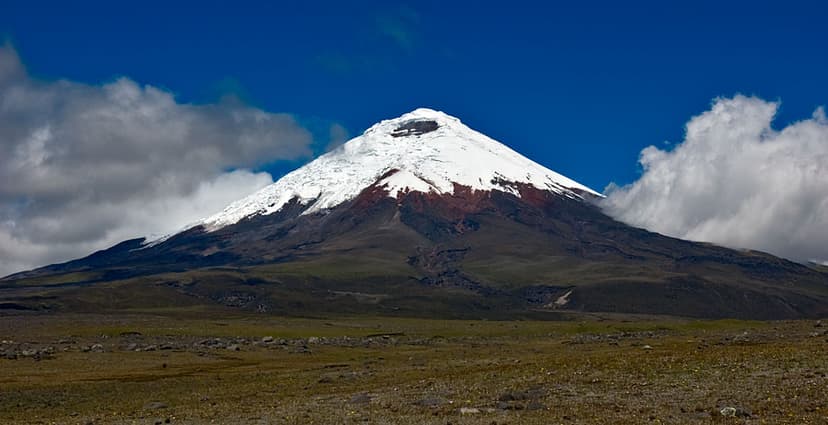
Cotopaxi
Cotopaxi is an active stratovolcano in Ecuador's Andes Mountains, renowned for its near-perfect conical shape and its significant equatorial glacier. It is one of the world's highest active volcanoes and has a history of frequent and powerful eruptions, which have shaped the surrounding landscape with lahars and pose a risk to nearby populations.

Nevado del Ruiz
Nevado del Ruiz is a stratovolcano in Colombia that is the highest point in both the Caldas and Tolima departments. It is part of the Andes mountain range and is known for its glaciers and its history of devastating lahars, particularly the 1985 eruption that destroyed the town of Armero and caused an estimated 25,000 deaths, making it the deadliest lahar in recorded history.