
Polish Glacier
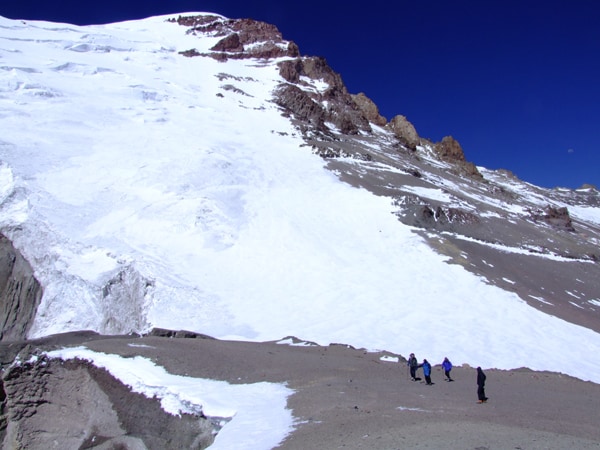
The Polish Glacier is a significant glacial feature on Aconcagua, the highest peak in the Andes and the Americas. It was named in honor of the 1934 Polish expedition that established a new route to the summit via this glacier, which subsequently became known as the Polish Route.
Key Facts
- ›Located on Aconcagua, the highest peak in the Andes and the Americas.
- ›Named after the Polish expedition of 1934.
- ›The glacier is associated with the 'Polish Route' to Aconcagua's summit.
- ›Part of the glacial fields of Aconcagua.
Known For
- Its association with the 'Polish Route' to Aconcagua's summit
- Being part of the glacial systems of the highest peak in the Andes
About Polish Glacier
The Polish Glacier
The Polish Glacier is a notable glacial feature situated on Aconcagua, the towering peak that holds the distinction of being the highest mountain in the Andes and across both North and South America. Its name and significance are directly tied to a pivotal moment in mountaineering history.
Naming and Historical Context
The glacier was officially named in honor of the Polish expedition that undertook a challenging ascent of Aconcagua in 1934. This expedition, under the leadership of Konstanty Jodko-Narkiewicz, successfully charted and developed a new, alternative route to the summit. This route, which traversed the glacier itself, subsequently became widely known as the "Polish Route," cementing the glacier's name in mountaineering lore.
Source: Wikipedia ↗
Frequently Asked Questions
What is the Polish Glacier?
The Polish Glacier is a glacial field located on Aconcagua, the highest mountain in the Andes and the Americas. It is part of the mountain's extensive glacial systems.
Why is it called the Polish Glacier?
It was named in recognition of the Polish expedition in 1934. This expedition, led by Konstanty Jodko-Narkiewicz, pioneered an alternative route to the summit of Aconcagua that utilized this glacier.
What is the significance of the Polish Route?
The Polish Route was an alternative path to the summit of Aconcagua developed by the 1934 Polish expedition. This route is directly associated with the Polish Glacier.
Related Glaciers

Perito Moreno Glacier
The Perito Moreno Glacier is a significant ice formation located in Los Glaciares National Park in Argentina, originating in the Andes mountain range shared with Chile. It is renowned for its dramatic, naturally occurring ruptures where an ice dam forms across Lake Argentino, causing water levels to rise and then break through the ice barrier in a spectacular event. This glacier is a major tourist attraction and a crucial part of the Southern Patagonian Ice Field, which represents the world's third-largest reserve of fresh water.

Torrecillas Glacier
The Torrecillas Glacier is a significant glacier located in Los Alerces National Park, Chubut Province, Argentina. It descends into the Y-shaped glacial lake, Lake Menéndez, and is notable for its proximity to extensive Alerce forests, which are among the oldest and largest in Argentina.

Upsala Glacier
The Upsala Glacier is a significant valley glacier situated on the eastern side of the Southern Patagonian Ice Field. Named after Uppsala University, which sponsored early glaciological studies, it is a notable feature of Argentinian Patagonia and a popular day tour destination from El Calafate. The glacier is particularly well-known for its rapid and ongoing retreat, which has been documented since its initial observation in 1810.