
Upsala Glacier
The Upsala Glacier is a significant valley glacier situated on the eastern side of the Southern Patagonian Ice Field. Named after Uppsala University, which sponsored early glaciological studies, it is a notable feature of Argentinian Patagonia and a popular day tour destination from El Calafate. The glacier is particularly well-known for its rapid and ongoing retreat, which has been documented since its initial observation in 1810.
Key Facts
- ›Located on the eastern side of the Southern Patagonian Ice Field.
- ›Named after Uppsala University, which funded early glaciological research in the area.
- ›Its terminus is at the Upsala channel of Lago Argentino.
- ›Known for its rapid and continuous retreat since 1810.
- ›It is the third largest glacier in the Southern Patagonian Ice Field.
- ›Significantly impacted by climate change, with notable effects from rising temperatures and altered precipitation.

Known For
- Rapid retreat
- Impacts of climate change
- Its size and position within the Southern Patagonian Ice Field
Bertacchi Glacier, Cono Glacier, MurallóN Glacier
Los Glaciares National Park
About Upsala Glacier
The Upsala Glacier is a prominent valley glacier located on the eastern flank of the Southern Patagonian Ice Field. Its higher reaches extend into a territory claimed by both Chile and Argentina, highlighting its significant geographical position. The glacier is named after Uppsala University in Sweden, which sponsored the initial glaciological studies in the area, contributing to its early scientific documentation.
Significance and Retreat
Upsala Glacier is renowned for its rapid and continuous retreat, a phenomenon observed since its first recorded documentation in 1810. This ongoing recession is a stark indicator of climate change impacts in the region. While it is the third largest glacier within the ice field, its retreat has been particularly pronounced, with significant acceleration noted in periods leading up to 1999 and again in 2008. By 2018, its retreat had progressed to the point where it no longer constrained its tributary, Bertacchi Glacier, leading to increased flow rates and thinning in the latter.
Tourism and Accessibility
Despite being a major glacial feature, Upsala Glacier receives fewer direct visitors than the more accessible Perito Moreno Glacier within Los Glaciares National Park. Nevertheless, it remains an important component of the local tourism infrastructure in Argentinian Patagonia. It is a popular destination for day tours originating from the nearby city of El Calafate, offering visitors opportunities to witness its grandeur through 4x4 excursions and hiking routes that provide vantage point views.
Source: Wikipedia ↗
Frequently Asked Questions
Where is the Upsala Glacier located?
The Upsala Glacier is situated on the eastern side of the Southern Patagonian Ice Field. Its higher portion is in a disputed territory between Chile and Argentina, and it is a prominent feature within Los Glaciares National Park in Argentinian Patagonia.
Why is Upsala Glacier named that way?
The glacier's name originates from the old spelling of Uppsala University. This Swedish university sponsored the first glaciological studies conducted in the region, leading to the glacier being named in its honor.
What is notable about the Upsala Glacier's retreat?
Upsala Glacier is well-known for its rapid and ongoing retreat, which has been observed since it was first documented in 1810. The retreat accelerated significantly in the years leading up to 1999 and again in 2008, with rates reported to be much faster than in previous periods.
How accessible is Upsala Glacier for tourists?
While Los Glaciares National Park receives many tourists, Upsala Glacier is less visited than the Perito Moreno Glacier due to accessibility. However, it is a popular day tour from El Calafate, with options for 4x4 vehicles and hiking to reach vantage points.
What are the impacts of climate change on Upsala Glacier?
Upsala Glacier is significantly affected by climate change, experiencing some of the most pronounced impacts globally from increasing temperatures and changes in precipitation. Its rapid retreat is a direct consequence of these climatic shifts.
Related Glaciers

Perito Moreno Glacier
The Perito Moreno Glacier is a significant ice formation located in Los Glaciares National Park in Argentina, originating in the Andes mountain range shared with Chile. It is renowned for its dramatic, naturally occurring ruptures where an ice dam forms across Lake Argentino, causing water levels to rise and then break through the ice barrier in a spectacular event. This glacier is a major tourist attraction and a crucial part of the Southern Patagonian Ice Field, which represents the world's third-largest reserve of fresh water.
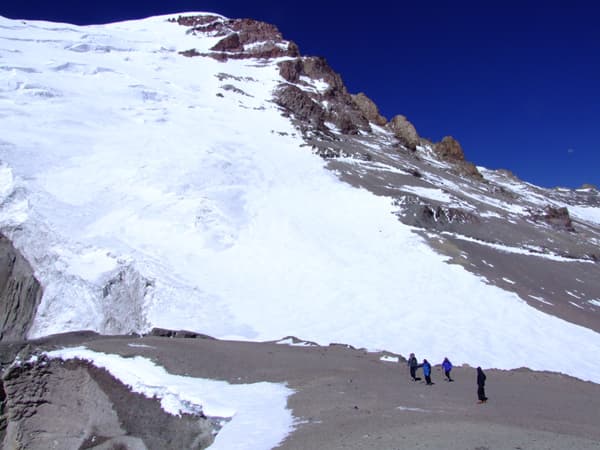
Polish Glacier
The Polish Glacier is a significant glacial feature on Aconcagua, the highest peak in the Andes and the Americas. It was named in honor of the 1934 Polish expedition that established a new route to the summit via this glacier, which subsequently became known as the Polish Route.

Torrecillas Glacier
The Torrecillas Glacier is a significant glacier located in Los Alerces National Park, Chubut Province, Argentina. It descends into the Y-shaped glacial lake, Lake Menéndez, and is notable for its proximity to extensive Alerce forests, which are among the oldest and largest in Argentina.