
San Quintín Glacier
Piedmont Glacier·Chile·South America·Alpine
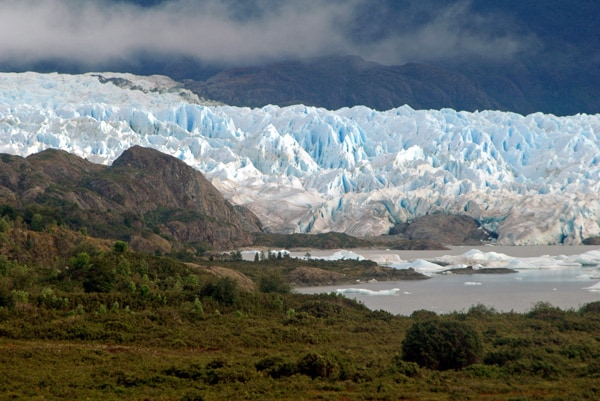
The San Quintín Glacier is the largest outflow glacier originating from the Northern Patagonian Ice Field in southern Chile. It is notable for its significant retreat observed throughout the 20th century, with visible changes documented by astronaut photography. Its terminus forms a piedmont lobe situated near the Gulf of Penas.
Key Facts
- ›Largest outflow glacier of the Northern Patagonian Ice Field.
- ›Terminus forms a piedmont lobe near the Gulf of Penas.
- ›Located just north of the 47°S parallel in southern Chile.
- ›Observed to be losing mass and retreating rapidly during the 20th century.
- ›Visible changes documented by astronaut photography over a seven-year period.
Known For
- Being the largest outflow glacier of the Northern Patagonian Ice Field
- Rapid retreat observed in the 20th century
- Visible changes documented by astronaut photography
Piedmont Lobe Terminus
About San Quintín Glacier
The San Quintín Glacier is a significant glacial feature in southern Chile, recognized as the largest outflow glacier originating from the Northern Patagonian Ice Field. Its terminus is a distinctive piedmont lobe that extends to within a short distance of the Gulf of Penas, situated on the Pacific Ocean and just north of the 47th parallel south latitude.
Recent Retreat
Like numerous glaciers across the globe, the San Quintín Glacier has exhibited a pattern of mass loss and rapid retreat throughout the 20th century. This phenomenon has been visually confirmed through comparative photographic evidence. Images captured by astronauts from different missions, separated by only seven years, have clearly demonstrated observable changes in the glacier's extent, underscoring the impact of contemporary climate shifts on this Patagonian ice outflow.
Source: Wikipedia ↗
Frequently Asked Questions
Where is the San Quintín Glacier located?
The San Quintín Glacier is located in southern Chile, as the largest outflow glacier of the Northern Patagonian Ice Field. Its terminus is situated just short of the Gulf of Penas on the Pacific Ocean and slightly north of the 47°S latitude.
What is the current state of the San Quintín Glacier?
The San Quintín Glacier, like many glaciers globally, has been experiencing significant mass loss and rapid retreat throughout the 20th century. Visible changes have been documented, indicating a shrinking ice mass.
Has the San Quintín Glacier's retreat been documented?
Yes, the retreat of the San Quintín Glacier has been documented, including visible changes captured by astronaut photography. Comparisons between images taken just seven years apart clearly show alterations in its extent.
What type of glacier is the San Quintín Glacier?
The San Quintín Glacier is described as an outflow glacier. Its terminus forms a piedmont lobe, which is a type of glacier that spreads out broadly at the foot of a mountain.
Related Glaciers

Amalia Glacier
Amalia Glacier, also known as Skua Glacier, is a tidewater glacier situated in Bernardo O'Higgins National Park, Chile. Originating from the Southern Patagonian Ice Field, it is notable for its significant retreat between 1945 and 1986, which was among the most dramatic observed in the region during that period. The glacier also plays a role in shaping the landscape by partially surrounding and eroding the northern flank of the Reclus volcano.
Colonia Glacier
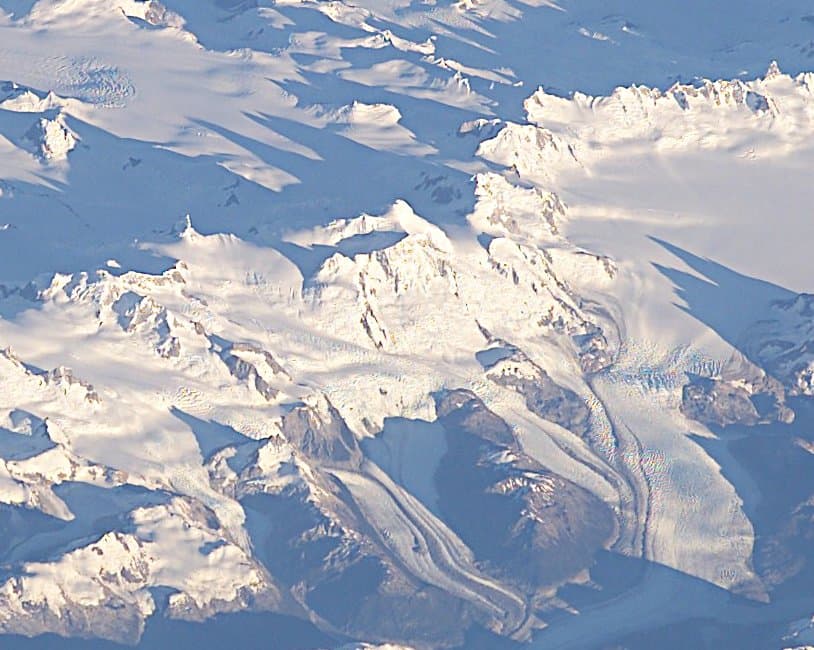
Colonia Glacier is a valley glacier situated in Chile's Northern Patagonian Ice Field. It is notable for damming two lakes, Cachet II and Arco Lake, and is particularly known for the regular glacial lake outburst floods (GLOFs) originating from Lake Cachet II. These floods, caused by perforations in the glacial ice due to rising temperatures, have increased in frequency, highlighting the glacier's sensitivity to climate change.

Jorge Montt Glacier
Jorge Montt Glacier is a significant tidewater glacier located in Chile's Aisén Region, within Bernardo O'Higgins National Park. It is notable for its rapid thinning and substantial retreat, which has been linked to both climate warming and the unique bathymetry of its fjord. The glacier plays a role in the local environment, calving icebergs into the Baker Channel.