
Aouelloul
Mauritania·Pliocene·Cenozoic·Roughly circular
Aouelloul is a well-preserved impact crater located in the Akchar Desert region of Mauritania. This roughly circular crater, measuring 390 meters in diameter, is geologically significant due to the presence of tektites and its estimated age of 3.1 million years.
Key Facts
- ›Diameter: 390 meters
- ›Age: 3.1 ± 0.3 million years (Pliocene)
- ›Location: Akchar Desert, Mauritania
- ›Morphology: Roughly circular with a rim rising 53 meters above the crater floor
- ›Associated materials: Tektites found around the crater
- ›Discovery: not explicitly dated, but tektites and the Zerga meteorite suggest scientific interest.
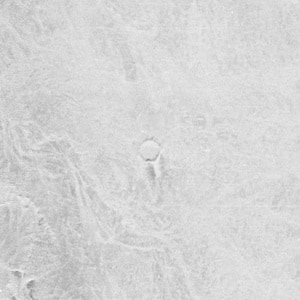
Tektites
About Aouelloul
Aouelloul Impact Crater
Aouelloul is an impact crater situated in the Akchar Desert, a part of the Sahara Desert in Mauritania. Located approximately 50 kilometers southeast of the city of Atar, this crater is notable for its exposed state and clear circular morphology.
Geological Features and Age
The crater measures 390 meters in width, with its rim rising up to 53 meters above the crater floor. Sedimentary deposits within the crater are approximately 23 meters thick. Scientific estimates place the age of the Aouelloul impact event at 3.1 ± 0.3 million years, corresponding to the Pliocene epoch.
Associated Materials and Discovery
Key evidence for the impact origin of Aouelloul includes the presence of tektites found scattered around the crater. While few meteorites have been recovered directly from the site, the Zerga meteorite was discovered in 1973 just outside the crater rim to the south-southeast. However, definitive scientific consensus has not been reached regarding whether the Zerga meteorite is the actual impactor responsible for forming the Aouelloul crater.
Source: Wikipedia ↗
Frequently Asked Questions
Where is the Aouelloul impact crater located?
The Aouelloul impact crater is situated in the Akchar Desert, which is part of the Sahara Desert in Mauritania. It lies approximately 50 kilometers southeast of the city of Atar.
How large is the Aouelloul crater?
The Aouelloul crater is exposed and has a diameter of approximately 390 meters (1,280 ft). Its rim rises about 53 meters (174 ft) above the crater's bottom.
What is the estimated age of the Aouelloul crater?
The age of the Aouelloul impact crater is estimated to be 3.1 ± 0.3 million years, placing its formation within the Pliocene epoch.
What evidence suggests an impact event at Aouelloul?
Tektites, which are natural glass fragments formed by meteorite impacts, have been found around the Aouelloul crater. Additionally, the Zerga meteorite was discovered near the crater's rim.
Is the Zerga meteorite confirmed to be the impactor for Aouelloul?
While the Zerga meteorite was found in 1973 immediately outside the crater rim to the south-southeast, scientists are not certain if it is the same meteorite that formed the Aouelloul crater.
Related Impact Craters

Tenoumer
Tenoumer is a probable impact crater located in the western Sahara Desert of Mauritania. While initially theorized as volcanic, current evidence strongly suggests an impact origin. It is a nearly circular structure exposed at the surface, with its base covered by a significant layer of sediments.

Roter Kamm
Roter Kamm is a confirmed impact crater located in the Namib Desert of Namibia. With a diameter of 2.5 kilometers, it is estimated to have formed approximately 4.81 million years ago during the Pliocene epoch. The crater is notable for its exposed surface, which is significantly covered by sand deposits, and for the unusual breccias found within its basement rocks, suggesting complex post-impact geological processes.
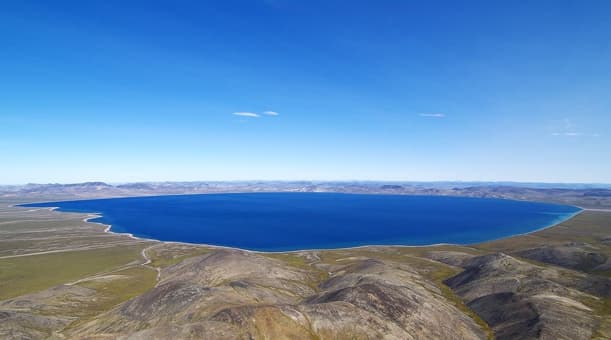
El'gygytgyn
Lake Elgygytgyn is an ancient impact crater lake located in Siberia, Russia, renowned for its undisturbed sediment record that provides invaluable insights into prehistoric climate change. Its unique geological history and the presence of endemic fish species make it a significant site for scientific research.