
Roter Kamm
Roter Kamm is a confirmed impact crater located in the Namib Desert of Namibia. With a diameter of 2.5 kilometers, it is estimated to have formed approximately 4.81 million years ago during the Pliocene epoch. The crater is notable for its exposed surface, which is significantly covered by sand deposits, and for the unusual breccias found within its basement rocks, suggesting complex post-impact geological processes.
Key Facts
- ›Diameter: 2.5 kilometers
- ›Depth: 130 meters
- ›Estimated Age: 4.81 ± 0.5 million years (Pliocene)
- ›Location: Sperrgebiet, Namib Desert, Namibia
- ›Target Rock: Precambrian granitic gneiss and younger sedimentary rocks
- ›Current State: Exposed at the surface but largely covered by sand

Anomalous Quartz, Cataclastic Breccias, Mylonitic Breccias, Pseudotachylitic Breccias
About Roter Kamm
Roter Kamm Impact Crater
Roter Kamm, meaning "Red Ridge" in German, is a confirmed impact crater situated in the vast Namib Desert of Namibia. This geological feature spans 2.5 kilometers in diameter and plunges to a depth of 130 meters. Scientific estimates place its formation at approximately 4.81 million years ago, during the Pliocene epoch.
Geological Context and Features
The impact occurred within a geological setting composed of Precambrian granitic gneiss, part of the Namaqua Metamorphic Complex, which is overlaid by younger sedimentary rocks. Notably, no fragments of the impacting meteorite have been recovered, suggesting it completely vaporized upon impact. The meteor itself is thought to have been roughly the size of an SUV.
A distinctive characteristic of Roter Kamm, unusual for craters of its size, is the exposure of a significant volume of cataclastic/mylonitic and pseudotachylitic breccias within the underlying basement rocks. Further research has identified anomalous quartz at the crater rim, with primary fluid inclusions that provide evidence for post-impact hydrothermal activity, likely generated by the immense heat of the impact.
Surface Modification and Preservation
Since its formation, Roter Kamm has been sculpted by both eolian (wind-driven) and alluvial (water-driven) processes. The crater is exposed at the surface, but its original floor is now buried beneath sand deposits that are at least 100 meters thick. Active, mobile sands continue to cover much of the crater, effectively masking many of the signatures associated with earlier geological processes. Ongoing eolian erosion is the primary force responsible for scouring the exposed rim of the crater.
Source: Wikipedia ↗
Frequently Asked Questions
Where is the Roter Kamm impact crater located?
The Roter Kamm impact crater is situated in the Sperrgebiet region of the Namib Desert, within Namibia. It lies approximately 80 kilometers north of Oranjemund and 12 kilometers southwest of Aurus Mountain.
How large is the Roter Kamm impact crater?
The crater has a diameter of 2.5 kilometers and a depth of 130 meters. The celestial body that caused the impact was estimated to be about the size of an SUV.
When did the Roter Kamm impact event occur?
The impact event that formed Roter Kamm is estimated to have occurred around 4.81 million years ago, placing it within the Pliocene epoch.
What is the geological significance of Roter Kamm?
Roter Kamm exposes a large volume of cataclastic/mylonitic and pseudotachylitic breccias in the basement granite and gneisses, which is unusual for its size. Anomalous quartz with primary fluid inclusions suggests post-impact hydrothermal activity.
Has any part of the meteorite been found at Roter Kamm?
No parts of the meteorite have been found at the Roter Kamm site. This suggests that the celestial body likely evaporated completely upon impact.
How has erosion affected the Roter Kamm crater?
Both eolian (wind) and alluvial (water) processes have played a role in modifying the Roter Kamm crater. Active mobile sands largely bury the crater, and ongoing eolian erosion is responsible for scouring the exposed rim.
Related Impact Craters
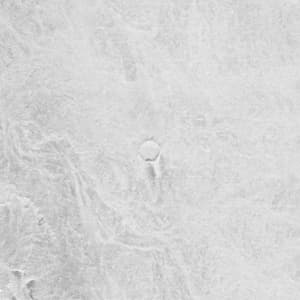
Aouelloul
Aouelloul is a well-preserved impact crater located in the Akchar Desert region of Mauritania. This roughly circular crater, measuring 390 meters in diameter, is geologically significant due to the presence of tektites and its estimated age of 3.1 million years.
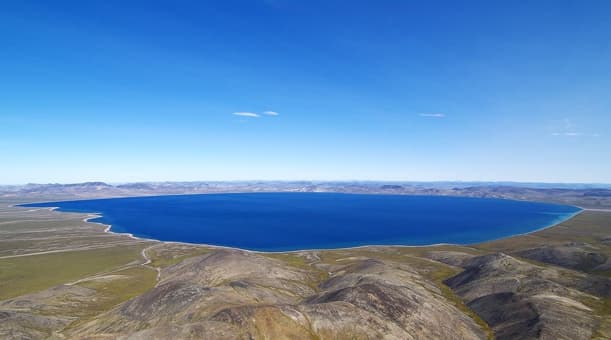
El'gygytgyn
Lake Elgygytgyn is an ancient impact crater lake located in Siberia, Russia, renowned for its undisturbed sediment record that provides invaluable insights into prehistoric climate change. Its unique geological history and the presence of endemic fish species make it a significant site for scientific research.
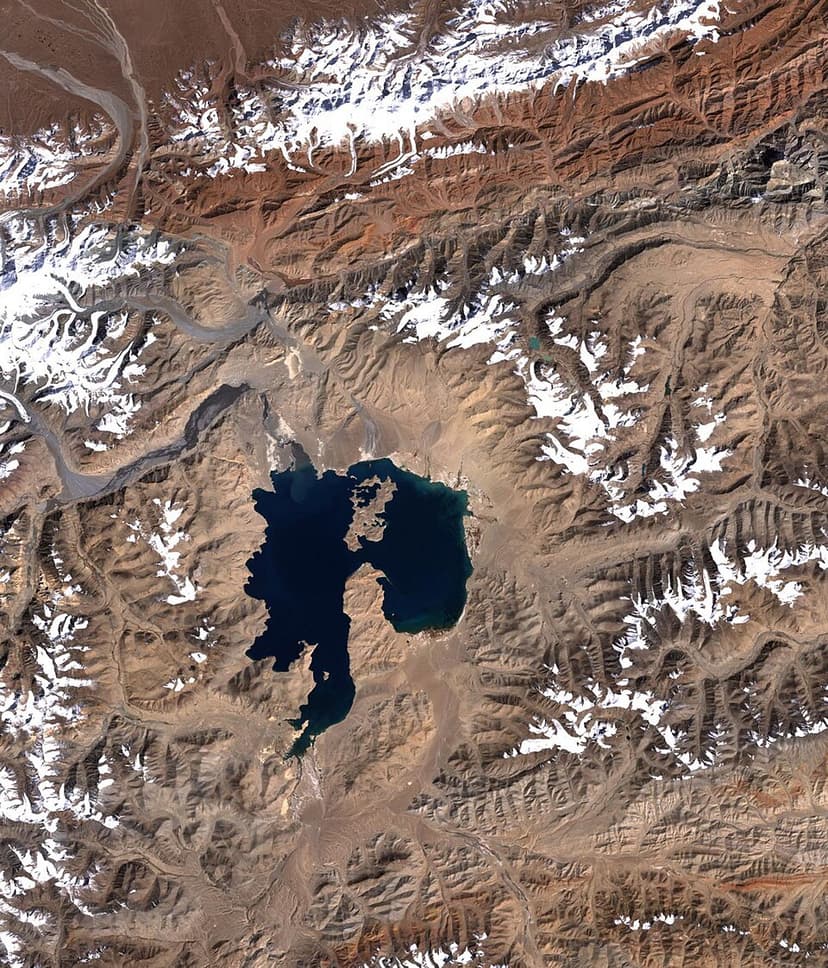
Karakul
Karakul is a large endorheic lake located within a 52 km impact crater in the Pamir Mountains of Tajikistan. The crater's age is estimated to be between 5 million and 25 million years old, and it is notable for its significant size and the unique ecological importance of the lake it contains.