
El'gygytgyn
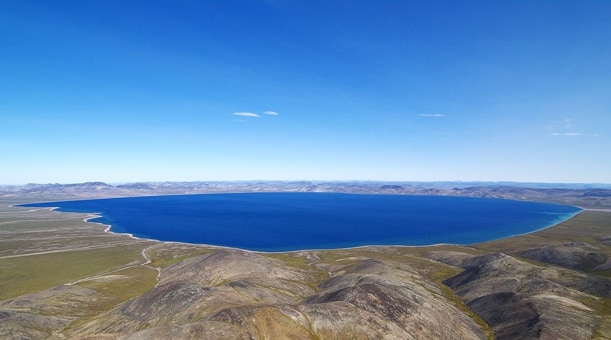
Lake Elgygytgyn is an ancient impact crater lake located in Siberia, Russia, renowned for its undisturbed sediment record that provides invaluable insights into prehistoric climate change. Its unique geological history and the presence of endemic fish species make it a significant site for scientific research.
Key Facts
- ›Lake Elgygytgyn is an impact crater lake in Siberia, Russia.
- ›It formed approximately 3.6 million years ago during the Pliocene epoch.
- ›The crater has a rim diameter of 18 km (11 MI).
- ›The lake itself has a diameter of approximately 12 km (7 MI) and a maximum depth of 174 m.
- ›It is of scientific interest because it has never been covered by glaciers, preserving a 400 m sediment record.
- ›The lake is home to three endemic species of char, adapted to its extremely cold and dark environment.
About El'gygytgyn
Lake El'gygytgyn, also transcribed as Elgygytgyn, is a significant impact crater lake located in the Anadyrsky District of Chukotka Autonomous Okrug in northeastern Siberia, Russia. The name "El'gygytgyn" itself translates to "white lake" in the Chukchi language. This lake is of immense scientific interest primarily because it has remained untouched by glaciers throughout its history. This unique condition has allowed for the continuous deposition of approximately 400 meters of sediment at the lake's bottom, creating an exceptionally well-preserved archive of prehistoric climate change.
Geography and Formation
The lake is situated within the Anadyr Plateau and is centered within an impact crater that boasts a rim diameter of 18 kilometers. The impact event that formed this structure is dated to approximately 3.6 million years ago, during the Pliocene epoch. The lake itself has a diameter of about 12 kilometers and reaches a maximum depth of 174 meters. It is drained to the southeast by the Enmyvaam River, a tributary of the Belaya River.
Scientific Research and Climate Data
An international drilling program conducted in 2008 and 2009 successfully extracted sediment cores from El'gygytgyn Lake. These cores have provided crucial data demonstrating the profound impact of polar amplification on past climates. Research has revealed numerous "super interglacial" periods during the Pleistocene, characterized by temperatures 4–5°C higher and precipitation 300mm greater than those experienced in the Holocene. Furthermore, during the mid-Pliocene Warm Period, when atmospheric carbon dioxide levels were comparable to today, summer temperatures at El'gygytgyn were approximately 8°C warmer. The findings from the Lake El'gygytgyn Drilling Project have been extensively published in scientific journals, highlighting its role as a vital paleoclimate archive.
Endemic Fauna
Life in Lake El'gygytgyn faces extreme conditions, with the lake being ultra-oligotrophic and covered by ice for roughly ten months of the year. Despite this, the lake supports three species of char, including Salvelinus boganidae (Boganid Char), Salvelinus elgyticus (Small-mouth Char), and Salvethymus svetovidovi (Long-finned Char). The latter two species are endemic to Lake El'gygytgyn, showcasing remarkable adaptation to the lake's consistently cold waters and prolonged periods of darkness. The lake also harbors over a dozen endemic species of diatoms.
Source: Wikipedia ↗
Frequently Asked Questions
What is Lake Elgygytgyn and where is it located?
Lake Elgygytgyn is an impact crater lake situated in the Anadyrsky District of Chukotka Autonomous Okrug in northeastern Siberia, Russia. It lies approximately 150 km southeast of Chaunskaya Bay.
How old is the Elgygytgyn impact crater?
The impact crater that formed Lake Elgygytgyn is estimated to be 3.6 million years old. This event occurred during the Pliocene epoch.
What is significant about the sediments in Lake Elgygytgyn?
The lake's sediments are of particular scientific interest because the area has never been covered by glaciers. This has allowed for the uninterrupted accumulation of 400 meters of sediment, which serves as a detailed record of prehistoric climate change.
What kind of life exists in Lake Elgygytgyn?
Despite its harsh conditions, including being covered by ice for about 10 months a year and ultra-oligotrophic waters, the lake supports three species of char. Two of these, Salvelinus elgyticus and Salvethymus svetovidovi, are endemic to the lake.
What does the name 'Elgygytgyn' mean?
The name 'Elgygytgyn' translates to 'white lake' in the Chukchi language, reflecting a characteristic of the lake.
Related Impact Craters

Roter Kamm
Roter Kamm is a confirmed impact crater located in the Namib Desert of Namibia. With a diameter of 2.5 kilometers, it is estimated to have formed approximately 4.81 million years ago during the Pliocene epoch. The crater is notable for its exposed surface, which is significantly covered by sand deposits, and for the unusual breccias found within its basement rocks, suggesting complex post-impact geological processes.
Karakul
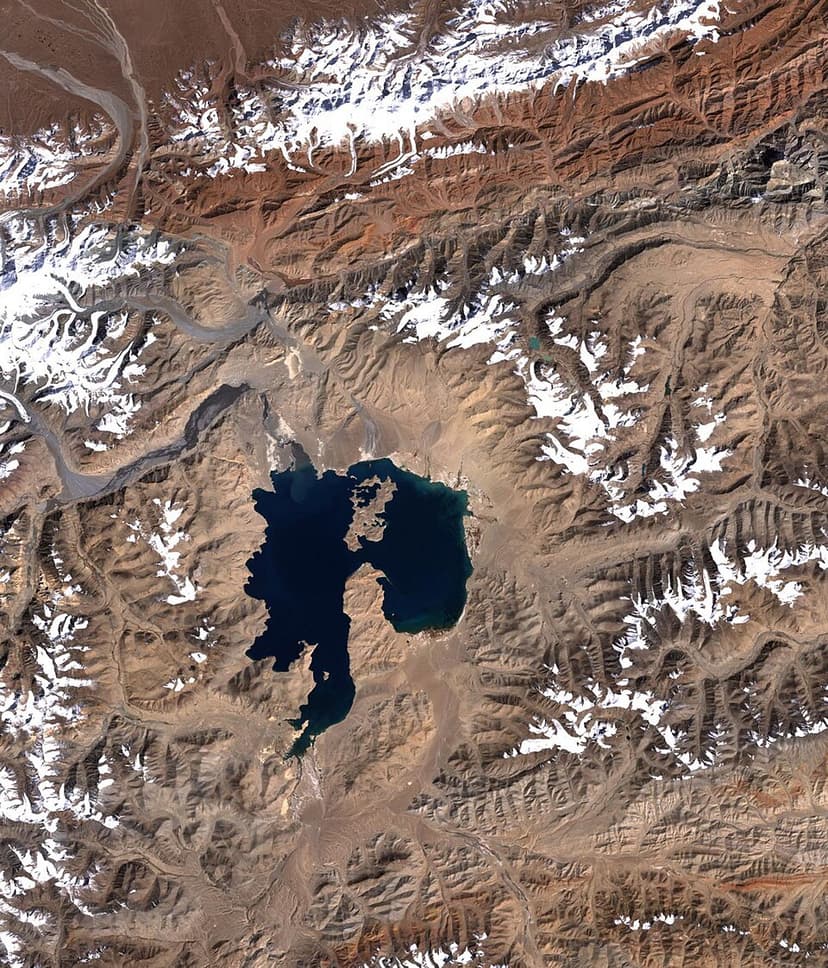
Karakul is a large endorheic lake located within a 52 km impact crater in the Pamir Mountains of Tajikistan. The crater's age is estimated to be between 5 million and 25 million years old, and it is notable for its significant size and the unique ecological importance of the lake it contains.
Aouelloul
Aouelloul is a well-preserved impact crater located in the Akchar Desert region of Mauritania. This roughly circular crater, measuring 390 meters in diameter, is geologically significant due to the presence of tektites and its estimated age of 3.1 million years.