
Foelsche
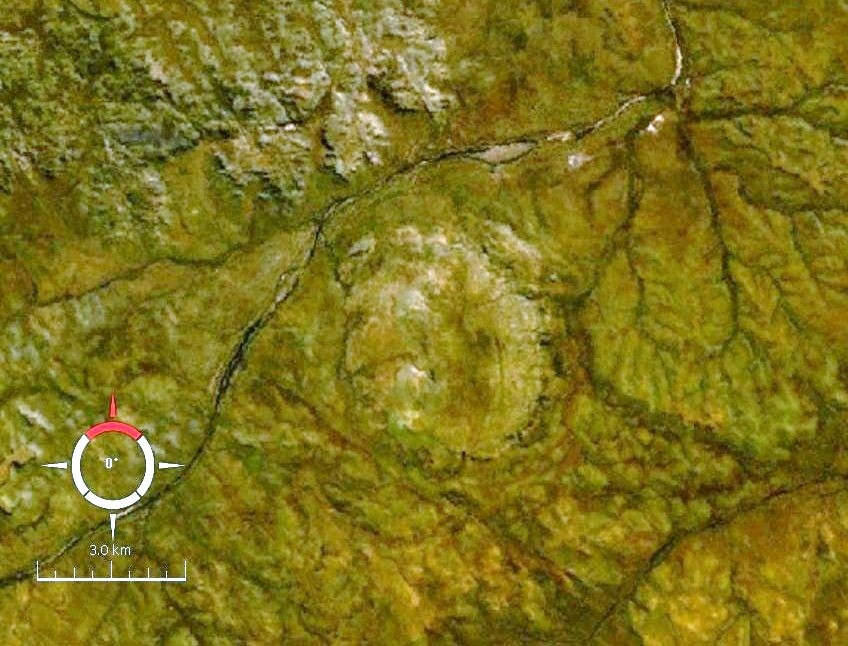
Foelsche is a largely buried impact structure in Australia's Northern Territory, named after the nearby Foelsche River. Its circular nature is evident on aeromagnetic images, leading to its discovery despite minimal surface exposure. The impact occurred into ancient sedimentary rocks, with remnants of the crater rim found around a Neoproterozoic sedimentary hill that partly covers the structure.
Key Facts
- ›Located approximately 85 km southeast of Borroloola, Northern Territory, Australia.
- ›The crater rim has an estimated diameter of 6 km.
- ›Impacted flat-lying Mesoproterozoic sedimentary rocks of the Mcarthur Basin.
- ›Partially covered by flat-lying Neoproterozoic sedimentary rock.
- ›Discovery was facilitated by aeromagnetic imaging revealing a circular anomaly.
- ›Associated with shocked quartz grains found in sedimentary rocks overlying the crater.
Shocked Quartz
About Foelsche
Foelsche Impact Structure
The Foelsche impact structure, also known as an astrobleme, is the eroded remnant of a former impact crater located in the Northern Territory, Australia. Situated approximately 85 kilometers southeast of Borroloola and named after the nearby Foelsche River, much of the structure is buried, and no distinct crater topography is visible on the surface. Its discovery was facilitated by the clear circular pattern observed on aeromagnetic images, which indicated a significant subsurface anomaly.
Geological Context and Discovery
The impact event occurred within flat-lying Mesoproterozoic sedimentary rocks belonging to the McArthur Basin. A substantial portion of the crater is now covered by a semi-circular hill composed of overlying flat-lying Neoproterozoic sedimentary rock. The only exposed remnants of the original crater are scattered outcrops of deformed sandstone and breccia found around the northern edge of this overlying hill, inferred to be fragments of the crater rim. The diameter of this inferred rim is approximately 6 kilometers.
Evidence supporting an impact origin includes the abundance of shocked quartz grains identified within the sedimentary rocks covering the crater. These grains are believed to have been dislodged from the crater floor during the impact. The prominent circular aeromagnetic anomaly that marks the hidden crater is thought to have been caused by the disruption of a horizontal layer of magnetic igneous rock (a sill) by the force of the impact.
Age and Significance
The precise age of the Foelsche impact structure is not well-constrained. However, it is understood to be younger than the Mesoproterozoic sedimentary rocks that were impacted and older than the Neoproterozoic sedimentary rocks that now partially cover it. Arguments suggest that the impact most likely occurred during the Neoproterozoic era, given the evidence that the crater was rapidly covered by sediments shortly after the impact event. The presence of shocked quartz and the discernible magnetic anomaly highlight its geological significance as a record of extraterrestrial impact on Earth.
Source: Wikipedia ↗
Frequently Asked Questions
Where is the Foelsche impact structure located?
The Foelsche impact structure is situated in the Northern Territory of Australia, about 85 kilometers southeast of Borroloola. It is named after the nearby Foelsche River.
How was the Foelsche impact structure discovered?
The circular nature of the Foelsche feature was identified on aeromagnetic images. This circular anomaly, believed to be caused by the impact's disruption of a magnetic rock layer, led to its discovery.
What is the geological setting of the Foelsche impact structure?
The impact occurred into flat-lying Mesoproterozoic sedimentary rocks of the McArthur Basin. Much of the structure is now covered by a semi-circular hill composed of flat-lying Neoproterozoic sedimentary rock.
What evidence points to an impact origin for Foelsche?
Evidence for an impact origin includes the circular aeromagnetic anomaly and the presence of shocked quartz grains in the sedimentary rocks overlying the crater. Scattered outcrops of deformed sandstone and breccia around the northern edge of the overlying hill are also inferred to be remnants of the crater rim.
What is the estimated age of the Foelsche impact structure?
The age of Foelsche is not precisely known. It must be younger than the Mesoproterozoic target rocks and older than the Neoproterozoic rocks that partially fill it. It is suggested to be most likely Neoproterozoic, as sediments appear to have covered the crater soon after the impact.
Related Impact Craters
Cleanskin
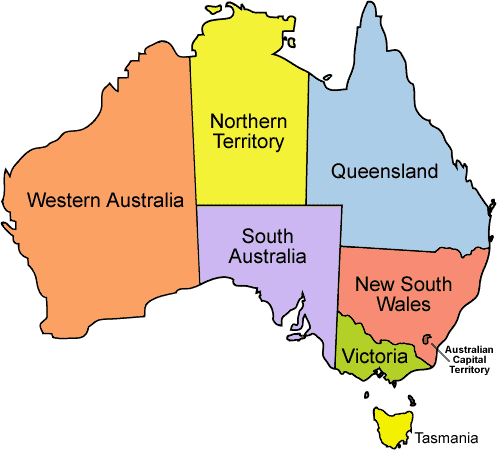
The Cleanskin crater is an eroded impact structure in Australia, straddling the border between the Northern Territory and Queensland. With a diameter of 15 kilometers, its polygonal shape is attributed to pre-existing regional faults. The crater formed during the late Mesoproterozoic to Neoproterozoic eras and became eroded and buried by the Cambrian and Cretaceous periods respectively.

Shoemaker
The Shoemaker impact structure, formerly known as Teague Ring, is the eroded remnant of a significant impact crater located in central Western Australia. Named in honor of planetary geologist Eugene Shoemaker, its prominent ring-like feature is visible in satellite imagery and lies on the boundary of the Earaheedy Basin and the Yilgarn craton.
Glikson
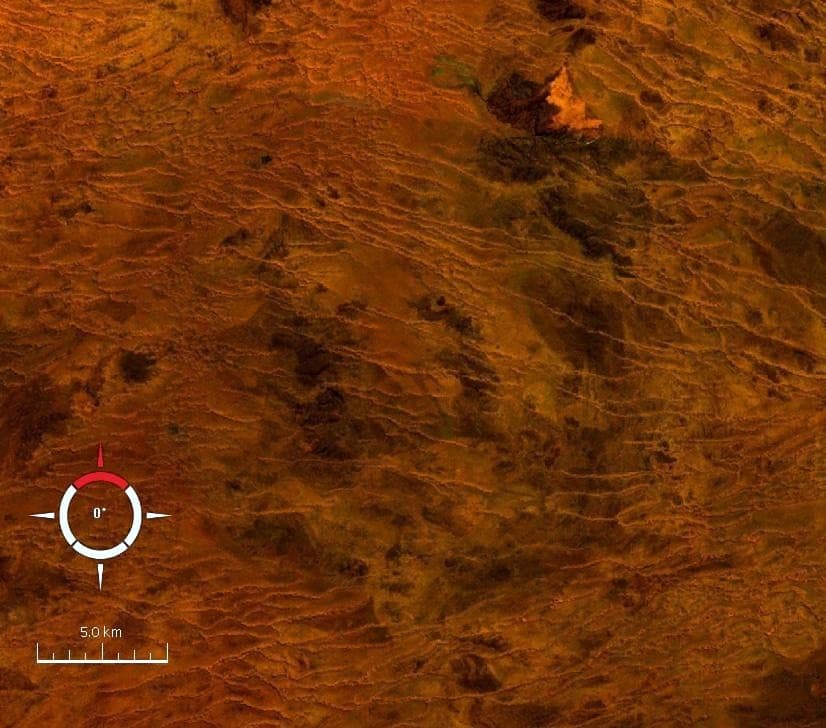
The Glikson crater is an eroded impact structure located in the Little Sandy Desert of central Western Australia. It is characterized by a prominent 14 km diameter ring-shaped aeromagnetic anomaly, with evidence of deformation extending to 19 km, suggesting this as the original crater diameter. The confirmation of shatter cones and microscopic shock effects provides reliable evidence for its impact origin.