
Vargeao Dome
Brazil·Cretaceous·Mesozoic·Circular depression with concentric rings and radial faults
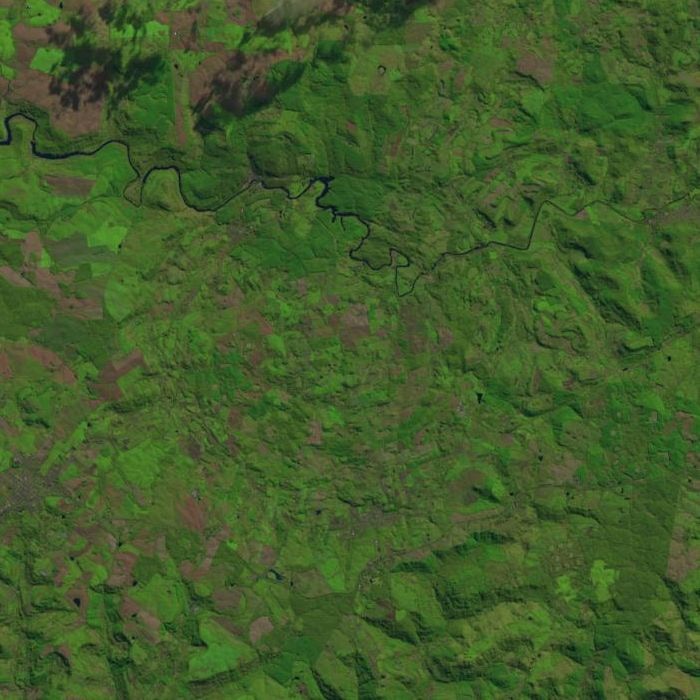
Vargeão Dome is a significant impact crater located in Santa Catarina, Brazil, with a near-perfectly circular depression spanning 12 kilometers in diameter. Formed approximately 123 million years ago during the Cretaceous period, its impact origin is confirmed by geological evidence such as shatter cones and shocked quartz.
Key Facts
- ›Diameter: 12 kilometers (7.5 MI)
- ›Age: Approximately 123 ± 2 million years old
- ›Geological Period: Cretaceous
- ›Location: Santa Catarina, Brazil
- ›Discovery: Identified as an impact crater in 1982
- ›Morphology: Circular depression with concentric rings, radial faults, and an eroded central bulge
Vista Alegre Crater
Shocked Quartz, Maskelynite Glass
About Vargeao Dome
Vargeão Dome: A Cretaceous Impact Scar in Brazil
Vargeão Dome is a prominent impact crater located in the state of Santa Catarina, Brazil. This nearly perfectly circular depression spans 12 kilometers in diameter and plunges up to 225 meters below its rim. The impact event that formed Vargeão Dome occurred approximately 123 million years ago, during the Cretaceous period.
Geological Features and Discovery
The meteorite struck the basaltic rocks of the Serra Geral Formation. The resulting crater exhibits a complex structure with multiple concentric rings and radial faults. A notable feature is its eroded central bulge, composed of displaced impact breccias and sandstones that were uplifted significantly. Geological evidence strongly supports its impact origin, including the presence of shatter cones and shocked quartz grains, with maskelynite glass also identified.
The structure was initially identified in radar images by Brazilian geologists in 1978. While early studies in the 1980s proposed volcanic or tectonic origins, Alvaro Crosta and A. Paiva Filho definitively identified it as an impact crater in 1982. Subsequent research confirmed the presence of key impact indicators like shocked quartz and maskelynite.
Preservation and Local Awareness
Despite centuries of agricultural activity, with Vargeão's city hall even situated within the crater's southern rim, Vargeão Dome remains remarkably well-preserved. The local population is notably aware of the crater's extraterrestrial origins, so much so that the town of Vargeão proudly bears the nickname 'Meteor City'.
Source: Wikipedia ↗
Frequently Asked Questions
Where is Vargeão Dome located?
Vargeão Dome is situated in Santa Catarina, Brazil. It straddles the municipalities of Vargeão, Faxinal dos Guedes, and Passos Maia.
How large is Vargeão Dome?
The impact crater has a diameter of approximately 12 kilometers (7.5 miles). It is a deep depression, measuring up to 225 meters (738 ft) relative to its rim.
When was Vargeão Dome formed?
The Vargeão Dome impact event occurred around 123 ± 2 million years ago, during the Cretaceous geological period.
What evidence confirms Vargeão Dome as an impact crater?
The impact origin is supported by the presence of shatter cones, shocked quartz grains, and maskelynite glass found at the site. The structure itself, with its concentric rings and radial faults, is also indicative of an impact.
Has Vargeão Dome been significantly altered by erosion?
Despite extensive farming in the area since the late 19th century, Vargeão Dome is considered to be still well-preserved. The local population is aware of its impact origin, with the town of Vargeão even nicknamed 'Meteor City'.
Related Impact Craters

Gosses Bluff
Gosses Bluff is the eroded remnant of a significant impact crater located in Australia's southern Northern Territory. Estimated to have formed around 142.5 million years ago from an asteroid or comet impact, its original 22 km diameter rim is now gone, leaving a 5 km wide central uplift structure. Known as Tnorala to the Western Arrernte people, it holds deep cultural and spiritual significance.
Manson
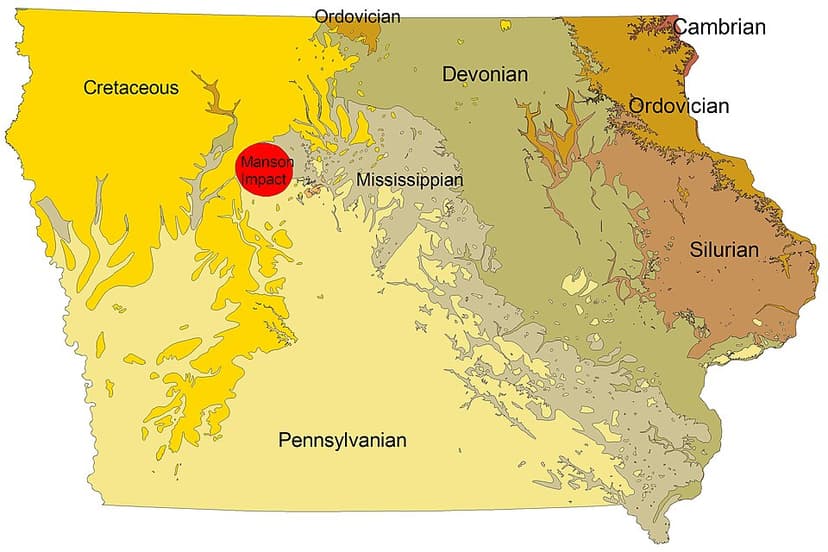
The Manson impact structure is a large, buried impact crater in Iowa, formed approximately 74 million years ago by an asteroid or comet. Despite its significant size and historical consideration for a role in the dinosaur extinction, its surface evidence is obscured by glacial till, making it a hidden geological feature.
Deep Bay
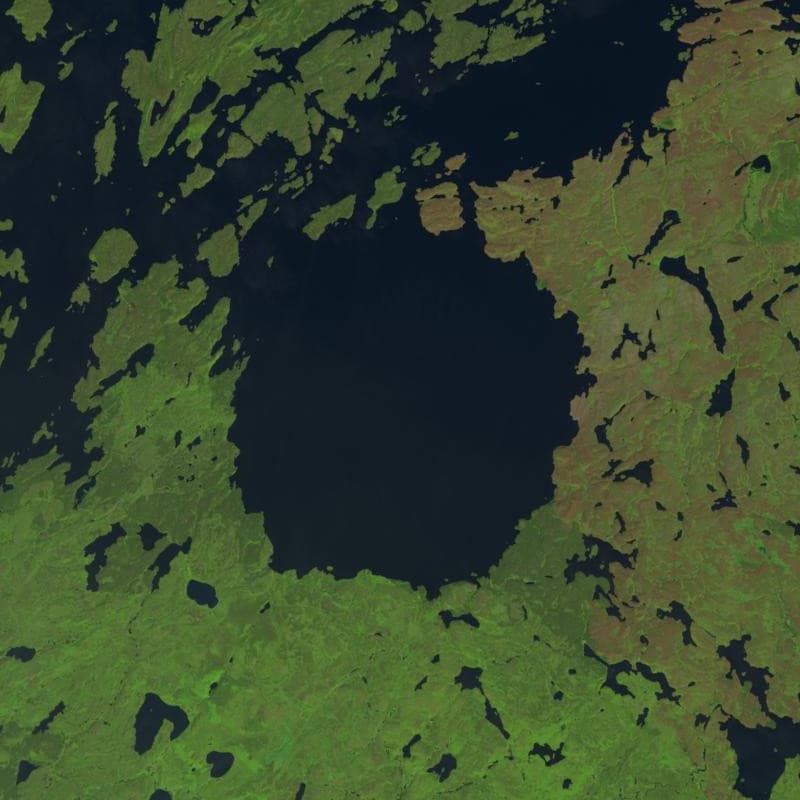
Deep Bay is a remarkably circular and deep bay located near the southwestern tip of Reindeer Lake in Saskatchewan, Canada. It is the deepest body of water in the province and was formed by a 13 km wide impact crater estimated to be 99 ± 4 million years old.