
Decaturville
The Decaturville crater, also known as the Decaturville Dome, is an impact structure located near Decaturville, Missouri. It is part of a series of geophysical features hypothesized to be remnants of an ancient serial impact event. The crater is notable for its size and its exposure at the surface, allowing for geological study of the impact's effects.
Key Facts
- ›Diameter: 6 kilometers (3.7 miles).
- ›Age: less than 300 million years old, dating to the Permian or younger.
- ›Location: near Decaturville, Missouri, United States.
- ›Discovery: First described and mapped in detail in the 1970s by T. W. Offield and H. a. Pohn.
- ›Visibility: Exposed at the surface.
- ›Geophysical context: Part of the 38th parallel structures.
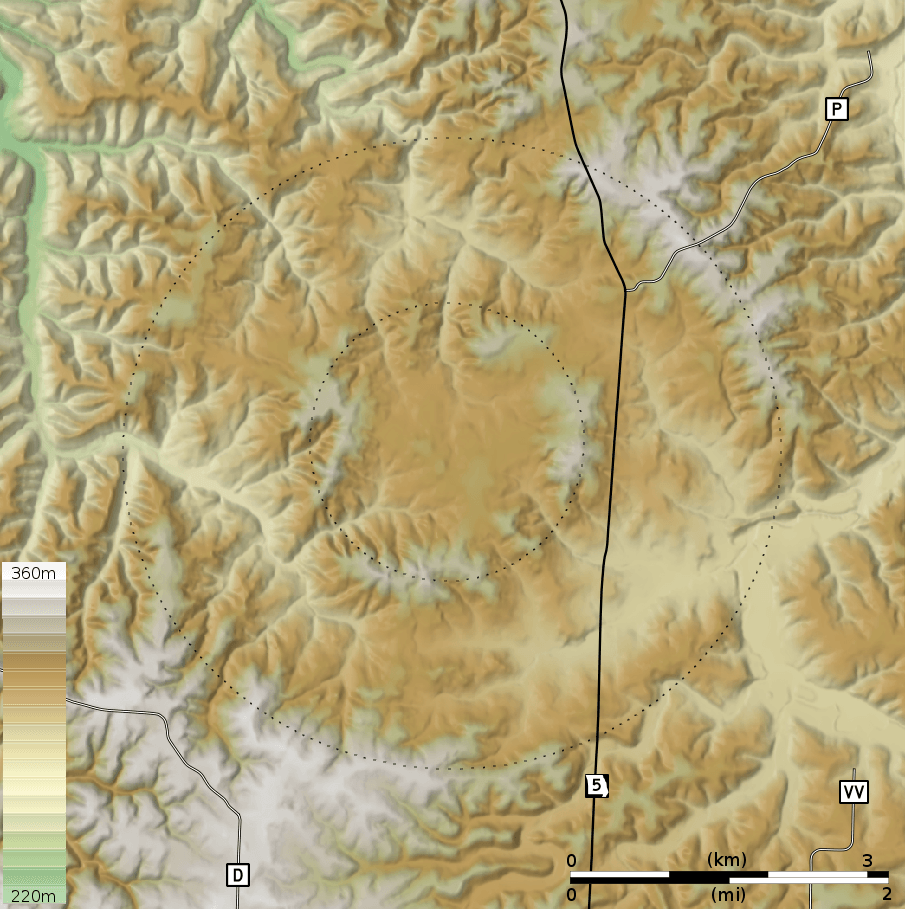
38th Parallel Structures
About Decaturville
Decaturville Crater
The Decaturville crater, also known as the Decaturville Dome, is an impact structure located near the town of Decaturville, Missouri, United States. It is recognized as one of the 38th parallel structures, a group of circular geophysical features across the central United States that have been theorized as the remnants of an ancient, serial impact event.
Description and Discovery
The crater spans approximately 6 kilometers (3.7 miles) in diameter and is estimated to be less than 300 million years old, dating from the Permian period or later. Crucially, the Decaturville crater is exposed at the surface, making its geological features readily accessible for study. The impact's effects on the surrounding bedrock are evident in a roadcut found along Highway 5, located about 16 miles north of Lebanon. The initial detailed description and mapping of the crater were conducted in the 1970s by T. W. Offield and H. A. Pohn under NASA funding, with their comprehensive findings published in a 1979 U.S. Geological Survey Professional Paper, which remains the most detailed account of the structure to date.
Source: Wikipedia ↗
Frequently Asked Questions
What is the Decaturville crater?
The Decaturville crater, also known as the Decaturville Dome, is an impact structure located in Missouri, United States. It is a circular geophysical feature believed to be the remnant of a celestial impact.
How large is the Decaturville crater?
The Decaturville crater has an estimated diameter of 6 kilometers (3.7 miles). Its exposed nature allows for direct measurement and study of its dimensions.
How old is the Decaturville crater?
The impact event that formed the Decaturville crater is estimated to be less than 300 million years old. This places its formation within the Permian geological period or later.
Where is the Decaturville crater located?
The crater is situated near the town of Decaturville in Missouri, United States. Its effects are observable in a roadcut along Highway 5, approximately 16 miles north of Lebanon.
Who discovered the Decaturville crater?
The Decaturville crater was first described and mapped in detail during the 1970s by T. W. Offield and H. A. Pohn. Their findings were reported in a 1979 U.S. Geological Survey Professional Paper.
Related Impact Craters
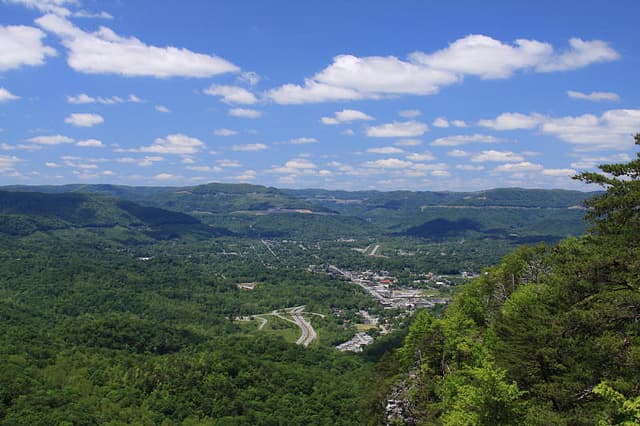
Middlesboro
The Middlesboro crater, also known as an astrobleme, is a meteorite impact structure located in Kentucky, United States, with the city of Middlesboro built within its bounds. Its estimated age is less than 300 million years, and it is notable for being the only known location where coal is mined inside an impact crater.
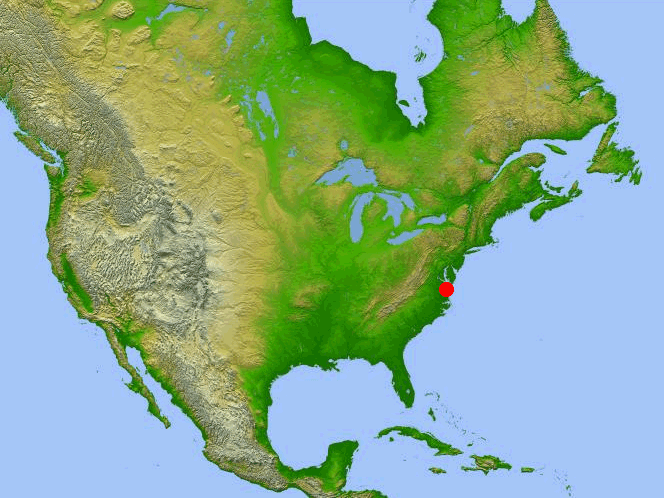
Chesapeake Bay
The Chesapeake Bay impact crater is a large, deeply buried structure located beneath the mouth of the Chesapeake Bay in the United States. Formed by a high-speed bolide impact approximately 35.5 million years ago, it is one of the best-preserved "wet-target" impact craters globally and has significantly influenced the region's geology, including the formation of the Chesapeake Bay itself.

Ames
The Ames crater is a significant buried meteorite impact structure located in Major County, Oklahoma. Discovered in 1991, its geological importance is amplified by the substantial oil and gas reserves found within it, making it one of the largest of several impact craters associated with oil production in the United States.