
Dellen
The Dellen lake system in Hälsingland, Sweden, is a prominent example of an impact crater. Formed approximately 89 million years ago during the Late Cretaceous period, the crater's impact created the unique geological formation known as Dellenite, which is now the provincial rock. The lake system itself is a popular destination for fly-fishermen, particularly for its brown trout population.
Key Facts
- ›The Dellen lake system was formed by an impact crater approximately 89 million years ago.
- ›The impact event occurred during the Late Cretaceous geological period.
- ›The resulting impact crater has a diameter of about 19 kilometers.
- ›The impact created the unique rock Dellenite, which is the provincial rock of Hälsingland.
- ›The asteroid 7704 Dellen is named in honor of this impact structure.
- ›The total surface area of the two lakes (Northern and Southern Dellen) is 130 km2.

Dellenite
About Dellen
Dellen Impact Crater
The Dellen lake system in the province of Hälsingland, Sweden, is a notable impact structure. This vaguely circular lake system was formed by the impact of a celestial body approximately 89 million years ago, during the Late Cretaceous period. The immense energy of this impact created a crater estimated to be about 19 kilometers in diameter and resulted in the formation of a unique rock type known as Dellenite.
Geological Significance
Dellenite, a rock with a composition intermediate between Rhyolite and Dacite, is intrinsically linked to the Dellen impact event and has been recognized as the provincial rock of Hälsingland. The impact crater itself, though significantly eroded and transformed over millions of years, is still discernible as the lake system. The asteroid 7704 Dellen was named in honor of this significant geological feature.
Modern Use and Recreation
Today, the Dellen lake system, comprising Northern Dellen and Southern Dellen, is a popular destination for fly-fishermen, particularly for its abundant population of brown trout. An installation of the Sweden Solar System, representing Pluto and Charon, is located near the southern lake, with its support pillars constructed from dellenite, further highlighting the enduring connection between the local geology and scientific or artistic endeavors.
Source: Wikipedia ↗
Frequently Asked Questions
What is the Dellen lake system?
The Dellen lake system is a collection of two lakes, Northern Dellen and Southern Dellen, located in the province of Hälsingland, Sweden. It is recognized as a significant impact crater formation.
How old is the Dellen impact crater?
The Dellen impact event occurred approximately 89 million years ago. This places the event within the Late Cretaceous geological period.
What is the size of the Dellen impact crater?
The impact crater that formed the Dellen lake system measures about 19 kilometers in diameter. The combined surface area of the two lakes is 130 km2.
What is Dellenite and why is it significant?
Dellenite is a rock type intermediate in composition between Rhyolite and Dacite, formed as a result of the Dellen impact event. It has become the provincial rock of Hälsingland due to its association with the crater.
Is the Dellen impact crater visible today?
The Dellen lake system, formed by the impact crater, is clearly visible on the Earth's surface as a vaguely circular body of water. The surrounding geological features are also a testament to the impact.
What celestial body caused the Dellen impact?
The Dellen impact was caused by an asteroid, as evidenced by the naming of asteroid 7704 Dellen after the crater.
Related Impact Craters
Lappajärvi
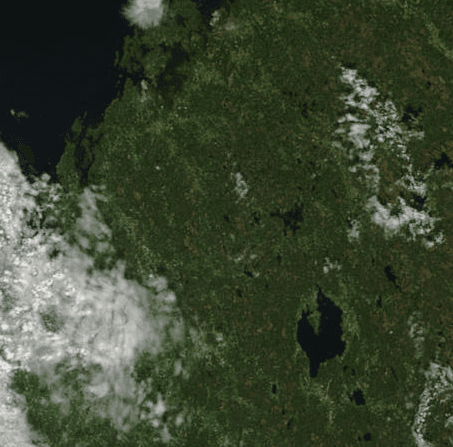
The Lappajärvi impact structure is a large, partly eroded meteorite crater in Finland, now occupied by a lake of the same name. It is one of the largest and youngest impact craters in Finland and is significant for scientific research, including projections for future landscapes. The area has also been recognized with a UNESCO Global Geopark application.

Kara
Kara is a heavily eroded meteorite crater located in the Yugorsky Peninsula, Nenetsia, Russia. While its current diameter is estimated at 65 kilometers, it is believed to have originally been 120 kilometers before significant erosion. The impact event occurred approximately 70.3 million years ago during the Late Cretaceous period.
Wetumpka
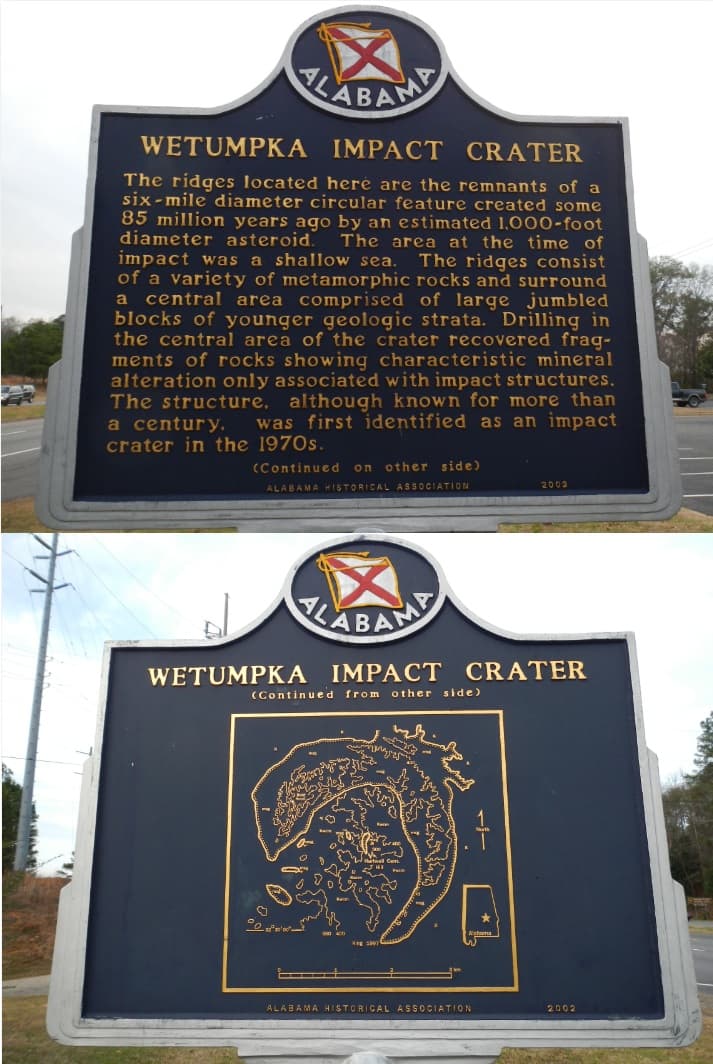
The Wetumpka impact crater is Alabama's sole confirmed impact structure, situated east of downtown Wetumpka in Elmore County. This significant geological feature, measuring 4.7 miles in diameter, is estimated to be approximately 85 million years old, dating back to the Late Cretaceous period. Its discovery and confirmation involved extensive geological mapping and the critical identification of shocked quartz.