
Eltanin impact
The Eltanin impact is a hypothesized asteroid impact that occurred in the eastern South Pacific Ocean approximately 2.51 million years ago, near the Pliocene-Pleistocene boundary. While no physical crater has been discovered, evidence such as an iridium anomaly in sediment cores and jumbled geological layers strongly suggests an extraterrestrial event that likely generated massive tsunamis and may have influenced the onset of the Northern Hemisphere's ice age.
Key Facts
- ›Occurred approximately 2.51 ± 0.07 million years ago, near the Pliocene-Pleistocene boundary.
- ›Estimated asteroid size: 1 to 4 km in diameter.
- ›Impact location: Eastern South Pacific Ocean, north of the Bellingshausen Sea, at a depth of 4-5 km.
- ›Evidence includes iridium anomaly and chaotic sediment deposits.
- ›No physical crater has been discovered.
- ›Likely generated tsunamis hundreds of meters high.

Spinel, Pyroxene
About Eltanin impact
The Eltanin Impact
The Eltanin impact is a hypothesized extraterrestrial impact event that is believed to have occurred in the eastern South Pacific Ocean approximately 2.51 million years ago, near the boundary of the Pliocene and Pleistocene epochs. Evidence for this event comes from scientific investigations of sediment cores collected by the research vessel Eltanin, after which the impact and its suspected bolide are named. The impact site is located in the north of the Bellingshausen Sea, about 1,500 kilometers southwest of Chile, where the ocean floor is between 4 and 5 kilometers deep.
Description and Evidence
No physical crater has been discovered to date, suggesting the impact likely occurred in deep ocean water. The primary evidence supporting the Eltanin impact is a significant anomaly of iridium, an element rare on Earth's surface but common in asteroids, found within sediment cores. Further studies, including those by the vessel Polarstern, revealed chaotic layers of jumbled and redeposited sediments, mixed with melted and fragmented meteorite material. The area near the Freeden Seamounts exhibits a high density of meteorite material, with a significant portion being melted. The disturbed sediment layers, described as a breccia (SU IV), overlaid by sand deposits from turbulently flowing water (SU III), and finally meteorite fragments settling from quiescent water (SU II), all point to a catastrophic event.
The Impactor and Potential Consequences
The celestial body responsible, known as the Eltanin asteroid, is estimated to have been between 1 and 4 kilometers in diameter and traveling at high speed. The size was inferred from the amount of iridium found. Remnants suggest the asteroid's composition was similar to low-metal mesosiderites. The impact itself is theorized to have evaporated approximately 150 cubic kilometers of water, generating colossal tsunami waves potentially hundreds of meters high. Erosional features and chaotic deposits found on Pacific Ocean shorelines, including large boulders mixed with marine fossils, support the occurrence of such megatsunamis. Waves of significant height are calculated to have reached coastlines as far away as Chile, the Antarctic Peninsula, Tasmania, Fiji, Central America, and New Zealand.
Possible Role in Ice Age Initiation
There is speculation that the Eltanin impact may have played a role in triggering the onset of the ice age in the Northern Hemisphere. At the time of the impact, Earth was undergoing a cooling trend. The hypothesized disruption to the atmosphere, including the injection of water and salt, potential damage to ice shelves and the ozone layer, and increased Earth's albedo, could have contributed to the initiation of glaciation.
Source: Wikipedia ↗
Frequently Asked Questions
What is the Eltanin impact?
The Eltanin impact is a hypothesized asteroid impact event believed to have occurred in the eastern South Pacific Ocean around 2.51 million years ago. Evidence suggests it was caused by an asteroid between 1 and 4 km in diameter.
Where did the Eltanin impact occur?
The impact is thought to have taken place in the eastern part of the South Pacific Ocean, specifically at the north edge of the Bellingshausen Sea, approximately 1,500 km southwest of Chile. The ocean floor at this location is about 4 to 5 kilometers deep.
Is there a crater from the Eltanin impact?
No physical crater associated with the Eltanin impact has been discovered. The impact likely occurred in deep ocean water, which would have prevented the formation of a visible crater on the seabed.
What evidence supports the Eltanin impact?
Evidence includes an iridium anomaly found in sediment cores collected by the research vessel Eltanin, which is a strong indicator of extraterrestrial material. Additionally, sediments in the area show chaotic mixing and the presence of melted and fragmented meteorite matter.
What were the consequences of the Eltanin impact?
The impact is estimated to have evaporated a significant amount of water, generating exceptionally large tsunami waves hundreds of meters high. It is also theorized that the disruption to weather patterns could have contributed to the start of the ice cap formation in the Northern Hemisphere.
When did the Eltanin impact occur?
The Eltanin impact is estimated to have occurred around the Pliocene-Pleistocene boundary, approximately 2.51 ± 0.07 million years ago.
Related Impact Craters
Haughton
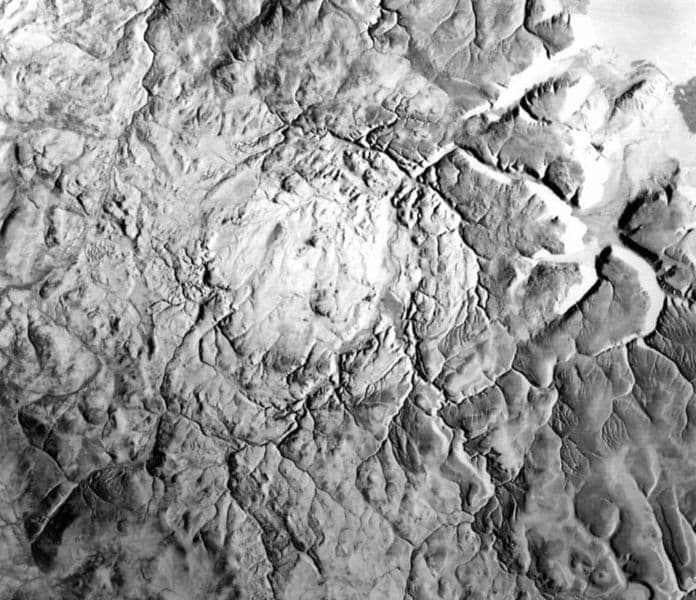
The Haughton impact crater, located on Devon Island in far Northern Canada, is a significant geological site due to its well-preserved features resulting from its high-latitude, cold environment. Formed approximately 31-32 million years ago, it serves as a valuable terrestrial analogue for Martian impact craters, prompting extensive research by space exploration organizations.
Chicxulub
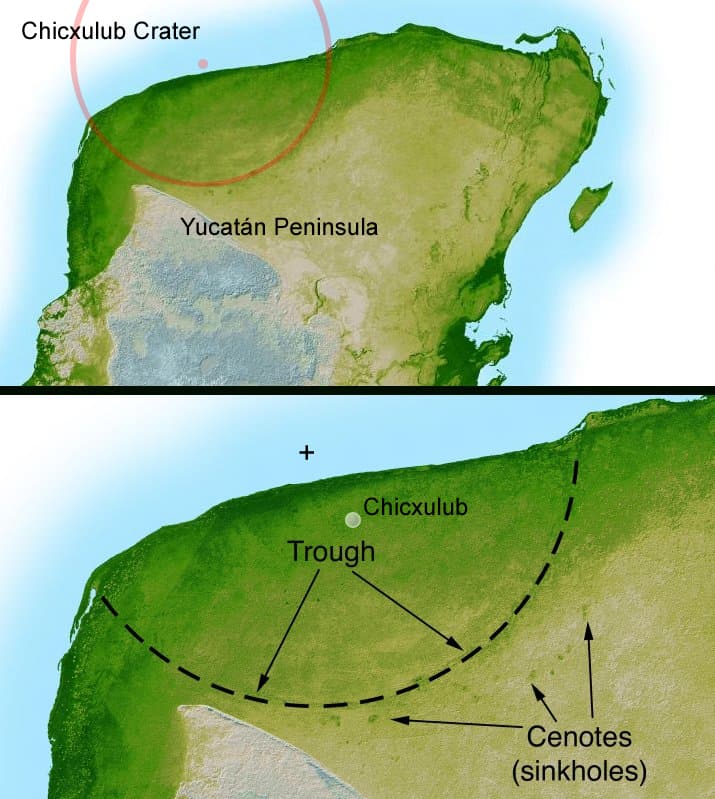
The Chicxulub crater, located beneath the Yucatán Peninsula in Mexico, is a massive impact structure formed approximately 66 million years ago by an asteroid impact. This event is widely recognized as the primary cause of the Cretaceous–Paleogene extinction event, which led to the demise of 75% of Earth's plant and animal species, including the non-avian dinosaurs.

Dellen
The Dellen lake system in Hälsingland, Sweden, is a prominent example of an impact crater. Formed approximately 89 million years ago during the Late Cretaceous period, the crater's impact created the unique geological formation known as Dellenite, which is now the provincial rock. The lake system itself is a popular destination for fly-fishermen, particularly for its brown trout population.