
Flynn Creek
The Flynn Creek crater, located in Jackson County, Tennessee, is a well-preserved impact structure formed approximately 360 million years ago. It is notable for its complex morphology, including a significant central uplift and folded rim strata, and its importance in understanding ancient impact events.
Key Facts
- ›Formed approximately 360 million years ago.
- ›Diameter of 3.8 kilometers (2.4 miles).
- ›Estimated depth of 150 meters (490 feet).
- ›Features a large central hill and deformed rim strata.
- ›Over 2 square kilometers of limestone and dolomite were brecciated.
- ›Considered one of the best-preserved ancient impact structures.

About Flynn Creek
Flynn Creek Crater
Flynn Creek crater is a significant impact structure located in Jackson County, Tennessee, approximately 8 kilometers south of Gainesboro. This complex crater was formed by a celestial impact event roughly 360 million years ago, making it a valuable site for studying ancient geological processes.
Description and Morphology
The crater measures approximately 3.8 kilometers in diameter and was initially about 150 meters deep. Its formation resulted in a complex morphology characterized by a large central hill, highly deformed rim strata, and a substantial breccia lens. The impact brecciated over 2 square kilometers of flat-lying Middle and Upper Paleozoic limestone and dolomite to a depth of 200 meters, with a significant portion of this material being ejected from the site. The central uplift is composed of Middle Ordovician limestone and dolomite that has been structurally raised about 100 meters above its original position, with some Knox group rocks uplifted as much as 250 meters and exhibiting shatter cones. The rim of the crater displays steeply-dipping, folded, and faulted Ordovician limestone, with radial shortening in some folds reaching up to 35% and concentric faulting common.
Preservation and Significance
Despite significant erosion over millions of years, Flynn Creek is considered one of the best-preserved ancient impact structures known. Post-crater erosion removed the ejecta blanket, but the structure was largely preserved by subsequent deposition of shale from the Late Devonian Chattanooga Sea. Later erosion along the Flynn Creek drainage has exposed much of the structure. The site is notable for containing Hawkins Impact Cave, the only known cave found within the central uplift of an impact structure. The geological features present, including the central uplift and folded rim strata, provide crucial insights into the dynamics of complex crater formation and the effects of large-scale impacts on Earth's crust. The presence of conodonts in the crater infill indicates the impact occurred in a marine environment.
Source: Wikipedia ↗
Frequently Asked Questions
When was the Flynn Creek crater formed?
The Flynn Creek crater was formed approximately 360 million years ago. This places the impact event in the Devonian period.
What are the dimensions of the Flynn Creek crater?
The impact crater is about 3.8 kilometers (2.4 miles) in diameter and was initially about 150 meters (490 feet) deep. Significant geological features include a large central hill and brecciated rock.
What geological features are found at the Flynn Creek crater?
The crater exhibits a large central hill formed by uplifted and deformed rock. The rim strata are also highly folded and faulted, with some areas showing thrust blocks and grabens.
How well-preserved is the Flynn Creek crater?
Flynn Creek crater is considered one of the best-preserved ancient impact structures known. Post-impact erosion was minimal, and subsequent deposition of shale further protected the site before later erosion exposed it.
Are there any unique geological discoveries associated with Flynn Creek?
Yes, the Flynn Creek crater is associated with Hawkins Impact Cave, which is the only known cave to occur within the central uplift of an impact structure.
Related Impact Craters

Siljan Ring
The Siljan Ring is a large prehistoric impact structure located in central Sweden, and it is recognized as the largest impact crater in Europe. Formed by a meteorite impact during the Devonian period, the structure has significantly deformed the surrounding bedrock, which is rich in fossils. The area has also been a focus for prospecting for oil and natural gas.
Elbow
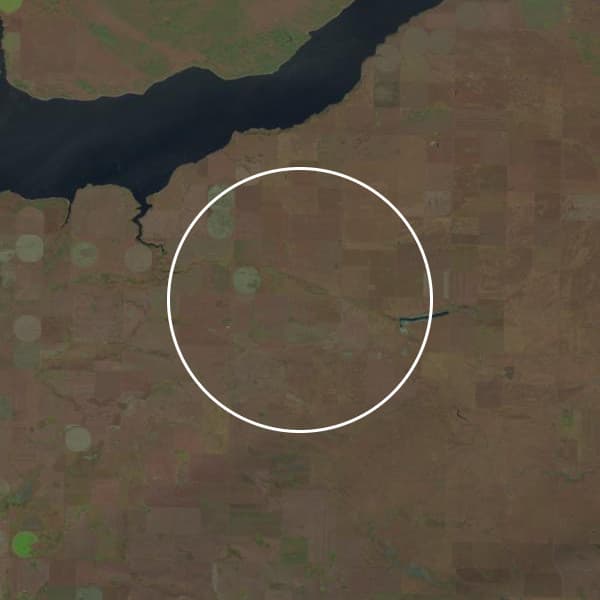
The Elbow crater is a buried impact structure located in Saskatchewan, Canada, measuring 8 kilometers in diameter. Its formation is estimated to have occurred approximately 395 million years ago during the Devonian Period. Although not visible on the surface due to younger sediment cover, its geological significance lies in its undisturbed nature for scientific study.

Nicholson
The Nicholson crater is a meteorite impact structure located in the Northwest Territories of Canada. It measures 12.5 kilometers in diameter and is estimated to be less than 400 million years old, dating back to the Devonian period or earlier. The crater is not visible on the surface due to erosion or burial.