
Nicholson
The Nicholson crater is a meteorite impact structure located in the Northwest Territories of Canada. It measures 12.5 kilometers in diameter and is estimated to be less than 400 million years old, dating back to the Devonian period or earlier. The crater is not visible on the surface due to erosion or burial.
Key Facts

About Nicholson
Nicholson Crater
The Nicholson crater is a significant impact structure located in the Northwest Territories of Canada. It is recognized as a confirmed impact crater with a diameter of 12.5 kilometers (7.8 miles).
Age and Geology
Scientific estimations place the age of the Nicholson crater at less than 400 million years. This timeframe suggests that the impact event occurred during the Devonian geological period or possibly earlier. Despite its considerable size, the crater is not visible on the Earth's surface, indicating that it is either buried beneath subsequent geological deposits or has been substantially eroded over the vast span of time since its formation.
Source: Wikipedia ↗
Frequently Asked Questions
Where is the Nicholson crater located?
The Nicholson crater is situated in the Northwest Territories of Canada. Its exact location is within this vast northern territory.
How large is the Nicholson crater?
The Nicholson crater has a diameter of approximately 12.5 kilometers, which is equivalent to 7.8 miles.
How old is the Nicholson crater?
The age of the Nicholson crater is estimated to be less than 400 million years. This places its formation during the Devonian period or possibly even earlier.
Can you see the Nicholson crater on the surface?
No, the Nicholson crater is not exposed at the Earth's surface. It is likely buried or has been significantly eroded, obscuring its visibility from above.
Related Impact Craters
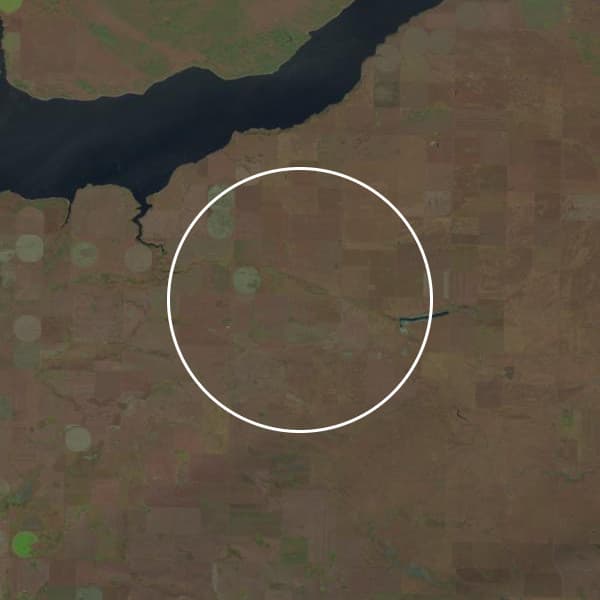
Elbow
The Elbow crater is a buried impact structure located in Saskatchewan, Canada, measuring 8 kilometers in diameter. Its formation is estimated to have occurred approximately 395 million years ago during the Devonian Period. Although not visible on the surface due to younger sediment cover, its geological significance lies in its undisturbed nature for scientific study.

Siljan Ring
The Siljan Ring is a large prehistoric impact structure located in central Sweden, and it is recognized as the largest impact crater in Europe. Formed by a meteorite impact during the Devonian period, the structure has significantly deformed the surrounding bedrock, which is rich in fossils. The area has also been a focus for prospecting for oil and natural gas.

Flynn Creek
The Flynn Creek crater, located in Jackson County, Tennessee, is a well-preserved impact structure formed approximately 360 million years ago. It is notable for its complex morphology, including a significant central uplift and folded rim strata, and its importance in understanding ancient impact events.