
Goat Paddock
Goat Paddock Crater is an ancient meteorite impact structure located in the Kimberley Region of Western Australia. Its interpretation as an impact crater is supported by geological evidence such as breccia, silica glass, shatter cones, and shocked quartz, with its minimum age estimated to be from the Early Eocene based on lake sediments filling the site.
Key Facts
- ›Located 106 km west-southwest of Halls Creek in the Kimberley Region, Western Australia.
- ›Evidence includes breccia with melted rocks, silica glass, shatter cones, and shocked quartz.
- ›Filled with approximately 200 meters of ancient lake sediments containing Early Eocene pollen.
- ›Minimum age estimated to be from the Early Eocene geological period.
- ›Slightly elongated in a north-south direction, suggesting a low-angle impact from the north or south.
- ›Situated in a range of gently dipping Proterozoic sandstone.

Silica Glass, Shocked Quartz
About Goat Paddock
Goat Paddock Crater
Goat Paddock Crater is a recognized impact structure situated in the Kimberley Region of northern Western Australia. It lies within an area characterized by gently dipping Proterozoic sandstone, approximately 106 kilometers west-southwest of Halls Creek. The interpretation of this geological feature as an ancient meteorite impact crater is substantiated by several key pieces of evidence.
Geological Evidence
Scientists have identified breccia containing melted rocks, silica glass, shatter cones, and shocked quartz at the site. These materials are strong indicators of the immense pressures and temperatures generated by a hypervelocity impact event. The presence of these diagnostic features confirms its classification as an impact crater.
Age and Sediments
Further investigation through drilling has revealed that the crater is filled with approximately 200 meters of ancient lake sediments. Analysis of pollen found within these sediments has dated them to the Early Eocene period. This dating provides a minimum age for the Goat Paddock Crater, suggesting the impact occurred no earlier than this geological epoch.
Morphology
The crater's shape is not perfectly circular; rather, it exhibits a slight elongation in a north-south direction. This asymmetry is interpreted to suggest that the impacting celestial body struck the Earth at a low angle, with the trajectory originating from either the north or the south.
Source: Wikipedia ↗
Frequently Asked Questions
Where is Goat Paddock Crater located?
Goat Paddock Crater is situated in the Kimberley Region of northern Western Australia. It is approximately 106 kilometers west-southwest of Halls Creek.
What geological evidence supports Goat Paddock being an impact crater?
The interpretation of Goat Paddock as an impact crater is supported by several geological features. These include breccia containing melted rocks, silica glass, shatter cones, and shocked quartz, all indicative of a high-energy impact event.
How old is Goat Paddock Crater?
The crater is filled with about 200 meters of ancient lake sediments. These sediments contain pollen dated to the Early Eocene, which provides a minimum estimate for the age of the Goat Paddock Crater itself.
What is the shape of the Goat Paddock Crater?
The crater is not perfectly circular but is slightly elongated in a north-south direction. This shape suggests that the celestial projectile struck the Earth at a low angle, likely from either the north or the south.
Related Impact Craters
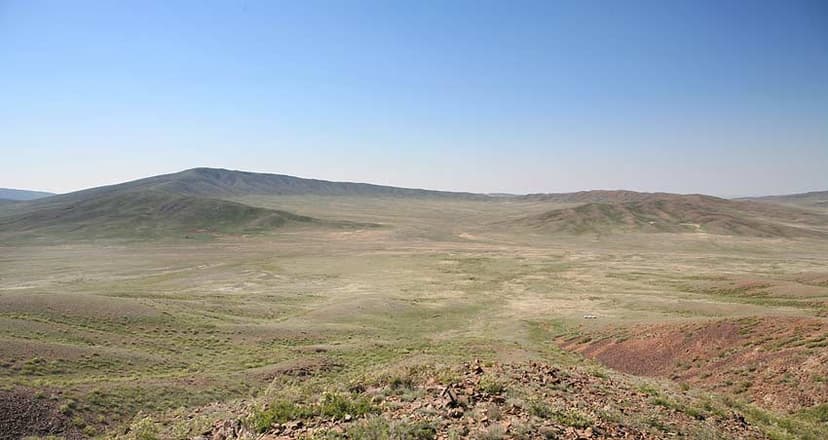
Shunak
Shunak is a meteorite impact crater located in the Qaraghandy Province of Kazakhstan. With a diameter of 2.8 kilometers, its age is estimated to be between 35 and 55 million years, dating back to the Eocene epoch. The crater is currently exposed on the Earth's surface.
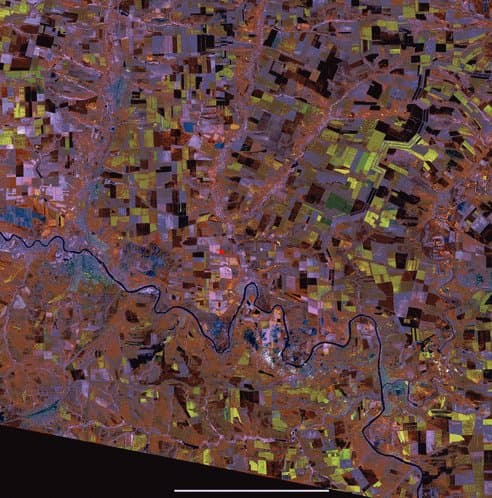
Kamensk
The Kamensk crater is a significant impact structure located in Rostov Oblast, Russia, approximately 10 to 15 kilometers north of Kamensk-Shakhtinsky town. With a diameter of 25 kilometers, its age is estimated to be around 49 million years old, dating back to the Eocene epoch. The crater is notable for being buried beneath the surface, making it invisible from ground level.
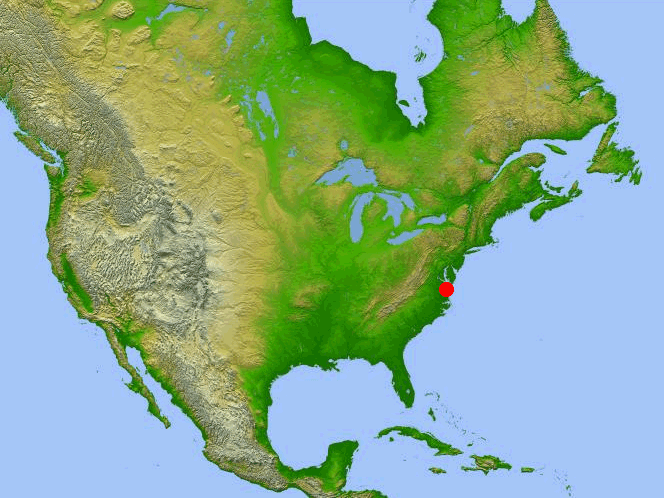
Chesapeake Bay
The Chesapeake Bay impact crater is a large, deeply buried structure located beneath the mouth of the Chesapeake Bay in the United States. Formed by a high-speed bolide impact approximately 35.5 million years ago, it is one of the best-preserved "wet-target" impact craters globally and has significantly influenced the region's geology, including the formation of the Chesapeake Bay itself.