
Gweni-Fada
Gweni-Fada Crater is an eroded impact structure located in the Ennedi Plateau of Chad. First identified in aerial photographs in the 1950s, its impact origin was later supported by evidence of shock metamorphism found in collected rock samples. The crater exhibits a complex morphology with an outer depression and an inner rugged terrain.
Key Facts
- ›Located in the Ennedi Plateau, Chad.
- ›Estimated age is less than 345 million years (Carboniferous).
- ›Diameter of the broad depression is approximately 12 km.
- ›The inner complex zone has a diameter of approximately 10 km.
- ›The structure is deeply eroded, with an elevated outer ring on the northern side.
- ›Discovery was first noted in IGN maps and aerial photographs in the 1950s.

Aorounga Crater
About Gweni-Fada
Gweni-Fada Crater
The Gweni-Fada Crater is an impact structure situated in the Ennedi Plateau region of Chad. First identified in the 1950s through aerial photographs and maps by Alain Beauvilain, the site later provided evidence of shock metamorphism, supporting its classification as an impact crater. This evidence was gathered by a team of French geologists in April 1995.
Geological Features
The Gweni-Fada structure is characterized by its deeply eroded state and asymmetric form. It features a broad depression, approximately 12 kilometers in diameter, which encircles about two-thirds of the inner complex zone. On the northern side, an elevated outer ring of outward-dipping sandstones surrounds this depression. The inner zone, measuring around 10 kilometers in diameter, consists of rugged terrain with hills that may be remnants of a central uplift.
Age and Significance
The age of the Gweni-Fada Crater is estimated to be less than 345 million years, dating its formation to the Carboniferous period. Its significant erosion, which has led to the disappearance of its impactite cover, indicates it is older than the nearby Aorounga Crater. The structure's geological characteristics and the evidence of shock metamorphism make it a site of interest for studying impact events on Earth.
Source: Wikipedia ↗
Frequently Asked Questions
Where is the Gweni-Fada Crater located?
The Gweni-Fada Crater is situated in the Ennedi Plateau region of Chad, Central Africa. Its approximate center is at 17°25′N and 21°45′E.
How large is the Gweni-Fada Crater?
The crater is characterized by a broad depression that measures about 12 kilometers in diameter, encircling about two-thirds of the inner complex zone. The inner zone itself is approximately 10 kilometers in diameter and features rugged terrain.
When was the Gweni-Fada Crater discovered?
The Gweni-Fada structure was first observed on maps and aerial photographs by Alain Beauvilain in the 1950s. Scientific investigation confirming evidence of impact occurred in April 1995.
What is the estimated age of the Gweni-Fada Crater?
The age of the Gweni-Fada Crater is estimated to be less than 345 million years, placing its formation within the Carboniferous period. It is considered older than the Aorounga Crater due to its more significant erosion.
What evidence confirms Gweni-Fada as an impact crater?
Evidence of shock metamorphism found within rock samples collected from the structure provides support for its impact origin. The crater's morphology, with distinct inner and outer zones, is also characteristic of impact events.
Related Impact Craters

Aorounga Central
Aorounga Crater is an impact structure located in northern Chad, characterized by a multi-ring morphology and an estimated age of less than 345 million years. Its geological investigation has revealed shock metamorphic effects, confirming its extraterrestrial impact origin and making it a site of significant scientific interest for understanding impact processes.
Chesapeake Bay
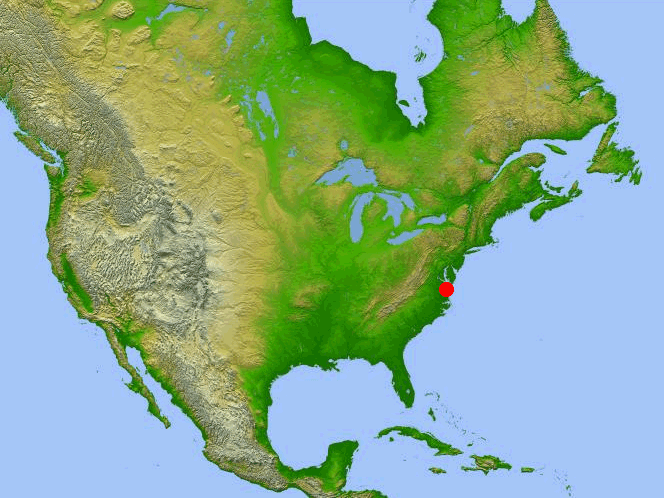
The Chesapeake Bay impact crater is a large, deeply buried structure located beneath the mouth of the Chesapeake Bay in the United States. Formed by a high-speed bolide impact approximately 35.5 million years ago, it is one of the best-preserved "wet-target" impact craters globally and has significantly influenced the region's geology, including the formation of the Chesapeake Bay itself.

Shoemaker
The Shoemaker impact structure, formerly known as Teague Ring, is the eroded remnant of a significant impact crater located in central Western Australia. Named in honor of planetary geologist Eugene Shoemaker, its prominent ring-like feature is visible in satellite imagery and lies on the boundary of the Earaheedy Basin and the Yilgarn craton.