
Jabel Waqf as Suwwan
The Jabel Waqf as Suwwan crater is a significant impact structure located in Jordan's Ma'an Governorate, near the Saudi Arabian border. This exposed crater, measuring 5.5 kilometers in diameter, is estimated to be between 37 and 56 million years old, providing valuable insights into Earth's impact history.
Key Facts
- ›Diameter: 5.5 kilometers (3.4 miles).
- ›Estimated age: 37–56 million years old.
- ›Location: Ma'an Governorate, Jordan, near the Saudi border.
- ›Discovered and proposed in 2006 by geologists Elias Salameh, Hani N. Khoury, and Werner Schneider.
- ›The bolide is estimated to have been 100 meters in diameter.
- ›It is exposed at the surface, making it visible.
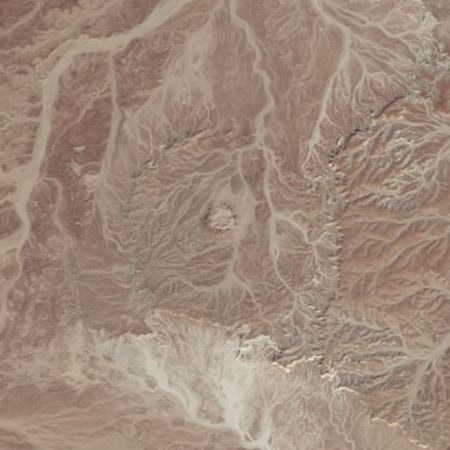
About Jabel Waqf as Suwwan
The Jabel Waqf as Suwwan crater is an impact structure located in Jordan's Ma'an Governorate, near the border with Saudi Arabia. This significant geological feature is exposed at the surface and measures approximately 5.5 kilometers (3.4 miles) in diameter.
Age and Origin
Scientific estimates place the age of the Jabel Waqf as Suwwan crater between 37 and 56 million years old. Geologists Elias Salameh and Hani N. Khoury, along with German professor Werner Schneider, proposed its identification as an impact crater in 2006. They further suggested that the celestial body, or bolide, responsible for the impact was likely around 100 meters in diameter and traveled at an impact velocity of 40–50 km/s.
Source: Wikipedia ↗
Frequently Asked Questions
Where is the Jabel Waqf as Suwwan crater located?
The Jabel Waqf as Suwwan crater is situated in the Ma'an Governorate of Jordan, close to the border with Saudi Arabia.
How large is the Jabel Waqf as Suwwan crater?
The crater has a diameter of approximately 5.5 kilometers, which is equivalent to about 3.4 miles.
What is the estimated age of the Jabel Waqf as Suwwan crater?
Scientists estimate that the Jabel Waqf as Suwwan crater is between 37 and 56 million years old.
Who discovered the Jabel Waqf as Suwwan crater?
The crater was proposed in 2006 by geologists Elias Salameh and Hani N. Khoury from the University of Jordan, in collaboration with German professor Werner Schneider.
What is the suspected size of the object that created the Jabel Waqf as Suwwan crater?
Professor Salameh has estimated that the celestial body, or bolide, responsible for the impact was about 100 meters in diameter and struck with a velocity of 40–50 km/s.
Related Impact Craters
Haughton
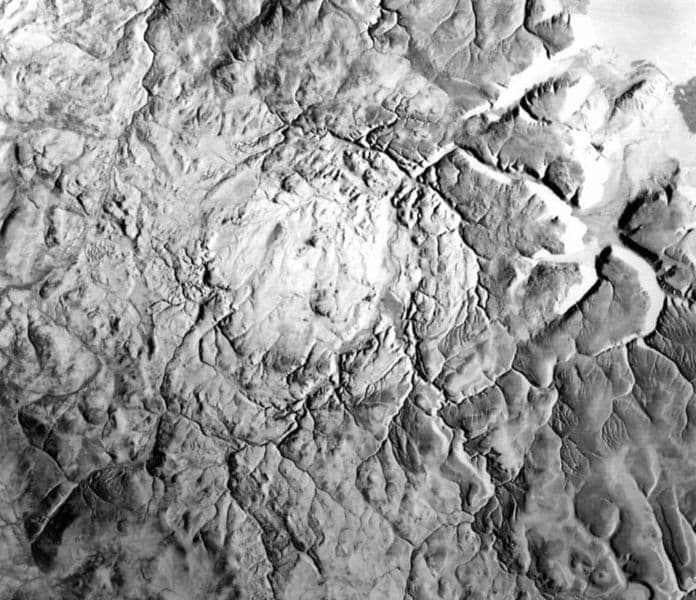
The Haughton impact crater, located on Devon Island in far Northern Canada, is a significant geological site due to its well-preserved features resulting from its high-latitude, cold environment. Formed approximately 31-32 million years ago, it serves as a valuable terrestrial analogue for Martian impact craters, prompting extensive research by space exploration organizations.
Chicxulub
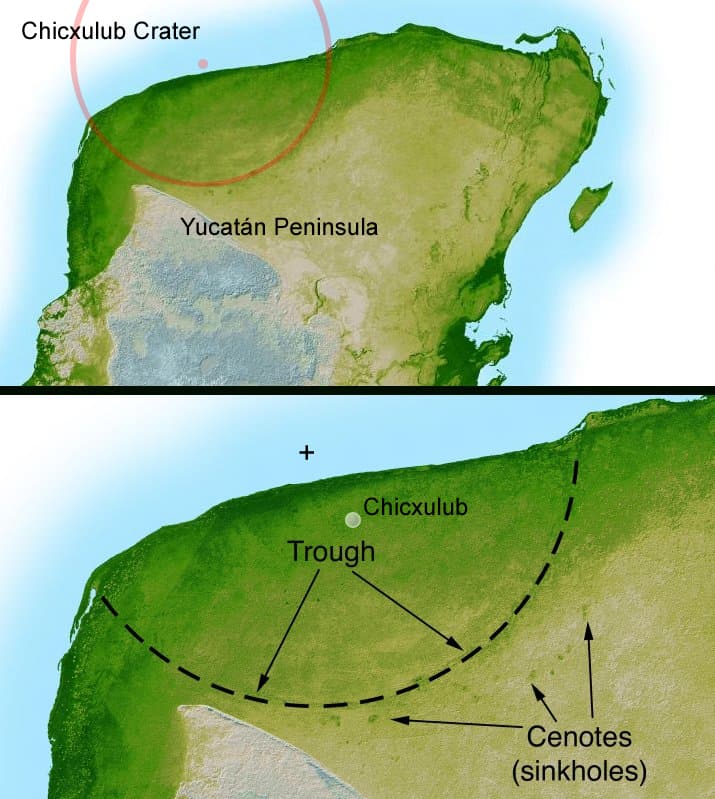
The Chicxulub crater, located beneath the Yucatán Peninsula in Mexico, is a massive impact structure formed approximately 66 million years ago by an asteroid impact. This event is widely recognized as the primary cause of the Cretaceous–Paleogene extinction event, which led to the demise of 75% of Earth's plant and animal species, including the non-avian dinosaurs.

Dellen
The Dellen lake system in Hälsingland, Sweden, is a prominent example of an impact crater. Formed approximately 89 million years ago during the Late Cretaceous period, the crater's impact created the unique geological formation known as Dellenite, which is now the provincial rock. The lake system itself is a popular destination for fly-fishermen, particularly for its brown trout population.