
Karikkoselkä
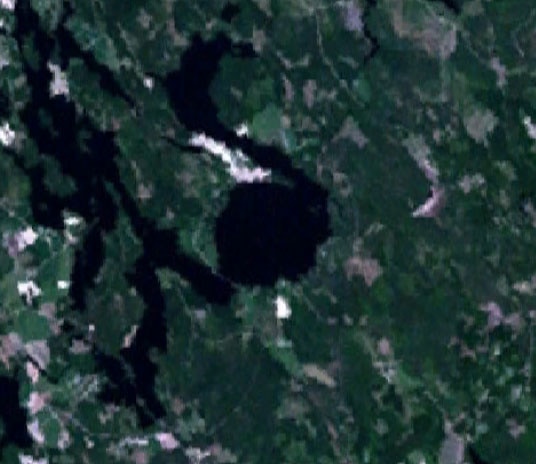
Karikkoselkä is a lake situated within an impact crater in Petäjävesi, Finland. It is notable for its unusually round shape, a characteristic that distinguishes it from the glacially-formed elongated lakes common in the region. Evidence such as shatter cones, magnetic anomalies, and deep drilling samples confirm its impact origin, making it the smallest identified impact crater in Finland.
Key Facts
- ›Diameter: 1.4 km
- ›Depth: 150 m (crater depth)
- ›Age: Estimated between 230 and 450 million years old, most likely around 240 million years.
- ›Location: Petäjävesi, Central Finland.
- ›Morphology: Circular impact crater.
- ›Confirmed impact origin through geological evidence.
Keurusselkä
Shatter Cones
About Karikkoselkä
Karikkoselkä Impact Crater
Karikkoselkä is an impact crater located in Petäjävesi, in the Central Finland region. It is distinguished by its remarkably round shape, a feature that sets it apart from the typically elongated lakes formed by glaciation in the surrounding area. The crater is the smallest identified impact structure in Finland, with a diameter of 1.4 kilometers and an original depth of 150 meters. The lake that now occupies the crater has a maximum depth of 26 meters due to sedimentation.
Geological Significance and Confirmation
The impact origin of Karikkoselkä is well-established through multiple lines of geological evidence. Numerous shatter cones, rock formations indicative of extreme impact pressures, have been discovered in the vicinity of the lake. Aeromagnetic maps reveal a distinct magnetic anomaly within the crater area, further supporting an impact event. Scientific confirmation has also been obtained from samples collected during deep drilling operations into the lake bed.
Age and Geological Context
Karikkoselkä is estimated to be between 230 and 450 million years old, with the most probable age being around 240 million years. This places the impact event during the Triassic period, or potentially earlier. The bedrock in the region, part of the Central Finland Granite Complex, formed much earlier, in the late Paleoproterozoic era, approximately 1.88 billion years ago. Some sources have mistakenly attributed a much younger, geologically improbable age of 1.88 million years, likely a misinterpretation of the bedrock formation age.
Archaeological Interest
Evidence of a Neolithic settlement has been found on the southern shore of Karikkoselkä. While a commemorative plate marks the site, no excavations have yet been conducted, and the precise age and nature of this ancient settlement remain undetermined.
Source: Wikipedia ↗
Frequently Asked Questions
What is Karikkoselkä?
Karikkoselkä is a lake that has formed within an impact crater. It is located in Petäjävesi, in the Central Finland region.
How was the impact origin of Karikkoselkä confirmed?
The impact origin is confirmed by several lines of evidence, including the discovery of shatter cones around the lake, a clear magnetic anomaly detected on aeromagnetic maps of the area, and samples from deep drillings into the lake bottom.
How old is the Karikkoselkä impact crater?
The crater is estimated to be between 230 and 450 million years old. The most likely age is around 240 million years, placing the impact event in the Triassic period or earlier.
What is the size of the Karikkoselkä impact crater?
Karikkoselkä is the smallest identified impact crater in Finland, measuring 1.4 kilometers in diameter. The crater itself has a depth of 150 meters, although the lake has a maximum depth of 26 meters due to sedimentation.
Are there any human settlements associated with Karikkoselkä?
Evidence of a Neolithic settlement has been found on the southern shore of the lake. However, no excavations have been conducted, and the age of this settlement remains unknown.
Related Impact Craters

Serra da Cangalha
Serra da Cangalha is a significant impact crater located in Tocantins, Brazil, measuring between 12 and 13 kilometers in diameter. It is the second-largest known crater in Brazil and was formed approximately 220 million years ago during the Triassic period. The crater's name translates to "Pack-Saddle Mountains" in Portuguese, referencing its distinctive topography.
Gow
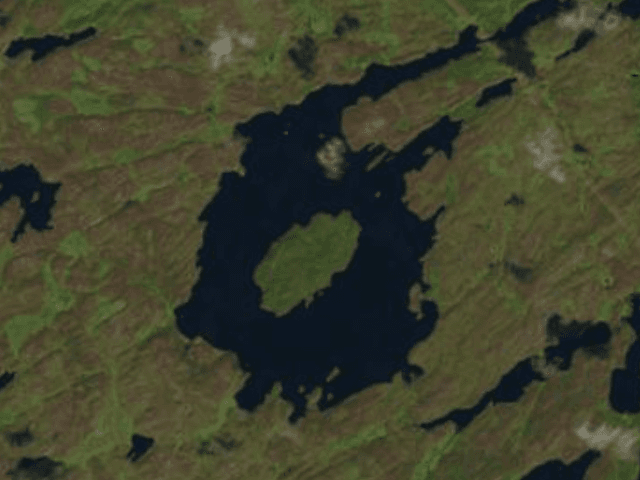
Gow Crater is a 5-kilometer wide impact structure located in Saskatchewan, Canada, estimated to be less than 250 million years old. It is notable for its classic crater lake, Gow Lake, which features a central island, Calder Island, formed by the uplifted center of the impact. Gow Crater is significant as the smallest known Canadian crater with an uplift structure and the only preserved example of a transitional impact structure on Earth.
Lappajärvi
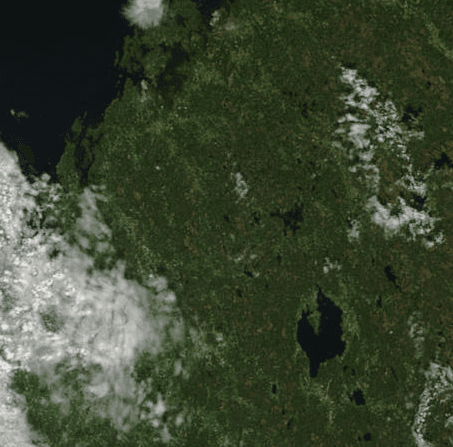
The Lappajärvi impact structure is a large, partly eroded meteorite crater in Finland, now occupied by a lake of the same name. It is one of the largest and youngest impact craters in Finland and is significant for scientific research, including projections for future landscapes. The area has also been recognized with a UNESCO Global Geopark application.