
Gow
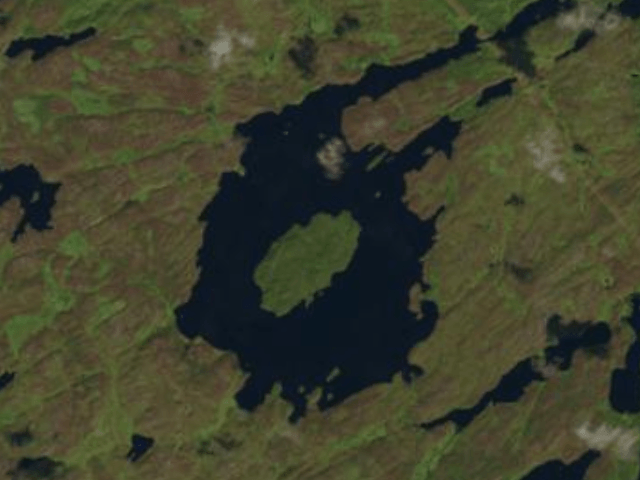
Gow Crater is a 5-kilometer wide impact structure located in Saskatchewan, Canada, estimated to be less than 250 million years old. It is notable for its classic crater lake, Gow Lake, which features a central island, Calder Island, formed by the uplifted center of the impact. Gow Crater is significant as the smallest known Canadian crater with an uplift structure and the only preserved example of a transitional impact structure on Earth.
Key Facts
- ›Diameter: 5 kilometers (3 miles)
- ›Age: less than 250 million years (Triassic or later)
- ›Location: Saskatchewan, Canada
- ›Geological feature: Contains Gow Lake and Calder Island
- ›Significance: Smallest known Canadian crater with an uplift structure
- ›Unique morphology: Preserved example of a transitional impact structure
Deep Bay Crater, Carswell Impact Structure
About Gow
Gow Crater
Gow Crater is an impact structure located in Saskatchewan, Canada, with a diameter of approximately 5 kilometers. Its age is estimated to be less than 250 million years, placing the impact event in the Triassic period or later. The crater is distinguished by Gow Lake, a classic crater lake that occupies its basin, and Calder Island, a central landmass formed by the impact's uplift.
Geological Significance
Gow Crater holds particular importance as the smallest known impact crater in Canada that exhibits a central uplift structure. Furthermore, it is recognized as the sole preserved example on Earth of a "transitional impact structure." This unique morphology is defined by crater walls that are relatively smooth, with a floor partially or entirely covered by debris that has slumped from the sides. The rock composing the crater bed is a unique form of breccia, created when terrestrial rock was liquefied by the intense heat and pressure of the meteor impact, a composition found nowhere else on the planet.
Naming and Context
The crater and the lake it contains are named in memory of James Richard Gow, who lost his life in action during World War II on April 25, 1945. Gow Crater is geographically situated in proximity to other significant impact structures. The larger Deep Bay crater lies about 90 kilometers to the east, and the Carswell impact structure is located to the northwest.
Source: Wikipedia ↗
Frequently Asked Questions
Where is Gow Crater located?
Gow Crater is situated in Saskatchewan, Canada. It is part of the geological landscape of the province.
How large is Gow Crater?
The impact crater itself has a diameter of approximately 5 kilometers (3 miles). The lake that fills it, Gow Lake, has a surface area of about 1,744.4 hectares.
When did the impact event that formed Gow Crater occur?
The age of Gow Crater is estimated to be less than 250 million years. This places the impact event within the Triassic period or later.
What is unique about Gow Crater's structure?
Gow Crater is considered the only preserved example of a transitional impact structure on Earth. This type of structure is characterized by relatively smooth walls and a floor partly or completely covered by slumped debris.
What is Calder Island?
Calder Island is a landmass located at the center of Gow Lake, which fills the Gow Crater. It was formed by the central uplift that occurred during the impact event.
Who is Gow Crater named after?
The crater, and by extension the lake within it, is named in honor of James Richard Gow. He was a soldier killed in action during World War II on April 25, 1945.
Related Impact Craters

Serra da Cangalha
Serra da Cangalha is a significant impact crater located in Tocantins, Brazil, measuring between 12 and 13 kilometers in diameter. It is the second-largest known crater in Brazil and was formed approximately 220 million years ago during the Triassic period. The crater's name translates to "Pack-Saddle Mountains" in Portuguese, referencing its distinctive topography.
Karikkoselkä
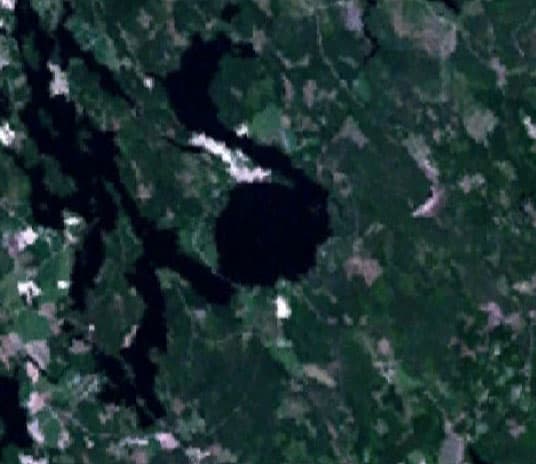
Karikkoselkä is a lake situated within an impact crater in Petäjävesi, Finland. It is notable for its unusually round shape, a characteristic that distinguishes it from the glacially-formed elongated lakes common in the region. Evidence such as shatter cones, magnetic anomalies, and deep drilling samples confirm its impact origin, making it the smallest identified impact crater in Finland.
Haughton
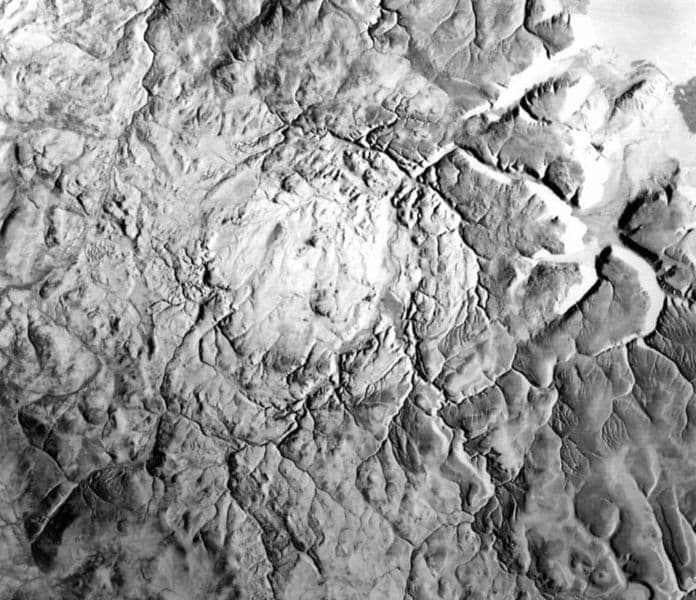
The Haughton impact crater, located on Devon Island in far Northern Canada, is a significant geological site due to its well-preserved features resulting from its high-latitude, cold environment. Formed approximately 31-32 million years ago, it serves as a valuable terrestrial analogue for Martian impact craters, prompting extensive research by space exploration organizations.