
Luizi
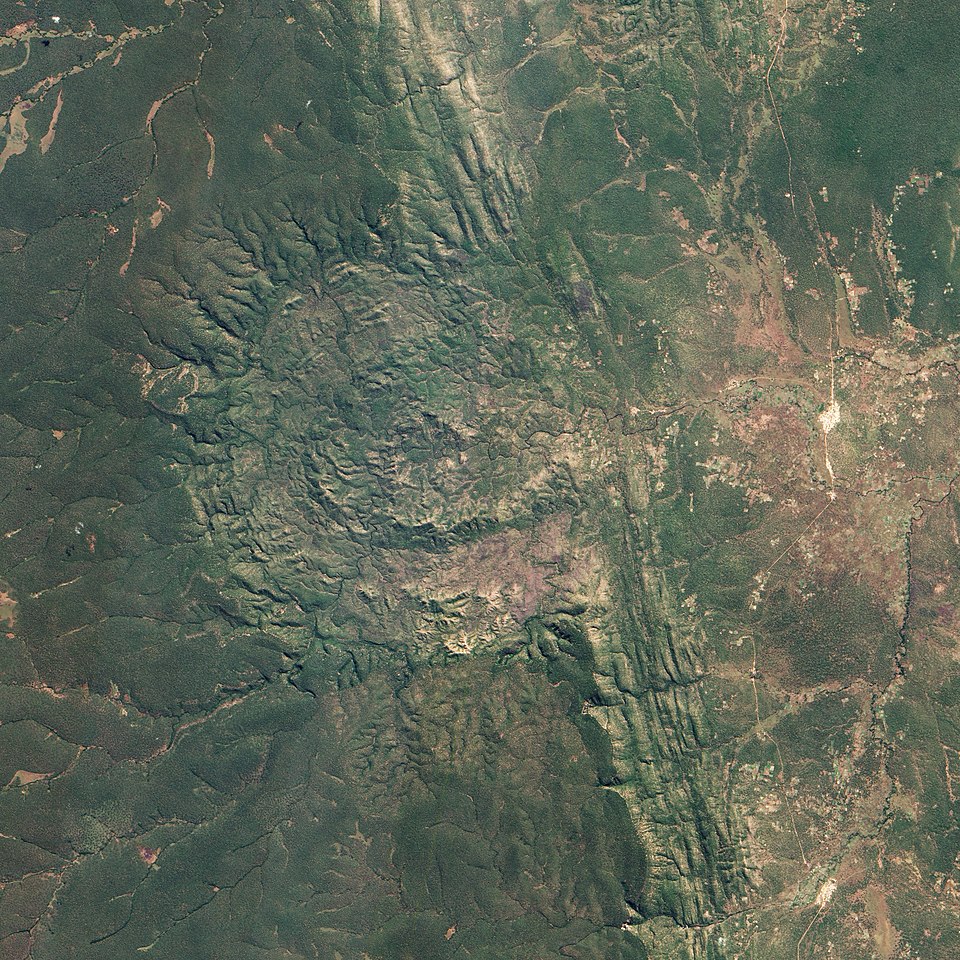
The Luizi impact structure is a confirmed meteorite impact crater located on the Kundelungu Plateau in the Democratic Republic of the Congo. Approximately 17 kilometers in diameter, it is the only recognized impact crater in the entire Central Africa region and is visible from satellite imagery.
Key Facts
- ›Diameter: Approximately 17 kilometers.
- ›Location: Kundelungu Plateau, Haut-Katanga province, Democratic Republic of the Congo.
- ›Discovery: initially described by E. Grosse in 1919.
- ›Confirmation: Confirmed as an impact structure in 2011 by Ferrière et al.
- ›Significance: the sole recognized impact crater in the Democratic Republic of the Congo and Central Africa.
- ›Visibility: Visible from satellite imagery.
About Luizi
Luizi Impact Structure
The Luizi impact structure is a significant geological feature located on the Kundelungu Plateau in the Haut-Katanga province of the Democratic Republic of the Congo. This crater, measuring approximately 17 kilometers in diameter, is notable for being the only confirmed impact structure in the Democratic Republic of the Congo and, indeed, throughout the entire Central Africa region.
Discovery and Confirmation
German geologist E. Grosse first described the feature in 1919, noting its appearance as a semi-circular basin. However, it was not until 2011 that Ferrière and colleagues confirmed Luizi as a meteorite impact structure, attributing its formation to a large impact event. The crater's presence is discernible from satellite imagery, highlighting its scale and visibility from above.
Geological Significance
The Luizi impact structure holds considerable geological importance due to its unique status in Central Africa. As the sole recognized impact site in this vast geographical area, it provides valuable insights into the history of meteorite impacts on Earth and offers a unique research opportunity for planetary science and geology within the continent.
Source: Wikipedia ↗
Frequently Asked Questions
Where is the Luizi impact structure located?
The Luizi impact structure is situated on the Kundelungu Plateau in the Haut-Katanga province of the Democratic Republic of the Congo. It lies in an underexplored region of southeastern Congo.
How large is the Luizi impact crater?
The Luizi crater has a diameter of approximately 17 kilometers. This size makes it a significant geological feature.
When was the Luizi impact structure confirmed?
The Luizi impact structure was confirmed as being caused by a large impact event in 2011 by Ferrière et al. Prior to this, it was described as a semi-circular basin.
Is Luizi the only impact crater in Central Africa?
Yes, the Luizi impact crater is currently the only recognized impact structure in the Democratic Republic of the Congo and the entire Central Africa region.
Can the Luizi crater be seen from space?
The Luizi impact crater is visible from satellite imagery. Its presence is detectable from orbit.
Related Impact Craters

Gweni-Fada
Gweni-Fada Crater is an eroded impact structure located in the Ennedi Plateau of Chad. First identified in aerial photographs in the 1950s, its impact origin was later supported by evidence of shock metamorphism found in collected rock samples. The crater exhibits a complex morphology with an outer depression and an inner rugged terrain.

Carswell
Carswell is a large impact structure located in northern Saskatchewan, Canada, with a diameter of approximately 39 kilometers. Estimated to be 115 million years old, it formed during the Lower Cretaceous period and is significantly exposed at the surface, making it a valuable site for geological study. The structure features a complex central peak with distinctive geological evidence of a high-energy impact event.
Chesapeake Bay
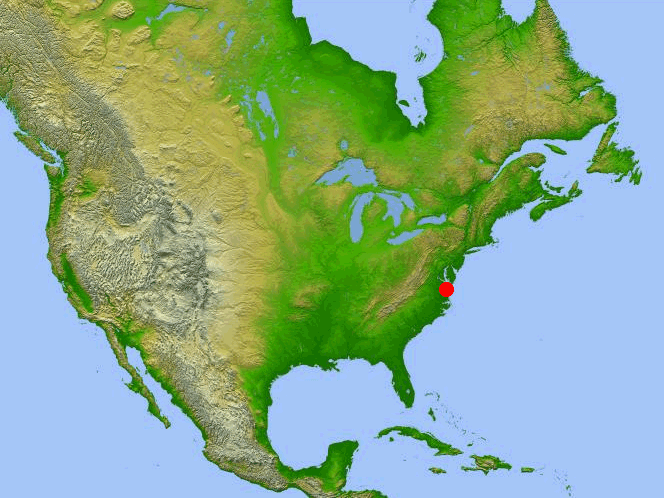
The Chesapeake Bay impact crater is a large, deeply buried structure located beneath the mouth of the Chesapeake Bay in the United States. Formed by a high-speed bolide impact approximately 35.5 million years ago, it is one of the best-preserved "wet-target" impact craters globally and has significantly influenced the region's geology, including the formation of the Chesapeake Bay itself.