
Macha
The Macha crater field in Siberia, Russia, comprises five meteorite craters ranging from 60 to 300 meters in diameter. The two largest craters form a pear-shaped feature known as Abram Lake. This field is significant as it contains the second-largest Holocene-era crater discovered to date, with an estimated age of approximately 7,300 years.
Key Facts
- ›Macha is a field of five meteorite craters in the Sakha Republic, Russia.
- ›Crater diameters range from 60 to 300 meters.
- ›The largest crater is the second-largest Holocene-era crater discovered.
- ›The impact event occurred around 5300 BCE, making the craters approximately 7,300 years old.
- ›The craters are well-preserved.

About Macha
Macha Crater Field
The Macha crater field is a significant impact structure located in the Sakha Republic of Siberia, Russia. This field consists of five distinct meteorite craters, with diameters ranging from 60 to 300 meters. The two largest craters are notable for forming a pear-shaped feature known as Abram Lake. The Macha craters are exceptionally well-preserved, offering valuable insights into impact events.
Geological Significance
The Macha crater field holds considerable geological importance, particularly due to the size of its largest crater. It is recognized as the second-largest Holocene-era crater discovered globally, trailing only the Jinlin Crater in China. The impact event that created these craters is estimated to have occurred around 5300 BCE, giving the structures an age of approximately 7,300 years. The presumed impactors were likely iron meteorites.
Source: Wikipedia ↗
Frequently Asked Questions
Where is the Macha crater field located?
The Macha crater field is situated in the Sakha Republic in Siberia, Russia. It is located approximately 685 kilometers west-southwest of Yakutsk.
How large are the craters in the Macha field?
The craters in the Macha field vary in size, ranging from 60 to 300 meters (200 to 980 feet) in diameter. The two largest craters together form a pear-shaped feature called Abram Lake.
When did the impact event that created the Macha craters occur?
The impact event that formed the Macha craters is estimated to have occurred around 5300 BCE, placing it in the Holocene epoch. This gives the craters an age of approximately 7,300 years.
What is the significance of the Macha crater field?
The Macha crater field is notable because its largest crater is the second-largest Holocene-era crater discovered on Earth, surpassed only by the Jinlin Crater in China. The craters are also exceptionally well-preserved.
What type of celestial body is believed to have caused the Macha craters?
The celestial bodies that caused the Macha craters are believed to be possible iron meteorites.
Related Impact Craters

Campo del Cielo
Campo del Cielo is a significant iron meteorite strewn field and impact crater area located in Argentina, discovered in 1576. The site encompasses at least 26 craters and has yielded approximately 100 tonnes of meteorite fragments, making it the most recovered meteorite material on Earth.
Whitecourt
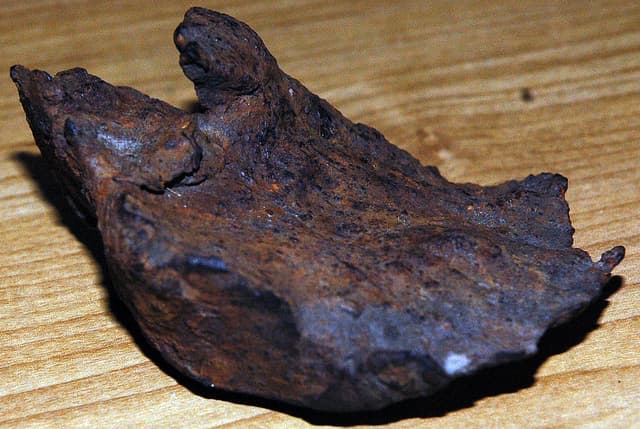
The Whitecourt crater is a well-preserved impact structure in central Alberta, Canada, notable for its small size and young age. Discovered in 2007, the crater has yielded over 3,000 fragments of the impacting iron meteorite, providing valuable insights into impact events.

Kaali
The Kaali crater group, located on the Estonian island of Saaremaa, is a significant impact structure formed by a meteorite event. The largest of the nine craters contains Lake Kaali and is surrounded by eight smaller impact features. Its formation, estimated to be shortly after 1530-1450 BC, is notable for occurring in a populated area and has been linked to regional mythology as a sacred site.