
Whitecourt
The Whitecourt crater is a well-preserved impact structure in central Alberta, Canada, notable for its small size and young age. Discovered in 2007, the crater has yielded over 3,000 fragments of the impacting iron meteorite, providing valuable insights into impact events.
Key Facts
- ›Diameter: Approximately 36 meters (118 ft)
- ›Depth: Approximately 6 meters (20 ft)
- ›Age: Estimated between 1,080 and 1,130 years old
- ›Discovery Date: July 3, 2007
- ›Discoverer: Sonny Stevens
- ›Meteorite Type: Iron, IIIAB
About Whitecourt
Whitecourt Crater
The Whitecourt crater is a meteorite impact structure located in central Alberta, Canada, approximately 10 kilometers southeast of the Town of Whitecourt. It is particularly noteworthy for its remarkably well-preserved state, considering its relatively small size and young age. The crater measures about 36 meters in diameter and 6 meters deep, and its formation is estimated to have occurred between 1,080 and 1,130 years ago.
Discovery and Confirmation
This impact site was discovered on July 3, 2007, by Sonny Stevens, a local resident who was using a metal detector while hunting. The authenticity of the crater as a meteorite impact site was subsequently confirmed by Dr. Chris Herd, a professor at the University of Alberta's Department of Earth and Atmospheric Sciences, who verified the meteoritic nature of the recovered fragments.
Meteorite Fragments and Preservation
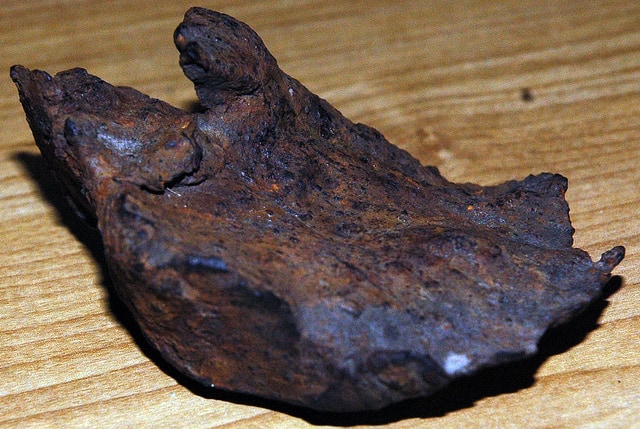
As of 2012, more than 3,000 pieces of the impacting meteorite had been found. These fragments are characterized as shrapnel, mostly weighing between a few grams and 500 grams, exhibiting sharp edges and mechanical deformation consistent with impact shock, but without signs of impact melt. In addition to the shrapnel, over a dozen individual meteorites, some showing regmaglypts and the largest weighing 31 kilograms, have been recovered. The meteorite fragments are identified as irons of type IIIAB, with most having been ejected eastward from the crater.
Protection and Research
The area surrounding the Whitecourt crater has been designated a protected zone, measuring 200 by 200 meters, where collecting is prohibited and subject to severe penalties. Despite this, the majority of meteorite fragments have been found on adjacent Crown land. The crater's excellent preservation makes it a valuable site for scientific study of small, young impact events.
Source: Wikipedia ↗
Frequently Asked Questions
Where is the Whitecourt crater located?
The Whitecourt crater is situated in central Alberta, Canada, approximately 10 kilometers southeast of the Town of Whitecourt within Woodlands County.
How was the Whitecourt crater discovered?
The crater was discovered by Sonny Stevens on July 3, 2007, while he was using a metal detector in the area. The meteoritic nature of the fragments was later confirmed by Dr. Chris Herd.
What is the estimated age of the Whitecourt crater?
The age of the Whitecourt crater is estimated to be between 1,080 and 1,130 years. This estimation is based on the location of buried meteorite fragments relative to a carbon layer from a forest fire dating to around 1,100 years ago.
What kind of meteorite caused the Whitecourt impact?
The impacting meteorite fragments found at the Whitecourt site are classified as irons of type IIIAB. Over three thousand pieces have been recovered, with the largest single meteorite weighing 31 kilograms.
Is the Whitecourt crater protected?
Yes, the area around the Whitecourt crater has been designated a protected zone of 200 by 200 meters. Collecting within this zone is prohibited and carries a significant fine or jail time.
Related Impact Craters

Campo del Cielo
Campo del Cielo is a significant iron meteorite strewn field and impact crater area located in Argentina, discovered in 1576. The site encompasses at least 26 craters and has yielded approximately 100 tonnes of meteorite fragments, making it the most recovered meteorite material on Earth.

Macha
The Macha crater field in Siberia, Russia, comprises five meteorite craters ranging from 60 to 300 meters in diameter. The two largest craters form a pear-shaped feature known as Abram Lake. This field is significant as it contains the second-largest Holocene-era crater discovered to date, with an estimated age of approximately 7,300 years.

Dalgaranga
The Dalgaranga crater is a small, exceptionally well-preserved impact structure located in Western Australia. Discovered in 1921, it is unique as the only known impact crater formed by a mesosiderite meteorite, with fragments of the stony-iron projectile found at the site. Its small size and pristine condition suggest a relatively young age.