
Meteor/Barringer
United States·Pleistocene·Cenozoic·nickel-iron meteorite
Meteor Crater, also known as Barringer Crater, is one of the best-preserved meteorite impact craters on Earth, located in northern Arizona. Excavated approximately 50,000 years ago by a nickel-iron meteorite, its well-preserved state is attributed to its relatively young age and the arid climate. The crater has been a site of significant scientific investigation and remains privately owned by the Barringer family.
Key Facts
- ›Diameter: approximately 1,200 meters (3,900 ft).
- ›Depth: approximately 170 meters (560 ft).
- ›Age: about 50,000 years old, during the Pleistocene epoch.
- ›Impact event caused by a nickel-iron meteorite about 50 meters (160 ft) across.
- ›Discovered by American settlers in the 19th century, with scientific investigation beginning in 1891.
- ›Designated a National Natural Landmark in 1967.

Shocked Quartz, Coesite, Stishovite, Impactite, Iron-Nickel Spherules
About Meteor/Barringer
Meteor Crater (Barringer Crater)
Meteor Crater, also widely known as Barringer Crater, stands as a remarkable and exceptionally well-preserved impact structure located in the desert of northern Arizona, United States. Situated approximately 60 kilometers (37 miles) east of Flagstaff, this crater is considered by many scientific institutions to be the finest example of a meteorite crater on Earth.
Formation and Age
The colossal excavation was the result of a catastrophic impact event that occurred roughly 50,000 years ago, during the Pleistocene epoch. At that time, the Colorado Plateau, where the crater resides, experienced a cooler and more humid climate, supporting grasslands and woodlands inhabited by megafauna such as mammoths. The celestial body responsible for this dramatic event was a nickel-iron meteorite, estimated to be about 50 meters (160 feet) in diameter. The impact generated an estimated energy of 10 megatons of TNT, and a significant portion of the meteorite was vaporized upon impact, leaving behind only fragments and altering the local geology.
Discovery and Investigation
While encountered by settlers in the 19th century, the scientific exploration of Meteor Crater began in earnest in 1891 with mineralogist Albert E. Foote's presentation of the first scientific paper on the associated meteorites. Early investigations, including those by Grove Karl Gilbert of the U.S. Geological Survey, initially proposed a volcanic steam explosion as the cause. However, mining engineer Daniel M. Barringer was a prominent early proponent of the impact hypothesis. Barringer, convinced by the evidence and the potential for valuable meteoric iron, purchased the land and dedicated much of his life and fortune to searching for the main body of the meteorite, drilling extensively into the crater floor. Despite his efforts, the vast majority of the impactor had been vaporized, a concept poorly understood at the time.
Later scientific work by Harvey H. Nininger in the 1930s and 1940s, and particularly by Eugene M. Shoemaker in the 1960s, solidified the impact origin. Shoemaker's identification of minerals like coesite and stishovite, which form under extreme shock pressures, provided irrefutable evidence for an impact event, further supporting the idea that the impactor was largely vaporized. The relatively young age of the crater and the arid Arizona climate have contributed significantly to its excellent state of preservation, making it a vital natural laboratory.
Modern Significance
Today, Meteor Crater remains privately owned by the Barringer family through the Barringer Crater Company. It is a popular tourist destination and an important educational and research site. Its geological features have been instrumental in understanding impact processes. Furthermore, the crater's unique terrain has served as a training ground for NASA astronauts, preparing them for lunar exploration during the Apollo missions and continuing to this day. The site was designated a National Natural Landmark in November 1967, acknowledging its profound scientific and geological importance.
Source: Wikipedia ↗
Frequently Asked Questions
What is Meteor Crater?
Meteor Crater, also known as Barringer Crater, is a large impact crater located in northern Arizona, United States. It is renowned for being one of the best-preserved meteorite craters on Earth, offering valuable insights into impact events.
When and how was Meteor Crater formed?
The crater was formed about 50,000 years ago during the Pleistocene epoch by the impact of a nickel-iron meteorite approximately 50 meters (160 ft) in diameter. The impact event created immense energy, vaporizing much of the meteorite.
Who discovered Meteor Crater?
The crater came to the attention of scientists after American settlers encountered it in the 19th century. Mineralogist Albert E. Foote presented the first scientific paper on the meteorites in 1891, and Daniel M. Barringer was among the first to suggest it was formed by a meteorite impact.
Why is it called Barringer Crater?
The crater is also known as Barringer Crater due to mining engineer Daniel M. Barringer, who was one of the first to champion the impact hypothesis. The Barringer family purchased the land and its surroundings in the early 20th century and still owns it today through the Barringer Crater Company.
What is the significance of Meteor Crater?
Meteor Crater is significant for its exceptional preservation, providing a clear example of an impact structure. It has been crucial for scientific research, helping to confirm the impact origin of craters and offering training grounds for astronauts.
Is Meteor Crater still being studied?
Yes, Meteor Crater continues to be an important site for scientific research and education. NASA astronauts trained there for Apollo missions, and research projects like METCRAX have investigated its unique atmospheric conditions.
Related Impact Craters
Kalkkop
Kalkkop is a confirmed impact crater located in the Eastern Cape Province of South Africa, approximately 50 kilometers southeast of Aberdeen. The impact event occurred about 250,000 years ago, leaving a significant crater that has since been filled with a deep limestone deposit.

Wolfe Creek
Wolfe Creek Crater, also known as Kandimalal by the local Djaru people, is a remarkably well-preserved meteorite impact crater located in Western Australia. Its pristine condition makes it a significant geological site, comparable to the Barringer Crater in Arizona, and it holds deep cultural importance for Indigenous Australians.
New Quebec/Pingualuit
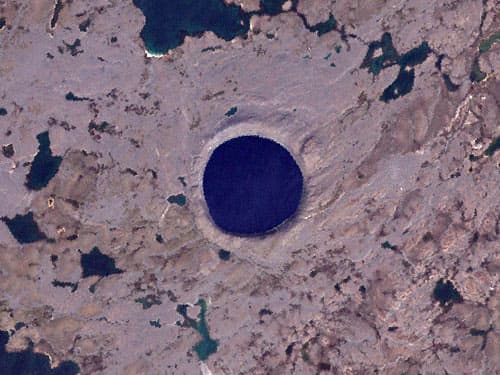
The Pingualuit Crater, also known as the New Quebec Crater, is a remarkably well-preserved impact structure on Ungava Peninsula, Quebec, Canada. Formed by a meteorite impact approximately 1.4 million years ago, it now contains the deep and exceptionally clear Pingualuk Lake, one of the purest freshwater bodies in the world.