
Riachão
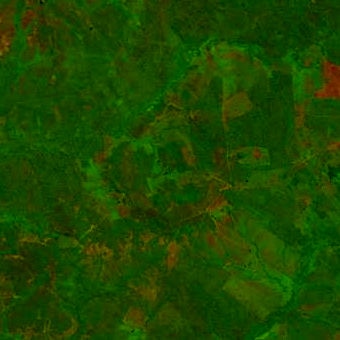
The Riachão Ring is a meteorite impact crater located in Brazil's Parnaíba Basin. With a diameter of 4.5 kilometers, its age is estimated to be less than 200 million years. The crater is exposed at the surface and shows evidence of shock deformation in quartz grains, supporting its impact origin despite significant erosion.
Key Facts
- ›Diameter: 4.5 kilometers (2.8 MI)
- ›Age: Estimated to be less than 200 million years (Jurassic or younger)
- ›Location: Parnaíba Basin, Brazil
- ›Discovered: First identified from orbital photographs in 1975
- ›Morphology: Exposed at the surface, severely eroded
- ›Geological evidence: Shock deformation identified in quartz grains within the central uplift
Shocked Quartz
About Riachão
Riachão Ring
The Riachão Ring is a meteorite impact crater located in Brazil's Parnaíba Basin. This geological structure is approximately 4.5 kilometers in diameter and is estimated to be less than 200 million years old, placing its formation within the Jurassic period or a more recent epoch.
Discovery and Confirmation
The Riachão Ring was first identified in 1975 through the analysis of orbital photographs captured during the Apollo–Soyuz Test Project. Subsequent reconnaissance investigations in 1977 provided further support for its impact origin. Features such as dipping breccia along the rim contributed to this interpretation, although initial observations did not find shatter cones or shocked quartz.
Geological Characteristics
The crater is exposed at the surface and is characterized by significant erosion, with no ejecta apparently remaining. The rim of the crater rises about 50 meters above the surrounding landscape. A central uplift within the crater measures approximately 30 meters above the annular depression. Crucially, shock deformation has been identified in quartz grains found within this central uplift, serving as strong evidence for the impact event.
Significance
Despite its eroded state, the Riachão Ring provides valuable insights into impact processes on Earth. The presence of shock deformation in its quartz grains confirms its extraterrestrial origin and contributes to the geological record of impact events in South America.
Source: Wikipedia ↗
Frequently Asked Questions
Where is the Riachão Ring located?
The Riachão Ring is situated in Brazil, specifically within the Parnaíba Basin. It is exposed at the surface in this region.
What is the size of the Riachão Ring impact crater?
The Riachão Ring has an estimated diameter of 4.5 kilometers (2.8 miles). The crater rim rises about 50 meters above the surrounding terrain.
How old is the Riachão Ring?
The age of the Riachão Ring is estimated to be less than 200 million years old. This places the impact event within the Jurassic period or younger.
When was the Riachão Ring discovered?
The Riachão Ring was first identified in 1975 through the analysis of orbital photographs taken during the Apollo–Soyuz Test Project. A reconnaissance investigation followed in 1977.
What geological evidence supports the Riachão Ring being an impact crater?
The structure of the site, with dipping breccia along the rim, supports an impact origin. Furthermore, shock deformation has been identified in quartz grains found within the central uplift.
Is the Riachão Ring well-preserved?
The Riachão Ring is severely eroded, and there is apparently no ejecta remaining. Despite this erosion, evidence of its impact origin is still discernible.
Related Impact Craters

Serra da Cangalha
Serra da Cangalha is a significant impact crater located in Tocantins, Brazil, measuring between 12 and 13 kilometers in diameter. It is the second-largest known crater in Brazil and was formed approximately 220 million years ago during the Triassic period. The crater's name translates to "Pack-Saddle Mountains" in Portuguese, referencing its distinctive topography.

Araguainha
The Araguainha crater, located on the border of Mato Grosso and Goiás states in Brazil, is the largest known impact crater in South America, measuring 40 kilometers in diameter. Its age, estimated at 254.7 million years ago, closely overlaps with the Permian-Triassic extinction event, suggesting a potential, though indirect, role in this catastrophic global event.
Colonia
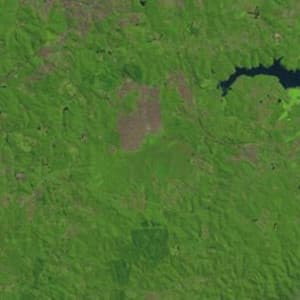
The Colônia crater, located in São Paulo, Brazil, is a recently confirmed impact structure with a diameter of approximately 3.6 kilometers. Formed between 1 million and 20 million years ago, it is partially filled with peat, preserving a valuable environmental record. Its tentative identification as an impact crater is based on its geomorphology and faulting patterns, though definitive impact evidence like shocked quartz has not yet been found.