
Santa Fe
The Santa Fe impact structure is a deeply eroded remnant of a crater formed by a bolide impact in the Sangre de Cristo Mountains of New Mexico. Discovered in 2005 due to the presence of shatter cones, it is estimated to be between 1.4 and 1.6 billion years old, with an original diameter of 6 to 13 kilometers.
Key Facts
- ›Located in the Sangre de Cristo Mountains northeast of Santa Fe, New Mexico.
- ›Estimated age of impact: 1.4 to 1.6 billion years.
- ›Original estimated diameter: 6 to 13 kilometers.
- ›Discovery year: 2005.
- ›Key indicator of impact: shatter cones found in road cuts.
- ›Significantly eroded, referred to as an 'impact structure' rather than a crater.

Shatter Cones
About Santa Fe
Santa Fe Impact Structure
The Santa Fe impact structure is a deeply eroded remnant of a crater located in the Sangre de Cristo Mountains, northeast of Santa Fe, New Mexico. Its significance lies in the geological evidence it provides for ancient extraterrestrial impacts on Earth.
Discovery and Evidence
The discovery of this impact structure was made in 2005 by a geologist who identified shatter cones within rocks exposed in a decades-old road cut along New Mexico State Road 475. Shatter cones are distinctive conical rock fractures that are formed by extreme shock pressures, which are characteristic of meteorite impacts or nuclear explosions. The presence of these features strongly indicates that the rocks in this area experienced such a significant event.
Characteristics and Age
Due to extensive erosion over billions of years, the site is referred to as an "impact structure" rather than a crater, as much of its original morphology has been obliterated. Only the basement rocks of the original crater remain visible on the surface today. Current scientific estimates place the age of the impact event between 1.4 and 1.6 billion years ago. The original diameter of the impact crater is estimated to have been between 6 and 13 kilometers (approximately 4 to 8 miles). The shatter cones found along the highway are interpreted to represent the central area of this much larger impact feature.
Source: Wikipedia ↗
Frequently Asked Questions
What is the Santa Fe impact structure?
The Santa Fe impact structure is the eroded remains of a crater formed by a bolide impact in the Sangre de Cristo Mountains of New Mexico. It is so eroded that it is referred to as an 'impact structure' rather than a crater.
When did the impact that formed the Santa Fe structure occur?
Current estimates place the age of the impact event between 1.4 and 1.6 billion years ago. This makes it a very ancient geological feature.
How large was the original Santa Fe impact crater?
The estimated diameter of the original impact crater is between 6 and 13 kilometers (approximately 4 to 8 miles). Today, only the basement rocks are visible on the surface.
How was the Santa Fe impact structure discovered?
The structure was discovered in 2005 by a geologist who observed shatter cones in rocks along a road cut. Shatter cones are a definitive indicator of a massive shock event, such as a meteor impact.
What evidence indicates an impact occurred at Santa Fe?
The primary evidence for an impact at Santa Fe is the presence of shatter cones. These geological formations are created by extreme shock pressures, typically associated with meteorite impacts or nuclear explosions.
Related Impact Craters
Glikson
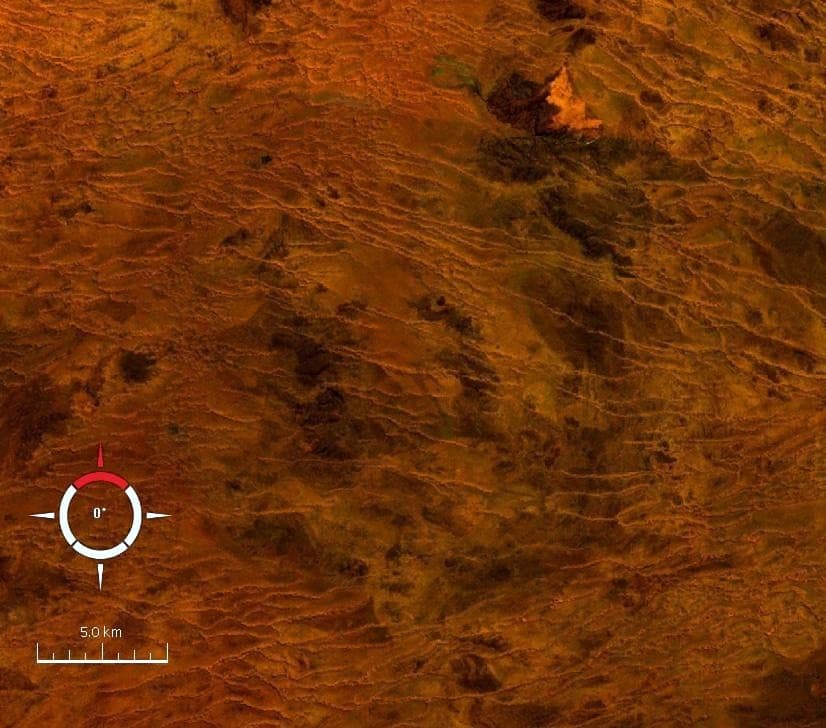
The Glikson crater is an eroded impact structure located in the Little Sandy Desert of central Western Australia. It is characterized by a prominent 14 km diameter ring-shaped aeromagnetic anomaly, with evidence of deformation extending to 19 km, suggesting this as the original crater diameter. The confirmation of shatter cones and microscopic shock effects provides reliable evidence for its impact origin.

Lawn Hill
The Lawn Hill crater is an eroded impact structure located in northwestern Queensland, Australia. Its existence was confirmed in 1987 with the discovery of shatter cones and shocked quartz, revealing an 18 km diameter ring of dolomite hills that marks the remnant of the original crater.

Yarrabubba
The Yarrabubba impact structure is the remnants of a significant impact event located in Western Australia. With an estimated age of 2.229 billion years, it was once considered the oldest known impact structure on Earth with a confident age, though subsequent discoveries have challenged this title. Despite its eroded state, evidence like shocked quartz and geophysical data point to its formation by a substantial bolide.