
Upheaval Dome
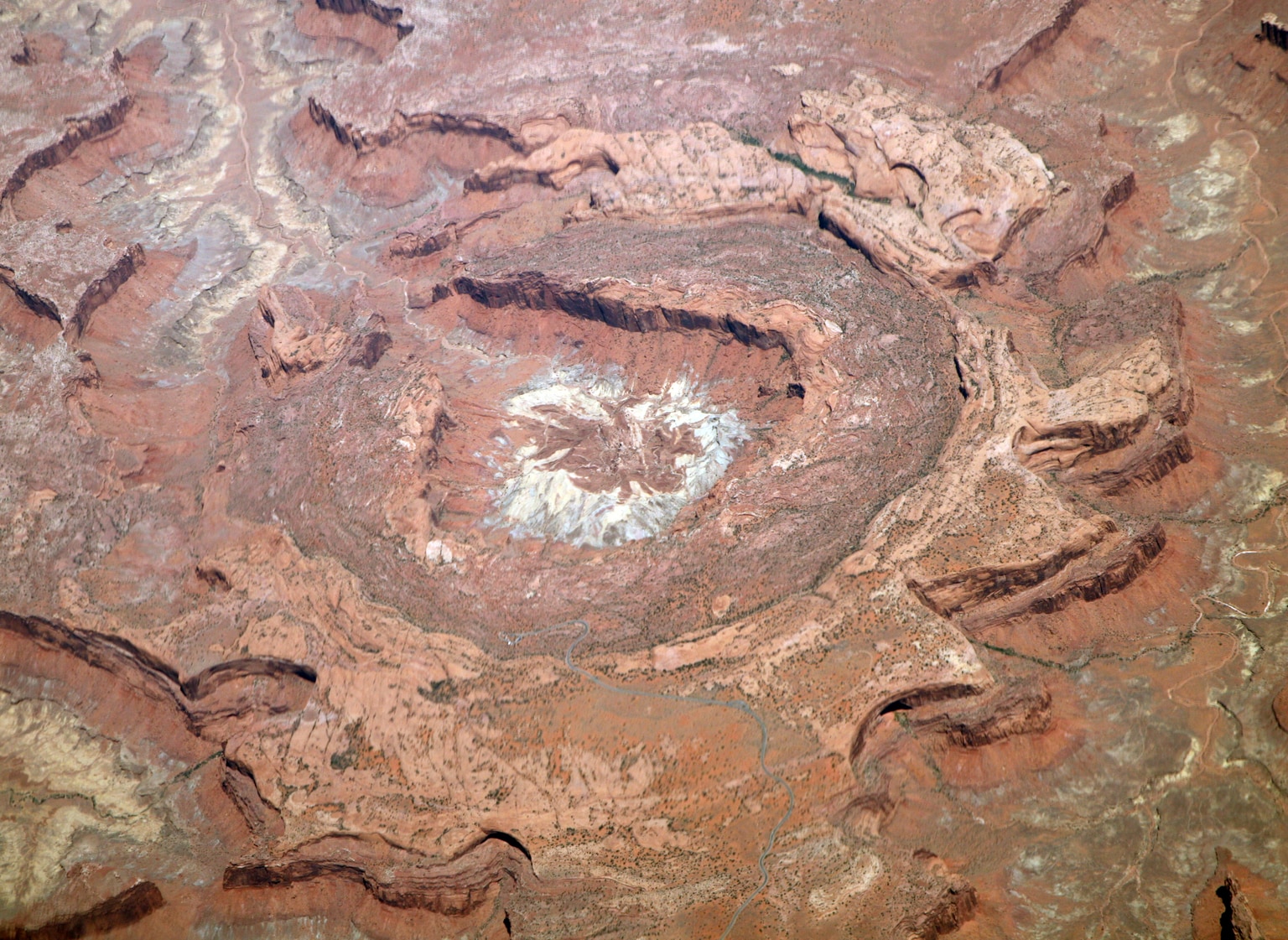
Upheaval Dome is a geological structure in Utah, USA, approximately 10 km in diameter, whose origin has been debated between being a salt dome or a meteorite impact structure. Current scientific consensus favors the impact crater interpretation, supported by evidence such as shocked quartz and concentric geological rings, indicating an event less than 170 million years old.
Key Facts
- ›Diameter is approximately 10 km (6.2 miles).
- ›Age is less than 170 million years old, dating to the Jurassic period or younger.
- ›Located in the Island in the Sky section of Canyonlands National Park, Utah.
- ›Features concentric rings of light and dark brown rock layers visible on the surface.
- ›The currently accepted theory is that it is an eroded impact crater.
- ›Shocked quartz has been discovered at the site.
Shocked Quartz
About Upheaval Dome
Upheaval Dome is an enigmatic geological structure located in San Juan County, Utah, within the Island in the Sky district of Canyonlands National Park. This feature, approximately 10 kilometers (6.2 miles) in diameter, has long been a subject of scientific inquiry, with its origins debated between being a salt dome or a meteorite impact structure. The structure is clearly visible on the surface, characterized by light and dark brown concentric rings.
Geological Interpretation
While salt domes are formed by the upward movement of salt layers beneath overlying rocks, the prevailing scientific consensus now interprets Upheaval Dome as an eroded impact crater. This conclusion is supported by extensive geological studies, including seismic refraction data and rock mapping conducted in the 1990s. Further evidence emerged in 2008 with the announcement of shocked quartz discovery, a mineral formation indicative of high-energy impacts. The structure exhibits anomalous stratigraphy, with some rock strata near the center oriented nearly vertically, including dips of up to 70 degrees measured in the Kayenta Formation. A circular syncline, approximately two miles across and primarily visible in the Navajo Sandstone, surrounds the central dome, with a concentric anticline mapped to its north.
Age and Context
Upheaval Dome is estimated to be less than 170 million years old, placing its formation within the Jurassic period or younger. The oldest exposed rock formation at its center is the Permian Organ Rock Shale, overlain by various Permian and Triassic formations, including the Cutler Formation, Moenkopi Formation, Chinle Formation, Wingate Sandstone, Kayenta Formation, and Navajo Sandstone. The structure's location within Canyonlands National Park highlights its significance as a natural wonder with a complex geological history.
Source: Wikipedia ↗
Frequently Asked Questions
What is Upheaval Dome?
Upheaval Dome is a geological structure located in San Juan County, Utah, United States. It is characterized by concentric rings and is about 10 km in diameter. Its origin has been a subject of scientific debate.
What are the theories about Upheaval Dome's origin?
Historically, two main theories existed: that it was a salt dome, formed by rising salt rock, or a meteorite impact structure. The currently accepted theory favors it being an eroded impact crater.
What evidence supports the impact crater theory?
Studies have revealed concentric geological rings visible on the surface, and more recently, the discovery of shocked quartz supports the meteorite impact hypothesis. Seismic refraction and rock mapping also align with this interpretation.
How old is Upheaval Dome?
Upheaval Dome is estimated to be less than 170 million years old. This places its formation within the Jurassic period or younger, though its precise age beyond this limit is not definitively established.
Where is Upheaval Dome located?
Upheaval Dome is situated in San Juan County, Utah, within the Island in the Sky district of Canyonlands National Park. It lies approximately 22 miles (35 km) southwest of the city of Moab.
Related Impact Craters

Wells Creek
The Wells Creek impact crater, situated near Cumberland City, Tennessee, is a significant geological feature with a diameter of 12 kilometers. Its age is estimated to be around 200 million years old, dating back to the Jurassic period. The crater is notable for exposing some of the world's finest shatter cones, which have been collected and displayed globally.
Middlesboro
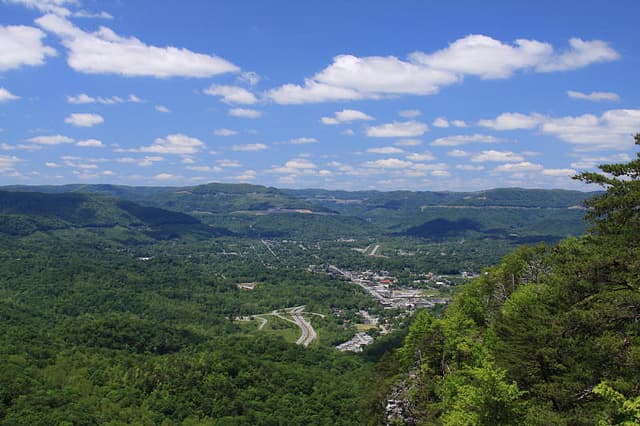
The Middlesboro crater, also known as an astrobleme, is a meteorite impact structure located in Kentucky, United States, with the city of Middlesboro built within its bounds. Its estimated age is less than 300 million years, and it is notable for being the only known location where coal is mined inside an impact crater.

Ames
The Ames crater is a significant buried meteorite impact structure located in Major County, Oklahoma. Discovered in 1991, its geological importance is amplified by the substantial oil and gas reserves found within it, making it one of the largest of several impact craters associated with oil production in the United States.