
Wells Creek
The Wells Creek impact crater, situated near Cumberland City, Tennessee, is a significant geological feature with a diameter of 12 kilometers. Its age is estimated to be around 200 million years old, dating back to the Jurassic period. The crater is notable for exposing some of the world's finest shatter cones, which have been collected and displayed globally.
Key Facts
- ›Diameter: 12 kilometers (7.5 MI)
- ›Estimated Age: 200 ± 100 million years
- ›Geological Period: Jurassic or neighboring periods
- ›Location: near Cumberland City, Tennessee
- ›Morphology: Exposed with a central uplift and concentric faults
- ›Significance: Contains some of the world's finest shatter cones

Shatter Cones
About Wells Creek
Wells Creek Impact Structure
The Wells Creek impact structure is a significant geological site located near Cumberland City, Tennessee. This impact crater measures approximately 12 kilometers (7.5 miles) in diameter. Its formation is estimated to have occurred around 200 million years ago, placing the event within the Jurassic period or a neighboring geological era.
Geological Features and Significance
What makes the Wells Creek structure particularly noteworthy is its exposure on the surface and the exceptionally fine shatter cones found within its central uplift. These conical rock fractures are a definitive diagnostic feature of hypervelocity impact events. Many of these shatter cones have been collected and are now displayed in geological collections worldwide.
The crater's internal structure reveals a central uplift where older Cambro-Ordovician rocks, specifically the Wells Creek Dolomite and Knox Group, are exposed. These uplifted older rocks are encircled by concentric exposures of younger Ordovician, Silurian, and Devonian strata. Further outward, Mississippian rocks, including the Chattanooga Shale, Fort Payne Formation, Warsaw Limestone, and St. Louis Limestone, are present. The structure is further characterized by abundant radial faults within the central uplift and sets of concentric faults that define the outer boundaries, including three distinct rings bounding the main structure.
Source: Wikipedia ↗
Frequently Asked Questions
Where is the Wells Creek impact crater located?
The Wells Creek impact crater is located near Cumberland City, Tennessee, in the United States.
How large is the Wells Creek impact crater?
The crater has an estimated diameter of 12 kilometers, which is approximately 7.5 miles.
When did the impact event that formed Wells Creek occur?
The impact event is estimated to have occurred approximately 200 million years ago, placing it within the Jurassic period or nearby geological periods.
What makes the Wells Creek impact crater geologically significant?
Wells Creek is renowned for containing some of the finest examples of shatter cones found anywhere in the world. These geological formations are a key indicator of impact events.
What geological features are found at the center of the Wells Creek crater?
The central uplift of the crater exposes older Cambro-Ordovician rocks, including the Wells Creek Dolomite and Knox Group. These are surrounded by concentric exposures of Ordovician, Silurian, and Devonian rocks.
Related Impact Craters
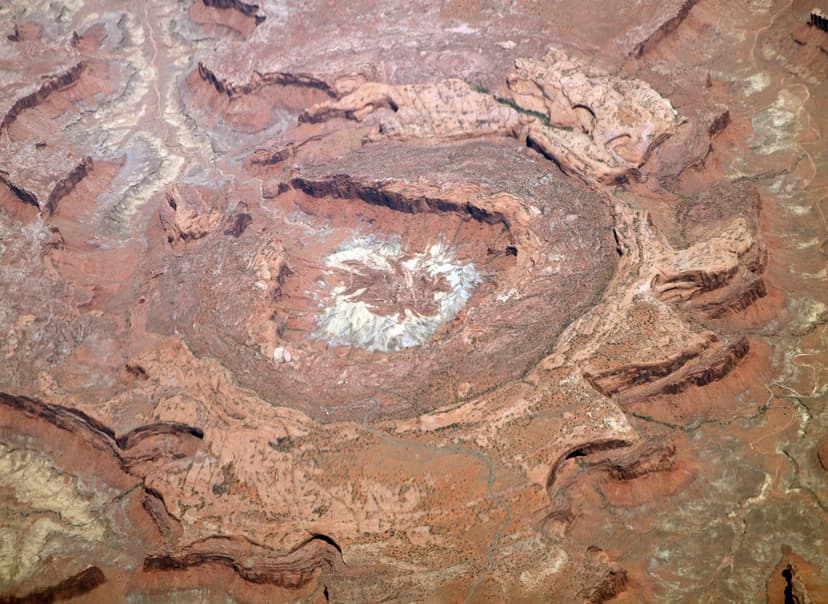
Upheaval Dome
Upheaval Dome is a geological structure in Utah, USA, approximately 10 km in diameter, whose origin has been debated between being a salt dome or a meteorite impact structure. Current scientific consensus favors the impact crater interpretation, supported by evidence such as shocked quartz and concentric geological rings, indicating an event less than 170 million years old.
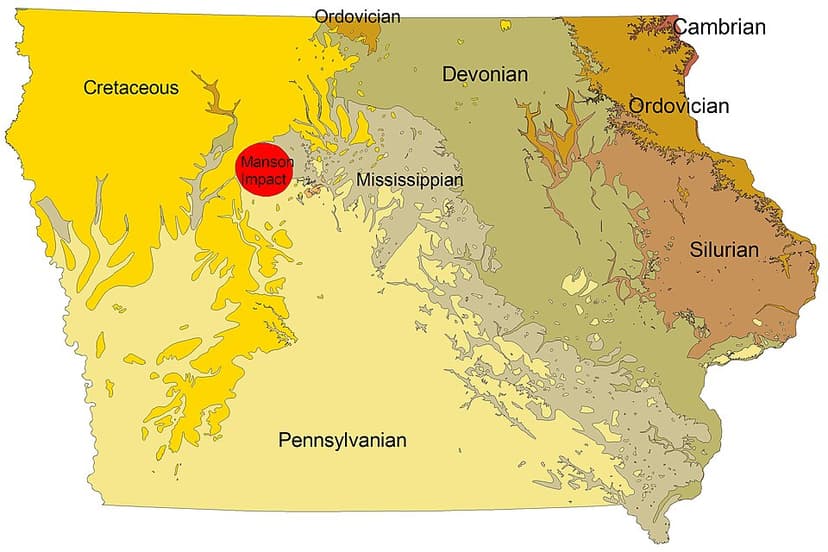
Manson
The Manson impact structure is a large, buried impact crater in Iowa, formed approximately 74 million years ago by an asteroid or comet. Despite its significant size and historical consideration for a role in the dinosaur extinction, its surface evidence is obscured by glacial till, making it a hidden geological feature.
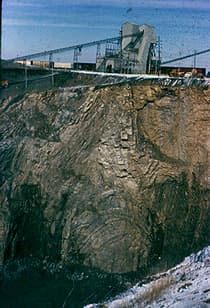
Kentland
The Kentland structure, located in Newton County, Indiana, is a deeply eroded impact crater first identified by farmers in the late 19th century. Its geological significance lies in the extreme deformation of bedrock, including uplifted ancient rock layers and the presence of shatter cones, which confirmed its extraterrestrial impact origin by the late 1960s. The structure is currently an active quarry.