
Vredefort
South Africa·Orosirian·Paleoproterozoic·asteroid
The Vredefort impact structure in South Africa is one of Earth's largest and oldest known impact craters. Although the original crater has been eroded away, the remaining deformed bedrock forms the Vredefort Dome, a significant geological feature. Its immense size and age make it crucial for understanding early Earth history and impact events.
Key Facts
- ›Estimated original crater diameter of 170–300 km.
- ›Formed 2.023 billion years ago (± 4 million years).
- ›Located in the Free State province of South Africa.
- ›Central uplift, the Vredefort Dome, is 100–120 km in diameter.
- ›Impact origin confirmed by shatter cones and planar deformation features.
- ›UNESCO World Heritage Site recognized for its geologic interest.

About Vredefort
Vredefort Impact Structure
The Vredefort impact structure, located in the Free State province of South Africa, stands as one of the largest and oldest confirmed impact craters on Earth. Although the original massive crater has been extensively eroded over billions of years, the deformed bedrock and resulting geological features, particularly the central uplift known as the Vredefort Dome, provide compelling evidence of the colossal impact event. The structure's immense scale and ancient age make it a site of profound geological significance, offering invaluable insights into the history of impacts on our planet.
Formation and Structure
The impact is estimated to have occurred approximately 2.023 billion years ago, during the Paleoproterozoic Era. The celestial body responsible is believed to have been an asteroid, with recent estimates suggesting a diameter between 20 and 25 kilometers. The initial impact likely created a crater with a diameter ranging from 170 to 300 kilometers, making it one of the largest impact structures ever to have struck Earth. The landscape has since been eroded to a depth of 7 to 11 kilometers, obscuring the original crater's form. The Vredefort Dome, the remaining central uplift, is a key feature, measuring around 100 to 120 kilometers in diameter and showcasing the rebound of rock from the impact's force.
Discovery and Recognition
The impact origin of the Vredefort structure was scientifically established in 1961 by American geologists Robert S. Dietz and Robert B. Hargraves, who identified shatter cones, a distinctive geological feature indicative of hypervelocity impacts. While the concept of its impact origin was proposed earlier in 1937 by Claude C. Albritton and John D. Boon, the concrete evidence was solidified by Dietz and Hargraves. Recognizing its unique geological importance, the Vredefort Dome was inscribed as a UNESCO World Heritage Site in 2005.
Geological Significance and Related Features
The Vredefort impact structure is noted for being one of the few multiple-ringed impact structures found on Earth, a morphology more common on other celestial bodies. The impact significantly distorted the surrounding geological strata, including the Witwatersrand Basin, the Ventersdorp lavas, and the Transvaal Supergroup. These rock layers now form partial concentric rings around the impact's center, with the erosion-resistant Witwatersrand quartzites and banded ironstones creating prominent hills. The discovery of gold in the Johannesburg group of the Witwatersrand rocks in 1886, possibly linked to the geological uplift caused by the Vredefort impact, highlights its indirect economic significance.
The central part of the structure, approximately 40 kilometers in diameter, features an exposed granite dome, a part of the ancient Kaapvaal craton. This central uplift is characteristic of complex impact structures where molten rock is ejected following the impactor's penetration of the surface. The Vredefort Dome is also home to several towns, including Parys, Vredefort, Koppies, and Venterskroon, with Parys serving as a notable tourist hub.
Source: Wikipedia ↗
Frequently Asked Questions
What is the Vredefort impact structure?
The Vredefort impact structure is one of the largest and oldest confirmed impact craters on Earth. While the original crater is eroded, the remaining geological deformation, known as the Vredefort Dome, is a testament to the colossal event.
How large was the Vredefort impact structure?
Estimates for the original crater's diameter range from 170 to 300 kilometers. The central uplift, the Vredefort Dome, measures approximately 100 to 120 kilometers across.
When did the Vredefort impact occur?
The impact event that formed the Vredefort structure occurred approximately 2.023 billion years ago, placing it in the Paleoproterozoic Era. It is among the oldest recognized impact structures on Earth.
Where is the Vredefort impact structure located?
The Vredefort impact structure is situated in the Free State province of South Africa. The structure is named after the town of Vredefort, which lies near its center.
What is the significance of the Vredefort Dome?
The Vredefort Dome is the central uplift of the impact structure and is a key indicator of the impact's immense scale. It is recognized for its geological significance and was designated a UNESCO World Heritage Site in 2005.
What caused the Vredefort impact?
The impact was caused by an asteroid, estimated to have been between 20 and 25 kilometers in diameter. This celestial body struck Earth with immense force, creating one of the largest impact events since the Hadean Eon.
Related Impact Craters

Yarrabubba
The Yarrabubba impact structure is the remnants of a significant impact event located in Western Australia. With an estimated age of 2.229 billion years, it was once considered the oldest known impact structure on Earth with a confident age, though subsequent discoveries have challenged this title. Despite its eroded state, evidence like shocked quartz and geophysical data point to its formation by a substantial bolide.
S2 spherule bed
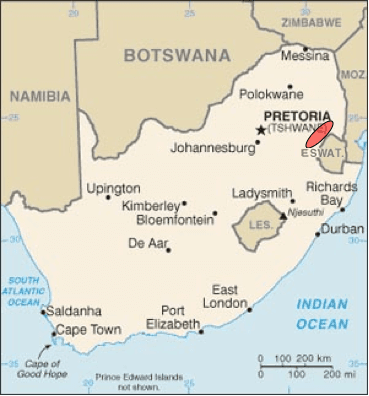
The S2 spherule bed is one of at least 8 layers containing spherules found within the Barberton Greenstone Belt, dating back approximately 3.26 billion years. These spherules are evidence of ancient impact events, with the S2 event being one of the most powerful, potentially causing global catastrophes like megatsunamis and prolonged darkness. The Barberton Greenstone Belt itself is a significant geological formation, preserving some of the oldest rocks and traces of life on Earth.
Kalkkop
Kalkkop is a confirmed impact crater located in the Eastern Cape Province of South Africa, approximately 50 kilometers southeast of Aberdeen. The impact event occurred about 250,000 years ago, leaving a significant crater that has since been filled with a deep limestone deposit.