
Wanapitei
Lake Wanapitei is a significant impact crater lake located in Greater Sudbury, Ontario, Canada. It is notable for being one of the largest lakes entirely contained within a single municipality and lies adjacent to the larger Sudbury impact crater. The lake's shape, from which its Ojibwe name is derived, and its geological history make it a point of interest for researchers and residents alike.
Key Facts
- ›The crater is 8.4 km (5.2 miles) in diameter.
- ›Its estimated age is 37.2 ± 1.2 million years.
- ›The impact event occurred during the Eocene period.
- ›It is located within the city of Greater Sudbury, Ontario, Canada.
- ›The Ojibwe name for the lake is Waanabidebiing, meaning 'place where the water is shaped like a tooth'.
- ›It is one of the world's largest lakes entirely within a single municipality.

Sudbury Impact Crater
About Wanapitei
Lake Wanapitei is a notable impact crater lake situated within the municipality of Greater Sudbury, Ontario, Canada, and is also associated with the Wahnapitae First Nation. Its significance lies in its status as one of the world's largest lakes that are entirely contained within the boundaries of a single municipality. The lake's formation is attributed to an impact event that occurred approximately 37.2 ± 1.2 million years ago, during the Eocene period.
Geography and Formation
The crater lake itself measures 8.4 kilometers (5.2 miles) in diameter. The Ojibwe name for the lake, Waanabidebiing, translates to 'place where the water is shaped like a tooth,' a description derived from its aerial perspective. While the impact origin is widely accepted, some studies have suggested a smaller diameter for the crater itself, between three and four kilometers, and have also proposed that large-scale faulting might have contributed to its formation. The lake is part of the Lake Wanapitei Subwatershed within the Great Lakes Basin watershed, encompassing extensive forests, lakes, and wetlands.
Human History and Recreation
Lake Wanapitei lies within the traditional territory of the Wahnapitae First Nation, signatories to the Robinson Huron Treaty of 1850. The area saw European settlement due to the fur trade and logging industries, with towns like Boland's Bay and Skead established on its shores. The lake is also a popular recreational destination, offering activities such as fishing and camping. In a more somber historical note, six RCMP officers tragically drowned in the lake during a training exercise in the 1960s.
Source: Wikipedia ↗
Frequently Asked Questions
What is Lake Wanapitei?
Lake Wanapitei is an impact crater lake located in Greater Sudbury, Ontario, Canada. It is known for its significant size and its unique geological origin as an impact structure.
How large is the Wanapitei impact crater?
The crater itself is estimated to be 8.4 kilometers (5.2 miles) in diameter. Some studies have proposed a smaller diameter for the crater itself, between three and four kilometers.
When did the impact event that formed Lake Wanapitei occur?
The impact event that created the crater lake is estimated to have occurred 37.2 ± 1.2 million years ago. This places the event within the Eocene period.
What does the Ojibwe name for Lake Wanapitei mean?
The Anishinaabemowin name for the lake, Waanabidebiing, translates to 'place where the water is shaped like a tooth'. This name refers to the lake's distinctive shape when viewed from above.
Where is Lake Wanapitei located?
Lake Wanapitei is situated within the city of Greater Sudbury, Ontario, Canada, and is also associated with Wahnapitae First Nation. It is adjacent to the larger Sudbury impact crater.
Related Impact Craters
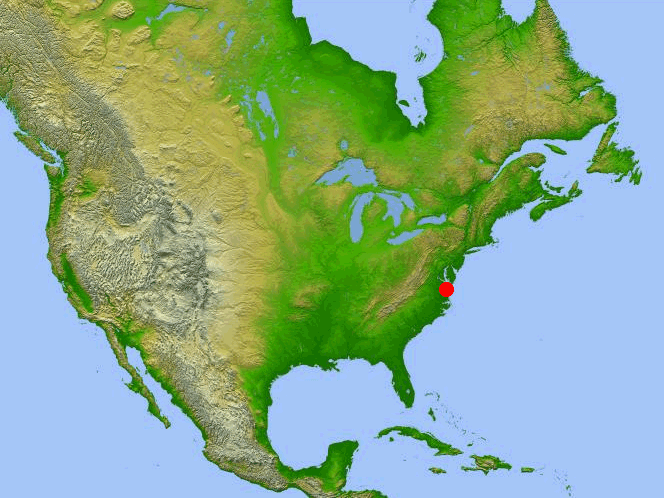
Chesapeake Bay
The Chesapeake Bay impact crater is a large, deeply buried structure located beneath the mouth of the Chesapeake Bay in the United States. Formed by a high-speed bolide impact approximately 35.5 million years ago, it is one of the best-preserved "wet-target" impact craters globally and has significantly influenced the region's geology, including the formation of the Chesapeake Bay itself.
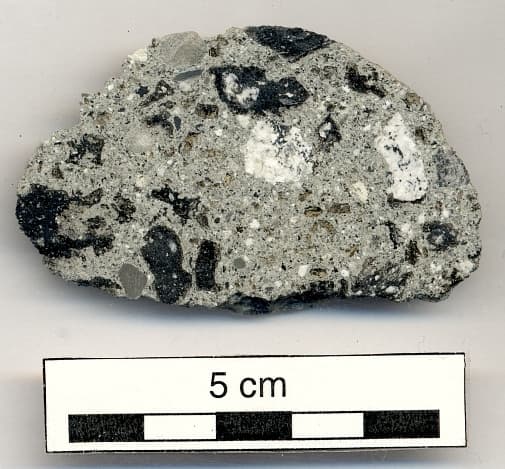
Logoisk
The Logoisk crater, also known as the Logoisk astrobleme, is a significant impact structure located in Belarus near the city of Lahoysk. This Eocene-era crater, estimated to be 42.3 million years old, has a diameter of 15 kilometers and is not visible on the surface, having been discovered through geological drilling.
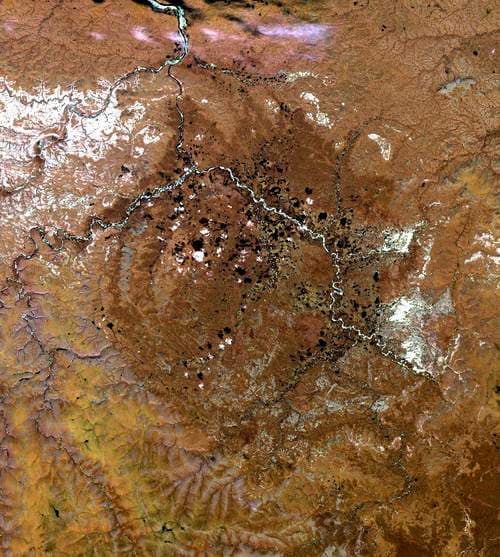
Popigai
The Popigai impact structure is a significantly eroded remnant of a massive impact crater located in northern Siberia, Russia. It is recognized as one of the largest verified impact structures on Earth, created by a large bolide approximately 35 million years ago. The impact event is notable for transforming graphite into diamonds within a significant radius, making it a site of immense geological interest.