
Algyroides marchi
The Spanish algyroides, also known as Valverde's lizard, is a species of lizard endemic to southeastern Spain. It inhabits temperate forests, riverbanks, and rocky areas at moderate to high altitudes. This oviparous lizard faces threats primarily from habitat loss.
Key Facts
- ›Endemic to southeastern Spain.
- ›Inhabits temperate forests, rivers, and rocky areas.
- ›Found at altitudes between 700 and 1,700 meters.
- ›Reproduces by laying eggs (oviparous).
- ›Threatened by habitat loss.

Spanish Keeled Lizard, Valverde's Lizard, Algyroides Marchi
Spain
Habitat Loss
About Algyroides marchi
Spanish Algyroides (Algyroides hidalgoi)
The Spanish algyroides, scientifically known as Algyroides hidalgoi, is a species of lizard that is native to southeastern Spain. This species is also recognized by the common names Spanish keeled lizard and Valverde's lizard. A synonym often encountered in scientific literature is Algyroides marchi, a name bestowed in honor of the Spanish financier Juan March.
Habitat and Distribution
The natural range of the Spanish algyroides is restricted to southeastern Spain. It thrives in a specific set of environments, including temperate forests, along the banks of rivers, and in rocky areas. These preferred habitats are typically found at elevations ranging from 700 to 1,700 meters (approximately 2,300 to 5,600 feet) above sea level.
Reproduction and Conservation
The Spanish algyroides reproduces by laying eggs, a characteristic known as being oviparous. Unfortunately, the species faces significant challenges to its survival. The primary threat identified is habitat loss, which directly impacts the availability of suitable environments for the lizards to live and reproduce.
Source: Wikipedia ↗
Frequently Asked Questions
What is another name for the Spanish algyroides?
The Spanish algyroides is also commonly known as Valverde's lizard. Another synonym for the species is Algyroides marchi, named in honor of Spanish financier Juan March.
Where can the Spanish algyroides be found?
This lizard species is endemic to southeastern Spain. Its natural habitats are specific to this region.
What kind of environment does the Spanish algyroides live in?
The Spanish algyroides prefers temperate forests, areas along rivers, and rocky terrain. These habitats are typically found at altitudes ranging from 700 to 1,700 meters.
How does the Spanish algyroides reproduce?
The Spanish algyroides is oviparous, meaning it reproduces by laying eggs.
What are the main threats to the Spanish algyroides?
The primary threat to the Spanish algyroides is habitat loss. This loss of suitable environment impacts the species' survival.
Related Lizards
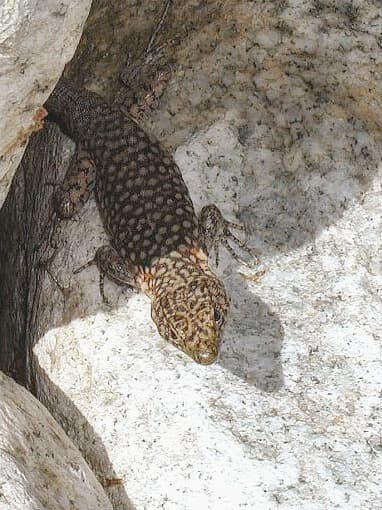
Archaeolacerta bedriagae
Bedriaga's rock lizard, scientifically known as Archaeolacterta bedriagae, is a species endemic to the islands of Corsica and Sardinia. This lizard is characterized by its brownish-grey coloration with a net pattern, which changes during the mating season, and juveniles are identifiable by their bright blue tails. It inhabits a variety of environments, including rocky areas, Mediterranean shrubland, and rural gardens, and is known for its ability to climb vertical surfaces and jump to catch flying insects.

Lacerta schreiberi
The Iberian emerald lizard, scientifically known as Lacerta schreiberi, is a large lizard species endemic to the Iberian Peninsula. Characterized by its impressive size, it inhabits temperate forests, shrublands, and areas near water. Primarily an insectivore, it also preys on smaller reptiles and is known for its oviparous reproduction.

Iberolacerta monticola
The Iberian rock lizard (Iberolacerta monticola) is a species endemic to Portugal and Spain, inhabiting mountain forests, shrublands, rivers, and rocky areas. It is characterized by a flattened body, short limbs, and a slender tail, with coloration varying across its range but often featuring green bellies in mature individuals. This species faces threats from habitat loss due to agriculture, forestry, and tourism.