
Trachylepis quinquetaeniata
The African five-lined skink (Trachylepis quinquetaeniata) is a medium-sized lizard native to north-central Africa, characterized by its glossy scales and distinctive five stripes running from head to tail. Its coloration varies with age, sex, and season, but typically features an olive-brown base with blue, black, and yellowish markings, especially on its bright blue tail. This adaptable species inhabits both rocky and grassland environments, often making its home on trees or man-made structures.
Key Facts
- ›Native to north-central Africa, with a range extending from Egypt to Mali and south into Southern Africa.
- ›Possesses a smooth, glossy body with a metallic sheen and distinctive five stripes, often including electric blue on the tail.
- ›Feeds primarily on invertebrates such as ants, beetles, spiders, and grasshoppers.
- ›Found in both rocky and grassland habitats, often utilizing trees or man-made structures for shelter.
- ›Can reach lengths of up to 20 centimeters (7.9 inches).
- ›Considered an invasive species in Florida due to escaped pets.

African Five-Lined Skink, Rainbow Mabuya
Egypt, Mali, North Africa, Southern Africa
Rocky Habitats, Grassland Habitats, Arboreal, Man-Made Structures
- Smaller To Medium-Sized Lizard, Maturing To About 20 cm .
- Scales Are Glossy, Shiny, and Smooth With A 'Metallic', Reflective Quality.
- Base Scale Color Is Usually Olive-Brown Or Dark Brown, Sometimes With Small, Pearly-Whitish Spots.
- Features Three Light-Olive Or Dark-Brown Stripes Running From the Head To A Bright, Electric-Blue Tail; These Stripes May Fade With Age.
- Possesses A Pointed Snout and Clearly Visible Ear Openings, Often With Small Black Spots Behind the Ears.
- Limbs Are Darker Black Or Brown, Short and Strong, With Relatively Long Toes.
- Flanks Are Mainly Yellowish Or Beige, and the Underside of the Body Is Whitish.
Invertebrates, Arthropods, Ants, Beetles, Butterflies, Crickets, Flies, Grasshoppers, Moths, Spiders, Termites, Worms, Larvae
- Adaptable To Various Habitats.
- Utilizes Trees and Man-Made Structures For Shelter.
- Diet Preferences Are Consistent Between Males and Females.
- Invasive Species In Florida, With Effects On Endemic Species Not Yet Well-Understood.
About Trachylepis quinquetaeniata
Trachylepis quinquetaeniata: The African Five-Lined Skink
The African five-lined skink, scientifically known as Trachylepis quinquetaeniata and formerly referred to as the rainbow mabuya, is a species of skink lizard native to north-central Africa. This reptile is recognized for its distinctive appearance, featuring a smooth, glossy body with a metallic sheen. Adults typically reach lengths of about 20 centimeters (7.9 inches). The coloration of T. quinquetaeniata is variable, influenced by factors such as gender, age, and the season. Generally, it possesses an olive-brown or dark brown base color, often adorned with small, pearly-whitish spots. A defining characteristic is the presence of three to five light-colored stripes that extend from the head to a vibrant, electric-blue tail, though these stripes can become less distinct as the lizard ages.
Habitat and Distribution
This adaptable species thrives in a variety of environments across Africa. Its geographic range spans from Egypt and Mali in the north, extending southward into Southern Africa. Trachylepis quinquetaeniata is commonly found in both rocky outcrops and grassland habitats. They exhibit a tendency to inhabit trees, but also frequently utilize man-made structures for shelter and nesting purposes.
Diet and Behavior
The diet of the African five-lined skink primarily consists of invertebrates. This includes a wide array of arthropods such as ants, beetles, spiders, grasshoppers, termites, and flies, along with occasional worms or larvae. There appears to be little difference in the dietary habits between males and females. While not as widely popular as some other reptile species, Trachylepis quinquetaeniata is occasionally kept in private collections and the pet trade. Notably, the species has been identified as invasive in Florida, with escaped or released pets potentially impacting native lizard populations, though the full extent of this impact is still under investigation.
Source: Wikipedia ↗
Frequently Asked Questions
What is the scientific name for the African five-lined skink?
The scientific name for the African five-lined skink is Trachylepis quinquetaeniata. It was formerly classified under the genus Mabuya.
What does the African five-lined skink eat?
The diet of the African five-lined skink consists mainly of invertebrates. This includes a variety of arthropods like ants, beetles, spiders, and grasshoppers, as well as occasional worms or larvae.
Where does the African five-lined skink live?
This species is found across a wide range in Africa, from Egypt and Mali in the north, stretching southwards into Southern Africa. They inhabit both rocky and grassland environments.
What are the key physical characteristics of Trachylepis quinquetaeniata?
Trachylepis quinquetaeniata is a medium-sized skink with glossy, smooth scales that have a metallic sheen. Adults mature to about 20 cm in length. They typically display an olive-brown base color with three to five light stripes running from the head to a bright blue tail, though coloration can vary.
Is the African five-lined skink a popular pet?
While occasionally found in private collections and the pet trade, the African five-lined skink is not as popular as other reptile species. Its popularity is considered fairly minimal compared to geckos or blue-tongued skinks.
Are there any subspecies of Trachylepis quinquetaeniata?
Yes, there are two recognized subspecies of Trachylepis quinquetaeniata: Trachylepis quinquetaeniata quinquetaeniata and Trachylepis quinquetaeniata riggenbachi.
Related Lizards

Allison's anole
Allison's anole, also known as the Cuban blue anole, is a lizard species endemic to Cuba and surrounding islands, with introduced populations in southern Florida. This diurnal species is characterized by its bright blue head and forelegs in males and its ability to change color to brown. They are typically found on palm trunks and are known for their communal nesting behavior.
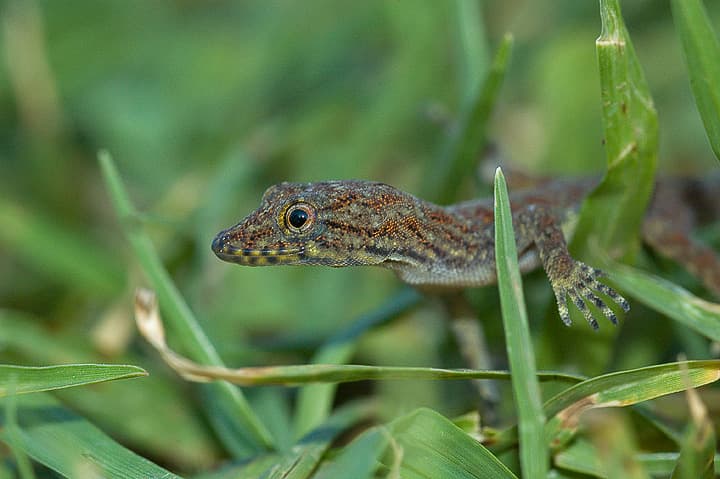
Cnemaspis tropidogaster
The Cnemaspis tropidogaster, also known as the rough-bellied day gecko, is a species of gecko found in the Western Ghats of India and Sri Lanka. This diurnal lizard is characterized by its distinct head, elongated snout, and keeled ventral scales. It inhabits rocky substrates and low tree trunks, and has been rediscovered in the wet zone of Sri Lanka.
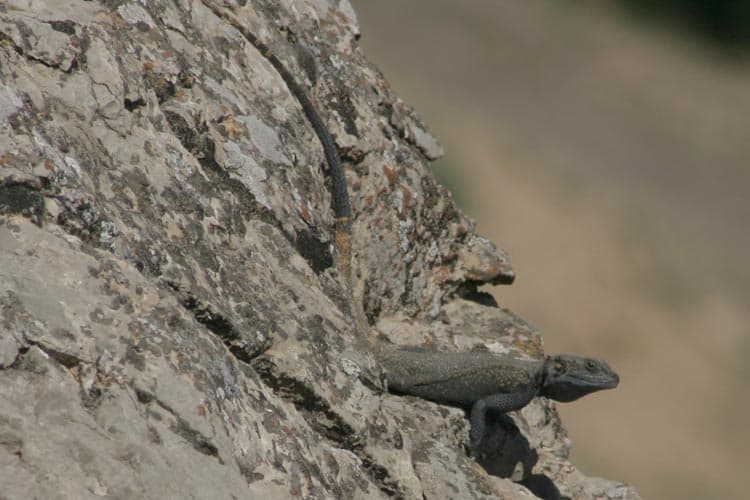
Laudakia nupta
Laudakia nupta, commonly known as the large-scaled rock agama, is a species of lizard native to western Asia, specifically found in Iraq, Iran, Afghanistan, and Pakistan. This species is characterized by its large size, heavy head, and vertebral enlarged scales along its back. It primarily inhabits rocky areas with crevices and man-made structures, and its diet consists mainly of plants, though one subspecies is known to be omnivorous.