
Sphaerodactylus sabanus
The Saba least gecko (Sphaerodactylus sabanus) is a small gecko species endemic to the Lesser Antilles in the Caribbean. It exhibits a range of coloration from light to dark brown, with some individuals displaying dull orange heads and dark brown stripes. This adaptable species inhabits various environments, including forests, palm groves, xeric habitats, and human settlements, and is generally considered to be of least concern for conservation.
Key Facts
- ›Endemic to the Lesser Antilles islands of Saba, Sint Eustatius, Saint Kitts, and Nevis.
- ›Reaches a snout-to-vent length of up to 30 mm in males and 28 mm in females.
- ›Coloration varies from uniform brown to patterned individuals with dull orange heads.
- ›Inhabits diverse micro-habitats including rocks, logs, leaf litter, and human debris.
- ›Classified as 'Least Concern' on the IUCN Red List due to abundance and lack of major threats.
- ›Distinguished from the island least gecko by its smaller size and keeled gular scales.
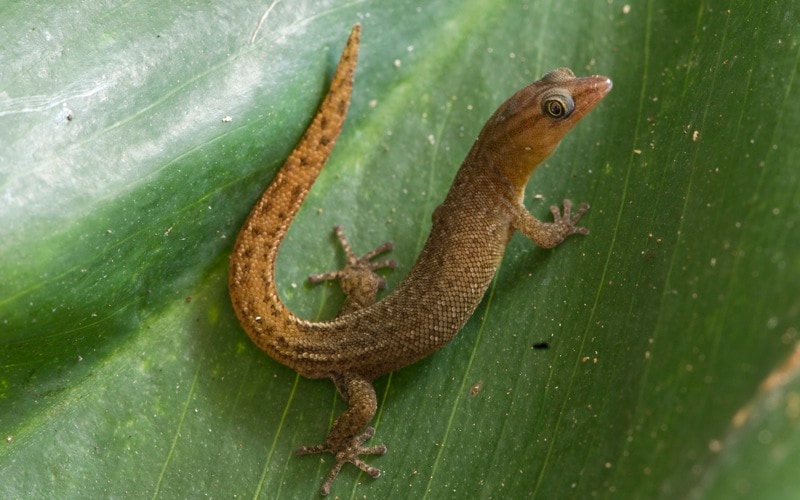
Saba Dwarf Gecko
Saba, Sint Eustatius, Saint Kitts, Nevis, Lesser Antilles
Gallery Forest, Palm Groves, Coccoloba Vegetation, Xeric Habitats, Human Settlements, Rocky Areas, Logs, Dead Agave, Leaf Litter, Human Debris
- Medium-Sized Least Gecko, Snout-To-Vent Length of 28 mm In Females and 30 mm In Males.
- Dorsum Background Color Ranges From Light To Dark Brown.
- Some Individuals Have Patterned Coloration With Dull Orange Heads; Unpatterned Individuals Are Uniform Brown.
- Dark Brown Stripes Extend From Nostrils To the Neck, Merging Mid-Body.
- A Black-Bordered Buff Or Dark Brown Line Runs From Snout To the Top of the Head, Dividing Past the Eyes.
- Rows of Pale Spots On the Body, Often More Prominent Towards the Tail, Which Has White Stripes.
- Throat Coloration Includes Yellow-Tinted White, Yellow, Or Pale Orange.
- Underside of the Body Can Be Pale Brown, Light Yellow, Gray, Or White.
- Unique Color Morph On Sint Eustatius Has An Off-White Head With Dark Brown Vermiculation, A Dull Yellow Dorsum, and White Venter.
- Juveniles Are Similar To Adults But With Darker Lengthwise Lines and Paler Head Vermiculation.
- 33–42 Keeled, Granular, and Imbricate Dorsal Scales.
- 28–33 Smooth and Cycloid Ventral Scales.
- 47–66 Rows of Scales Along the Middle of the Body.
- Keeled Gular Scales.
- Keeled, Flat, Imbricate, and Acute Subcaudal Scales.
- 2 Postnasal Scales, 1–3 Internasal Scales, and 3 Upper Labial Scales.
- All Snout Scales Are Flat and Smooth.
- Brown Irises In Geckos From Saba; Black Irises With A Yellow Ring In Geckos From Other Islands.
- Typically Insectivorous, Though Specific Prey Items Are Not Detailed.
- Males Court Females By Staring, Head Bobbing, Licking, and Tail Waving.
- Females Generally Rebuff Male Courtship Attempts.
- Females of the Same Species Are Highly Aggressive Towards Each Other, Using Head-Bobbing, Licking, and Biting.
- Females Generally Ignore Females of Other Species.
- Males Rarely Approach Or Touch Other Males.
- Passive Behavior May Be An Adaptation To Sharing Habitats.
Not Specified In the Text.
Invasive Species
About Sphaerodactylus sabanus
Saba Least Gecko (Sphaerodactylus sabanus)
The Saba least gecko, scientifically known as Sphaerodactylus sabanus and also referred to as the Saba dwarf gecko, is a small lizard species native to the Lesser Antilles in the Caribbean. This gecko is found on the islands of Saba, Sint Eustatius, Saint Kitts, and Nevis, with the highest abundance noted on Sint Eustatius and Saba.
Physical Characteristics
Adult Saba least geckos are relatively small, with females reaching a snout-to-vent length of up to 28 mm and males up to 30 mm. Their coloration varies, with a background ranging from light to dark brown. Some individuals exhibit patterns, including dull orange heads and dark brown stripes extending from the nostrils towards the neck. Unpatterned individuals are a uniform brown. The throat can be yellow-tinted white, yellow, or pale orange, and the underside of the body is typically pale brown, light yellow, gray, or white. A distinctive color morph observed on Sint Eustatius features an off-white head with dark brown vermiculation, a dull yellow dorsum, and a white venter.
Habitat and Distribution
Sphaerodactylus sabanus demonstrates adaptability in its habitat preferences. It thrives in moderately moist environments such as gallery forests, palm groves, and areas with Coccoloba vegetation. However, it also inhabits less hospitable xeric environments and human settlements, often at lower population densities. The species is found across various micro-habitats, including rocks, logs, dead agave plants, leaf litter, and human debris. It generally prefers slightly higher elevations, typically found up to 500 meters, though small populations may exist at higher altitudes.
Behavior and Reproduction
Observations of Saba least geckos reveal specific courtship behaviors in males, which include staring, head bobbing, licking, and tail waving. Females, however, tend to rebuff these advances. Within the same species, females can be highly aggressive towards one another, employing head-bobbing, licking, and biting. Interestingly, females of different Sphaerodactylus species tend to ignore each other. The species reproduces by laying eggs.
Conservation Status
The Saba least gecko is currently listed as 'Least Concern' by the IUCN. This classification is attributed to its relative abundance on key islands like Sint Eustatius and Saba, a lack of identified significant threats, and a stable population. Its ability to persist on human-modified islands like Saint Kitts and Nevis suggests a degree of resilience to anthropogenic pressures. Potential threats include invasive species such as mammals and rats, though its presence is documented in some protected areas.
Source: Wikipedia ↗
Frequently Asked Questions
What is the typical size of the Saba least gecko?
The Saba least gecko is a medium-sized least gecko. Females typically reach a snout-to-vent length of 28 mm, while males are slightly larger, reaching up to 30 mm.
Where can the Saba least gecko be found?
This species is endemic to the Lesser Antilles in the Caribbean. It is found across the islands of Saba, Sint Eustatius, Saint Kitts, and Nevis, being most abundant on Sint Eustatius and Saba.
What kind of habitats does the Saba least gecko prefer?
The Saba least gecko prefers moderately moist habitats such as gallery forests, palm groves, and Coccoloba vegetation. However, it can also be found in less hospitable xeric habitats and human settlements.
What are the main threats to the Saba least gecko?
Currently, there are no known major threats to the Saba least gecko, contributing to its 'Least Concern' conservation status. Its presence on human-modified islands suggests resilience to anthropogenic pressures. However, invasive species like mammals and rats could potentially affect populations.
What is the conservation status of the Saba least gecko?
The Saba least gecko is classified as 'Least Concern' on the IUCN Red List. This status is due to its relative abundance, stable population, and the lack of significant known threats to the species.
How does the Saba least gecko differ from the island least gecko?
The Saba least gecko can be easily differentiated from the island least gecko (Sphaerodactylus sputator) by its significantly smaller size. Additionally, the Saba least gecko possesses keeled gular scales, which are smooth in the island least gecko.
Related Lizards

Anolis leachii
Anolis leachii, also known as the Antigua Bank tree anole or Leach's anole, is a lizard species endemic to the Caribbean, specifically Antigua and Barbuda. This arboreal species is characterized by its bright green coloration that fades to greyish-brown on its tail, and a grey to brown head with yellowish-orange dewlaps. It inhabits various environments, from forests and shrublands to human-disturbed areas like pastures and farms, provided vertical perching surfaces are available.

Allison's anole
Allison's anole, also known as the Cuban blue anole, is a lizard species endemic to Cuba and surrounding islands, with introduced populations in southern Florida. This diurnal species is characterized by its bright blue head and forelegs in males and its ability to change color to brown. They are typically found on palm trunks and are known for their communal nesting behavior.

Furcifer belalandaensis
Furcifer belalandaensis, also known as the Belalanda chameleon, is a critically endangered chameleon species endemic to a small region in southwestern Madagascar. It is characterized by its green coloration and a somewhat smaller casque compared to its relative, the veiled chameleon. The species' habitat has been significantly altered by logging, leading to its current existence in planted non-indigenous trees and remaining mature trees.