
Burmese glass lizard
The Burmese glass lizard, also known as the Asian glass lizard or Indian glass snake, is a legless lizard species found across Southeast Asia and parts of South Asia. It is characterized by its smooth ventral scales, a slight keel on its dorsal scales, and a distinct lateral fold of skin that allows for expansion. This oviparous species likely inhabits dry areas and preys on small vertebrates.
Key Facts
- ›Legless lizard belonging to the Anguidae family.
- ›Found in southern China, northern India, Nepal, Myanmar, Thailand, and Vietnam.
- ›Distinguished by smooth ventral scales and keeled dorsal scales.
- ›Possesses a lateral fold of skin for body expansion.
- ›Reproduces by laying eggs (oviparous).
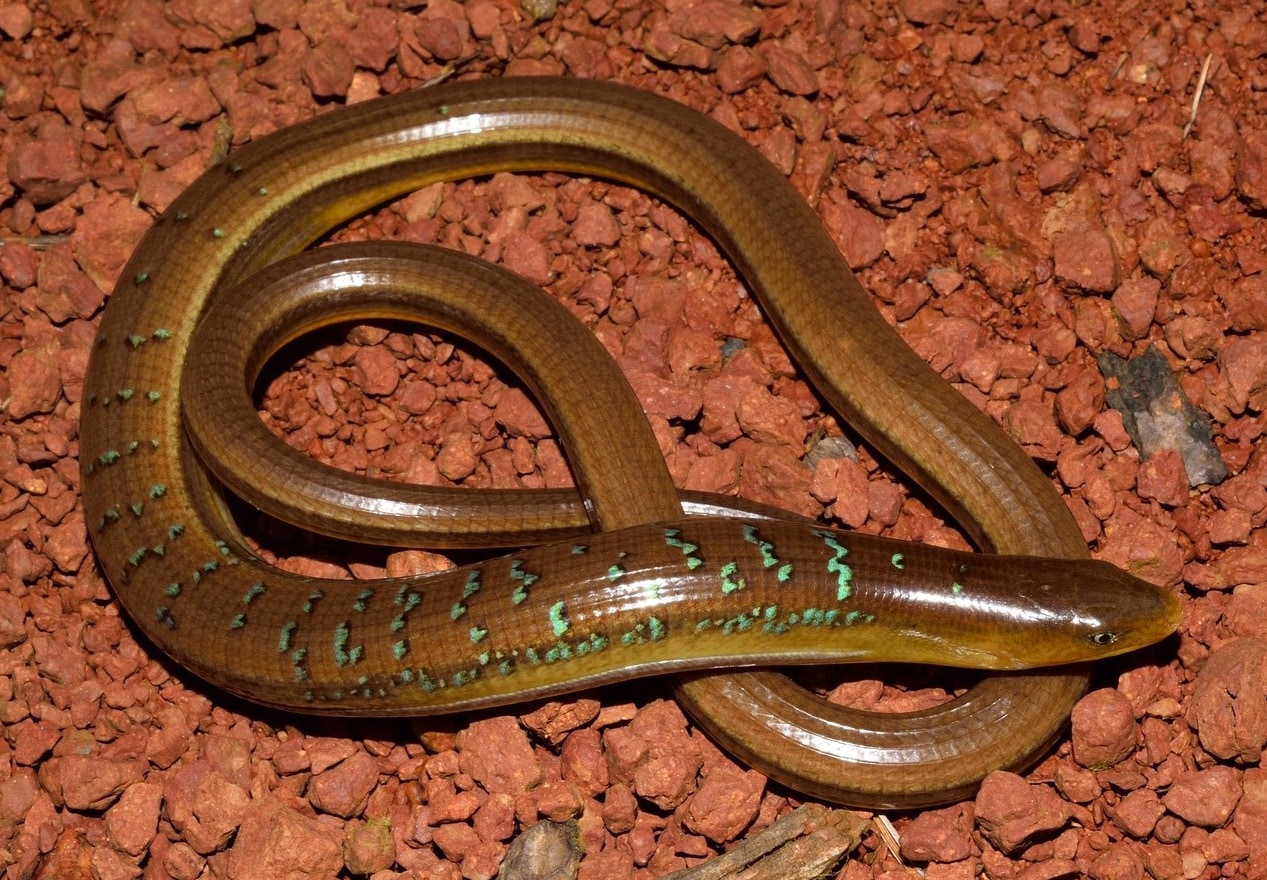
Asian Glass Lizard, Burmese Glass Lizard, Indian Glass Snake
Southern China, Northern India, Northern Myanmar, Nepal, Thailand, Vietnam, Northern Bangladesh, Laos
- Legless Lizard.
- Absence of Rudimentary Hind Limbs, Distinguishing It From Some Congeners.
- Palatine Teeth Are Small and Arranged In A Narrow Band.
- Head Covered With A Large Vertical Plate and Three Smaller Occipitals.
- Frontal Plates Are Paired and Irregular.
- Superciliaries Arranged In Two Series.
- Dorsal Scales In Fourteen Longitudinal Series, Each With A Slight Continuous Keel.
- Ventral Scales Are Smooth, In Ten Series.
- Upper Parts Are Brown With Irregular Black Spots Across the Back.
- Possesses An Expansible Fold of Skin Running Along Each Side of Its Trunk.
Small Lizards, Mice
- Likely Lives In Dry Places.
- Likely Hides Under Stones.
- Body Structure Allows For Significant Food Intake Due To Extensible Skin Fold.
About Burmese glass lizard
The Burmese glass lizard, scientifically known as Dopasia gracilis, is a species of legless lizard recognized for its serpentine appearance and distribution across various Asian countries. It is also commonly referred to as the Asian glass lizard or the Indian glass snake, reflecting its geographic range and unique morphology.
Physical Characteristics and Habitat
This lizard belongs to the Anguidae family and is distinguished by the complete absence of hind limbs, setting it apart from some of its relatives. It possesses smooth ventral scales arranged in ten series and dorsal scales in fourteen longitudinal series, each bearing a slight keel. A notable feature is the presence of an expansible fold of skin along its trunk, which is crucial for accommodating food intake, a characteristic shared with snakes. The upper parts of its body are typically brown, marked with irregular black spots across the back.
The Burmese glass lizard is found in southern China, northern India, northern Myanmar, Nepal, Thailand, and Vietnam, with potential presence in northern Bangladesh and Laos. Based on its close relation to other glass lizards, it is inferred to inhabit dry areas, likely seeking shelter under stones.
Diet and Reproduction
While specific dietary details are limited, historical accounts suggest that the Burmese glass lizard preys on small vertebrates, such as small lizards and mice. It is oviparous, meaning it reproduces by laying eggs. The typical adult length, including the tail, is around 15 inches (approximately 38.1 cm), with the tail comprising a significant portion of this length.
Source: Wikipedia ↗
Frequently Asked Questions
What are the common names for Dopasia gracilis?
Dopasia gracilis is commonly known as the Asian glass lizard, the Burmese glass lizard, or the Indian glass snake. These names reflect its geographic distribution and legless appearance.
Where is the Burmese glass lizard found?
The Burmese glass lizard has a wide distribution across Asia. It is found in southern China, northern India, northern Myanmar, Nepal, Thailand, and Vietnam, with possible occurrences in northern Bangladesh and Laos.
What are the key physical characteristics of the Burmese glass lizard?
This legless lizard has smooth ventral scales arranged in ten series and dorsal scales in fourteen longitudinal series, each with a slight keel. It also features a distinct lateral fold of skin along its trunk which allows for expansion, similar to snakes.
How does the Burmese glass lizard reproduce?
The Burmese glass lizard is oviparous, meaning it reproduces by laying eggs. Specific details about nesting or egg-laying habits are not extensively documented in historical accounts.
What is the typical habitat of the Burmese glass lizard?
Based on its close resemblance to other glass lizards, it is inferred that the Burmese glass lizard likely inhabits dry places. It is thought to live under stones.
What does the Burmese glass lizard eat?
It is presumed to feed on small prey items such as small lizards and mice. Its body structure, particularly the extensible fold of skin, aids in consuming food.
Related Lizards

Dopasia gracilis
Dopasia gracilis, commonly known as the Asian glass lizard or Indian glass snake, is a legless lizard species native to Asia. It is characterized by its absence of hind limbs and a distinct lateral fold of skin along its trunk, which aids in body expansion. This species inhabits dry areas and is likely an insectivore or feeds on small vertebrates.

European copper skink
The European copper skink, also known as the European snake-eyed skink, is a small, slender lizard native to Eastern Europe and Southwestern Asia. It is characterized by its bronze coloration with dark sides and immovable eyelids. This shy species prefers dry, open habitats and is primarily active during twilight hours, feeding on insects and small snails.

Amphisbaena ridleyi
Amphisbaena ridleyi, also known as Ridley's worm lizard or the Noronha worm lizard, is a species unique to the island of Fernando de Noronha off the coast of Brazil. This legless reptile possesses a stout head with a broad snout and a tail that resembles its head, allowing it to move effectively in both directions. Its diet consists primarily of snails and other invertebrates, though it has also been observed climbing trees to feed on nectar during droughts.