
European snake-eyed skink
The European snake-eyed skink, also known as the European copper skink, is a small, slender lizard native to Eastern Europe and Southwestern Asia. It is characterized by its bronze coloration and immovable eyelids, a feature distinguishing it from many other skinks. This shy species inhabits dry, open areas, preferring to live under stones and leaves, and is primarily active during twilight hours.
Key Facts
- ›Grows up to 15 cm (5.9 in) in total length.
- ›Bronze-colored with dark sides.
- ›Possesses immovable eyelids.
- ›Inhabits dry areas under stones and leaves.
- ›Active during twilight hours.
- ›Oviparous, meaning it lays eggs.

European Copper Skink, European Snake-Eyed Skink, Juniper Skink, Snake-Eyed Skink
Greece, Aegean Islands, Romania, Bulgaria, Former Yugoslavia, Hungary, Albania, Slovakia, Caucasus, Turkey, Syria, Israel, Jordan, Lebanon, Sinai Peninsula, Egypt, Macedonia, Possibly Iraq
Dry Areas, South Slopes, Fields, Meadows, Under Stones, Under Leaves
Small, Slender Lizard., Grows Up To 15 cm In Total Length., Bronze-Colored Skin., Dark Sides., Immovable Eyelids.
Insects, Small Snails
Shy Species., Active During Twilight., Hunts For Prey., Typical Ground Dweller., Dislikes Climbing.
About European snake-eyed skink
The European snake-eyed skink, scientifically recognized as Ablepharus kitaibelii, is a small lizard species native to the regions of Eastern Europe and Southwestern Asia. Commonly known by several names, including the European copper skink and the juniper skink, this reptile is distinguished by its slender build and a characteristic bronze coloration accented by dark sides. A notable anatomical feature is its immovable eyelids, which sets it apart from many other skink species.
Habitat and Behavior
This species is characterized by its shy disposition and a preference for terrestrial habitats. The European snake-eyed skink is typically found in dry environments such as south-facing slopes, open fields, and meadows, where it often shelters beneath stones and leaf litter. It is a ground-dwelling lizard that shows little inclination for climbing. Its activity patterns are most pronounced during twilight hours, when it emerges to hunt for its food.
Diet and Reproduction
The diet of the European snake-eyed skink primarily consists of insects and small snails, which it actively pursues. In terms of reproduction, the species is oviparous, meaning it reproduces by laying eggs. Specific details regarding its breeding behaviors, such as clutch size or gestation periods, are not widely documented.
Distribution and Taxonomy
The geographic range of Ablepharus kitaibelii is extensive, encompassing countries like Greece, Romania, Bulgaria, Hungary, Turkey, Syria, and Israel, extending to the Sinai Peninsula of Egypt and potentially into Iraq. Historically, several subspecies were recognized, though some, such as Ablepharus rueppellii and Ablepharus budaki, have since been elevated to full species status. The specific epithet "kitaibelii" honors the Hungarian botanist Paul Kitaibel.
Source: Wikipedia ↗
Frequently Asked Questions
What is the European snake-eyed skink?
The European snake-eyed skink, scientifically known as Ablepharus kitaibelii, is a species of skink native to Eastern Europe and Southwestern Asia. It is a small, shy lizard characterized by its bronze coloration and unique immovable eyelids.
Where does the European snake-eyed skink live?
This species has a broad geographic range, being native to countries such as Greece, Romania, Bulgaria, Hungary, Turkey, Syria, and Israel, as well as the Sinai Peninsula of Egypt. It typically inhabits dry environments like south slopes, fields, and meadows.
What does the European snake-eyed skink eat?
The European snake-eyed skink is an insectivore. It actively hunts for its prey, which includes insects and small snails, during the twilight hours when it is most active.
What are the physical characteristics of the European snake-eyed skink?
It is a small, slender lizard reaching up to 15 cm in total length. Its skin is a distinctive bronze color with darker sides. A notable feature is its immovable eyelids, which differ from those of many other skink species.
How does the European snake-eyed skink reproduce?
The European snake-eyed skink reproduces by laying eggs, making it an oviparous species. Details about clutch size or incubation periods are not extensively documented in available records.
What is the behavior of the European snake-eyed skink?
This skink is a shy species that prefers to live on the ground, often found under stones and leaves in dry, open areas. It is not known to be an adept climber and is most active during twilight.
Related Lizards

European copper skink
The European copper skink, also known as the European snake-eyed skink, is a small, slender lizard native to Eastern Europe and Southwestern Asia. It is characterized by its bronze coloration with dark sides and immovable eyelids. This shy species prefers dry, open habitats and is primarily active during twilight hours, feeding on insects and small snails.
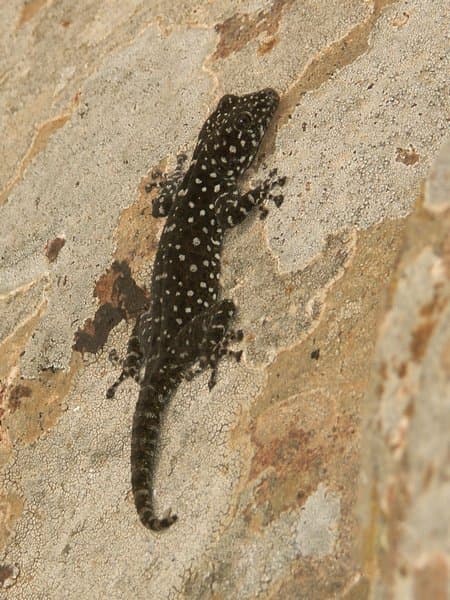
Ptyodactylus
Ptyodactylus, commonly known as fan-fingered geckos, is a genus of geckos comprising 12 described species. These geckos are characterized by their distinctly splayed toes, resembling a snowflake pattern, which are equipped with adhesive pads and retractable claws. They are found across dry regions of Africa and the Middle East.
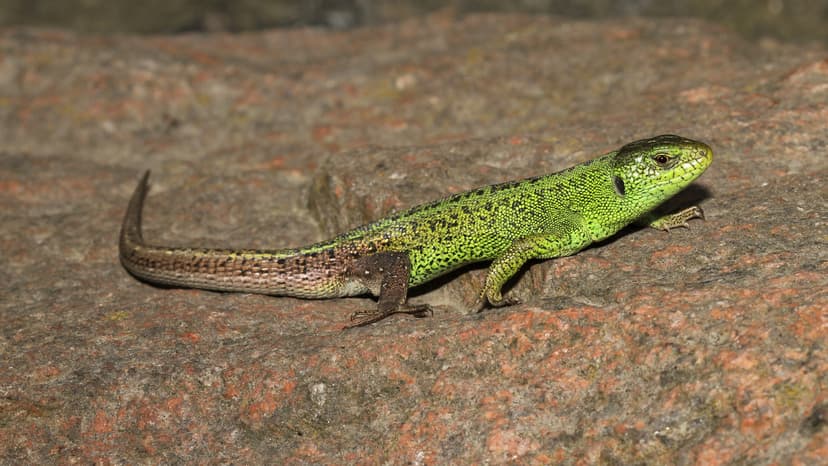
Sand lizard
The sand lizard (Lacerta agilis) is a sexually dimorphic lacertid lizard found across much of Europe and into Russia. Males are known for their vibrant green coloration during the mating season and aggressive territorial behavior, while females are typically a more subdued brown or grey. They inhabit dry, open areas and rely on warm sand for thermoregulation and egg incubation, facing threats from habitat loss and degradation.