
Viviparous lizard
Viviparous (gives birth to live young), but also oviparous (lays eggs) in some populations.
The viviparous lizard (Zootoca vivipara), also known as the common lizard, is a Eurasian reptile renowned for its ability to give birth to live young, though it can also lay eggs. This small lizard inhabits a wide range of cold climates, extending farther north than most non-marine reptiles, and is adept at thermoregulation to survive harsh conditions. It exhibits sexual dimorphism, with males often having larger heads and brighter undersides, while females display more color polymorphism.
Key Facts
- ›The viviparous lizard is named for its ability to give birth to live young, a trait known as viviparity.
- ›It possesses the largest geographic distribution of any lizard species, extending into subarctic regions.
- ›This species is capable of surviving extreme cold by entering a 'supercooled' state and even freezing solid during winter.
- ›Males have larger heads than females, a trait linked to success in mating and male-male competition.
- ›Females exhibit color polymorphism, with yellow, orange, and mixed coloration, influenced by social cues related to reproduction.
- ›The viviparous lizard is exclusively insectivorous, preying on insects like flies and spiders.

Common Lizard
Eurasia, Europe, British Isles, Northern Spain, Balkans, Russia, Northern Kazakhstan, Mongolia, China, Japan
Heathland, Moorland, Woodland, Grassland, Terrestrial
- Small Lizard With An Average Length Between 50 and 77 mm .
- Average Mass of 2 To 5 g .
- Coloration Can Be Brown, Red, Grey, Green, Or Black.
- Exhibits Sexual Dimorphism: Females Can Be Yellow, Orange, Or A Mixture; Males Typically Have Brighter Undersides and Spots Along Their Backs.
- Males Have Larger Heads Than Females.
Flies, Spiders, Various Other Insects, Hemipterans, Moth Larvae, Mealworms
- Participates In Normal Thermoregulation.
- Known To Hibernate During Colder Months .
- Exhibits Tongue Flicking In the Presence of A Predator.
- Female-Female Aggression Is Observed, Mediated By Side Stripe Color.
- Males Engage In Aggressive Interactions For Mates, Using Their Heads.
- Actively Hunts Prey.
Birds of Prey, Crows, Snakes, Shrikes, Hedgehogs, Shrews, Foxes, Domestic Cats
About Viviparous lizard
The Viviparous Lizard
The viviparous lizard, scientifically known as Zootoca vivipara and also called the common lizard, is a remarkable reptile native to Eurasia. It is distinguished by its name, derived from the Latin for 'live birth,' as it typically gives birth to live young, although some populations exhibit egg-laying (oviparity). This species holds the distinction of living farther north than any other non-marine reptile, inhabiting a vast range that includes subarctic regions.
Survival in Extreme Climates
Zootoca vivipara's ability to thrive in very cold climates is a key characteristic. Instead of conforming to the ambient temperature, it actively engages in thermoregulation, basking in the sun to maintain its body temperature. When temperatures become extreme, individuals can enter a state of 'supercooling' and even freeze solid, thawing later when conditions improve. This remarkable hardiness, coupled with the presence of geothermally warmed microhabitats, allows for its extensive distribution.
Description and Dimorphism
This is a small lizard, typically measuring between 50 to 77 mm in snout-to-vent length and weighing only 2 to 5 grams. Its coloration is variable, ranging from brown, red, grey, green, to black. The species exhibits sexual dimorphism. Females are more prone to color polymorphism, displaying variations in ventral coloration from pale yellow to bright orange, influenced by social cues related to reproduction. Males often have more colorful undersides and may feature spots along their backs. A notable dimorphism is that males possess larger heads than females, a trait that is sexually selected for, aiding them in mating and male-male competition.
Habitat and Diet
The viviparous lizard is terrestrial, spending most of its time on the ground. Its typical habitats include heathland, moorland, woodland, and grassland. Unlike many other lizards, Zootoca vivipara is exclusively insectivorous, actively hunting prey such as flies, spiders, and other small invertebrates. Feeding rates have been observed to increase with more sunshine.
Reproduction and Life History
While primarily known for viviparity, some populations in specific regions, like northern Spain and southwestern France, are oviparous. The evolutionary origins of viviparity in this species are a subject of scientific inquiry, with evidence suggesting multiple independent evolutions from oviparity and occasional reversions. Juveniles reach sexual maturity in their second year. The typical lifespan for a viviparous lizard is between 5 to 6 years.
Source: Wikipedia ↗
Frequently Asked Questions
What is the scientific name for the viviparous lizard?
The scientific name for the viviparous lizard is Zootoca vivipara. It was previously known as Lacerta vivipara before the genus Lacerta was redefined.
Where are viviparous lizards found?
Viviparous lizards are found across much of northern Eurasia, including Europe north of the Alps and Carpathians, the British Isles, and parts of Asia such as Russia, northern Kazakhstan, Mongolia, China, and Japan. They have the widest distribution of any lizard species.
How does the viviparous lizard survive in cold climates?
The viviparous lizard survives cold climates through active thermoregulation, including basking. In extreme cold, they can enter a supercooled state and even freeze solid for extended periods before thawing. They also utilize warm microhabitats and hibernate during winter.
What do viviparous lizards eat?
Viviparous lizards are exclusively insectivorous. Their diet primarily consists of insects such as flies and spiders, along with other invertebrates like hemipterans and moth larvae.
How do viviparous lizards reproduce?
The viviparous lizard is named for its viviparity, giving birth to live young. However, in certain populations, particularly in northern Spain and southwestern France, they can also lay eggs (oviparity). The evolution of viviparity from oviparity in this species is thought to have occurred multiple times.
What are the main predators of the viviparous lizard?
Common predators of the viviparous lizard include birds of prey, crows, snakes, shrikes, hedgehogs, shrews, foxes, and domestic cats. Male-biased predation has been observed, possibly due to increased male activity during the reproductive season.
What is the lifespan of a viviparous lizard?
A viviparous lizard typically lives for 5 to 6 years.
Are there different color variations in viviparous lizards?
Yes, viviparous lizards exhibit color variations, particularly in females, which can be yellow, orange, or a mixture of both. These color morphs are influenced by social cues related to reproduction. Males tend to have more colorful undersides and spots along their backs.
Related Lizards
Anguis
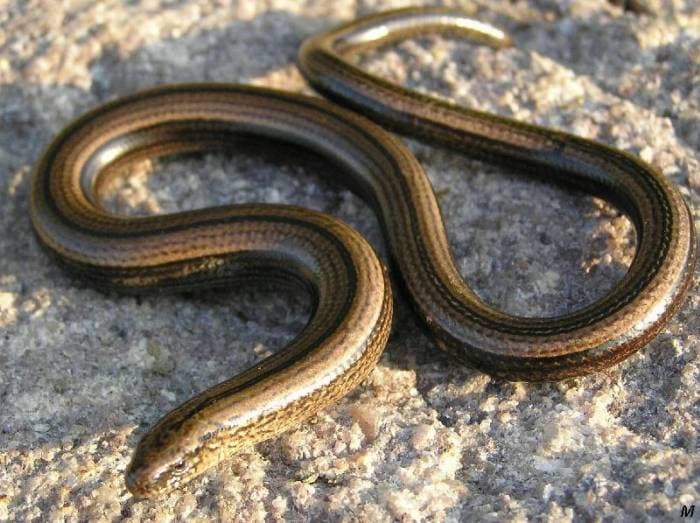
Anguis, commonly known as slow worms, are a genus of legless lizards that are often mistaken for snakes. They are characterized by their grey-brown coloration, with females often exhibiting a coppery sheen and males displaying blue spots, especially during breeding season. These lizards inhabit a variety of warm, protected environments across Europe and parts of Asia, feeding primarily on invertebrates.

Pogona minor
Pogona minor, commonly known as the western bearded dragon, is a species of agamid lizard native to the southwest coast and interior of Western Australia. This species is characterized by its chameleon-like coloration, which aids in camouflage or can be used for display during social interactions. It is distinguished from similar species by its smaller head and the arrangement of spines on its underside and neck.

Chalcides striatus
The western three-toed skink (Chalcides striatus) is a lizard found in the Iberian Peninsula, southern France, and northwestern Italy. It superficially resembles a snake due to its tiny limbs, but possesses smooth, glossy skin with a silvery or bronze coloration marked by longitudinal dark lines. This secretive species inhabits damp, sunny areas with dense low vegetation and feeds on invertebrates.