
Anisolepis grilli
Anisolepis grilli, also known as Boulenger's tree lizard, is a species of lizard endemic to South America, found in parts of Argentina, Brazil, and Uruguay. It inhabits forests and grasslands and is oviparous, meaning it reproduces by laying eggs. The species is named in honor of Giuseppe Franco Grillo.
Key Facts
- ›Endemic to South America, found in Argentina, Brazil, and Uruguay.
- ›Inhabits forest and grassland environments.
- ›Reproduces by laying eggs (oviparous).
- ›The specific name 'grilli' honors physician Giuseppe Franco Grillo.
- ›Also known by the common name Boulenger's tree lizard.
- ›Belongs to the Leiosauridae family.

Boulenger's Tree Lizard, Papa-Vento-Do-Rabo-Rajado
Northwestern Argentina, Southeastern Brazil, Uruguay
About Anisolepis grilli
What is Anisolepis grilli?
Anisolepis grilli, commonly referred to as Boulenger's tree lizard, is a species of lizard belonging to the family Leiosauridae. This species is native to and endemic to the continent of South America.
Geographic Range and Habitat
The natural distribution of Anisolepis grilli encompasses extreme northwestern Argentina, adjacent southeastern Brazil, and Uruguay. The species' preferred natural habitats are varied, consisting of both forest environments and grassland areas. This suggests an adaptability to different ecological niches within its range.
Taxonomy and Etymology
The species was first described scientifically, and its specific name, 'grilli', was chosen in honor of the Italo-Brazilian physician Giuseppe Franco Grillo. It is known by the scientific name Anisolepis grilli, although it has also been referred to in some contexts as Urostrophus grilli.
Reproduction
Anisolepis grilli reproduces by laying eggs, a method known as being oviparous. Further details regarding its reproductive cycle, such as clutch size or incubation periods, are not extensively documented in readily available records.
Source: Wikipedia ↗
Frequently Asked Questions
What is Anisolepis grilli commonly known as?
Anisolepis grilli is commonly known as Boulenger's tree lizard. In Brazilian Portuguese, it is also called papa-vento-do-rabo-rajado.
Where is Anisolepis grilli found?
This lizard species is native to extreme northwestern Argentina, adjacent southeastern Brazil, and Uruguay. The type locality, the original place where it was described, is Palmeira, Paraná, Brazil.
What kind of habitats does Anisolepis grilli prefer?
Anisolepis grilli shows a preference for natural habitats that include both forest and grassland environments. These varied landscapes provide the resources and shelter necessary for its survival.
How does Anisolepis grilli reproduce?
Anisolepis grilli is oviparous, which means that it reproduces by laying eggs. This is a common reproductive strategy among many lizard species.
What is the etymology of the scientific name Anisolepis grilli?
The specific name, grilli, was given to this species in honor of Giuseppe Franco Grillo, an Italo-Brazilian physician. This naming convention is a way to acknowledge individuals who have contributed to scientific understanding or exploration.
Related Lizards

Calumma hilleniusi
Calumma hilleniusi is a chameleon species native to Madagascar. This lizard inhabits forest and grassland environments at significant altitudes. It is known for being oviparous, with females laying clutches of eggs.
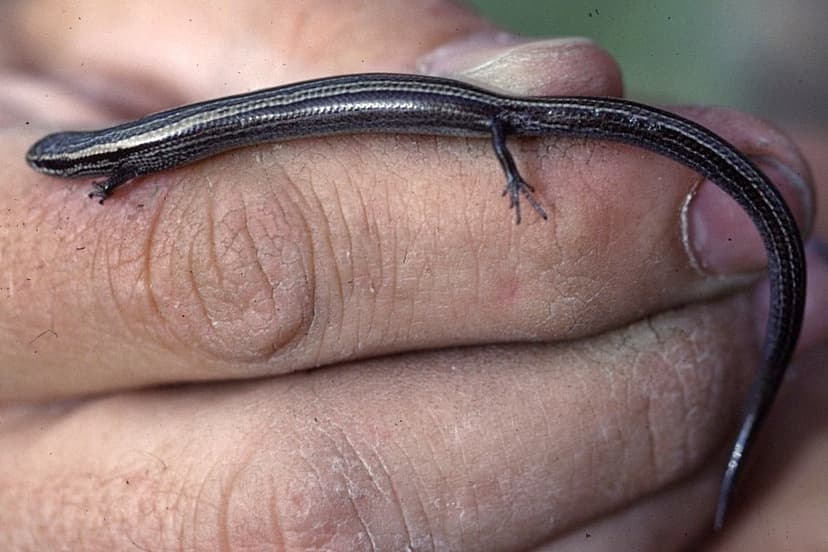
Chernov's skink
Chernov's skink, scientifically known as *Ablepharus chernovi*, is a species of skink found in northern Eurasia. This lizard inhabits grasslands, shrublands, and forests at moderate to high altitudes. It is characterized by being oviparous, with females laying clutches of up to four eggs.

Ctenotus helenae
Ctenotus helenae, commonly known as the clay-soil ctenotus, is a species of skink found across various Australian habitats including forests, shrublands, grasslands, and deserts. This terrestrial and diurnal lizard is oviparous, meaning it reproduces by laying eggs. The species' scientific name honors Helen Louise Pianka.