
Calumma hilleniusi
Calumma hilleniusi is a chameleon species native to Madagascar. This lizard inhabits forest and grassland environments at significant altitudes. It is known for being oviparous, with females laying clutches of eggs.
Key Facts
- ›Endemic to Madagascar.
- ›Inhabits forest and grassland habitats.
- ›Found at altitudes between 1,550 and 2,550 meters.
- ›Reproduces by laying eggs (oviparous).
- ›Females can lay up to ten eggs in a clutch.

Madagascar
About Calumma hilleniusi
Calumma hilleniusi is a species of chameleon that is native to the island of Madagascar. As a member of the Chamaeleonidae family, it is one of the many unique reptile species found on the island.
Habitat and Distribution
The preferred natural habitats for Calumma hilleniusi are forest and grassland environments. This species is typically found at significant altitudes, dwelling at elevations ranging from 1,550 to 2,550 meters (approximately 5,090 to 8,370 feet) above sea level. Its distribution is endemic to Madagascar, meaning it is found nowhere else in the world.
Reproduction
Calumma hilleniusi reproduces through laying eggs, a method known as being oviparous. Females of this species are capable of laying a clutch containing as many as ten eggs, indicating a notable reproductive capacity within its environmental niche.
Source: Wikipedia ↗
Frequently Asked Questions
What is Calumma hilleniusi?
Calumma hilleniusi is a species of chameleon belonging to the family Chamaeleonidae. It is a type of lizard.
Where is Calumma hilleniusi found?
This chameleon species is found exclusively in Madagascar. It is endemic to the island.
What kind of habitat does Calumma hilleniusi prefer?
Its preferred natural habitats include forest and grassland environments. It is typically found at higher elevations.
How does Calumma hilleniusi reproduce?
Calumma hilleniusi is oviparous, meaning it reproduces by laying eggs. A female may lay a clutch of up to ten eggs.
What are the typical altitudes for Calumma hilleniusi?
This species is found at altitudes ranging from 1,550 to 2,550 meters (approximately 5,090 to 8,370 feet).
Related Lizards

Anisolepis grilli
Anisolepis grilli, also known as Boulenger's tree lizard, is a species of lizard endemic to South America, found in parts of Argentina, Brazil, and Uruguay. It inhabits forests and grasslands and is oviparous, meaning it reproduces by laying eggs. The species is named in honor of Giuseppe Franco Grillo.
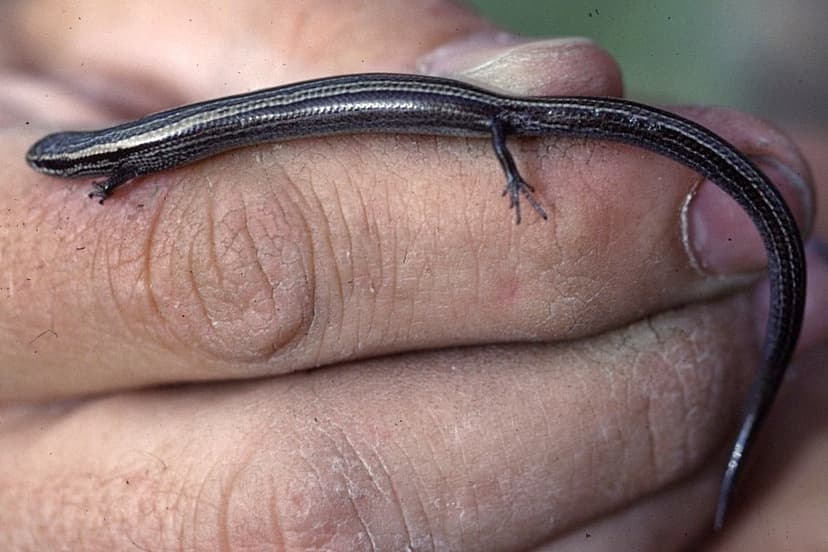
Chernov's skink
Chernov's skink, scientifically known as *Ablepharus chernovi*, is a species of skink found in northern Eurasia. This lizard inhabits grasslands, shrublands, and forests at moderate to high altitudes. It is characterized by being oviparous, with females laying clutches of up to four eggs.

Ctenotus helenae
Ctenotus helenae, commonly known as the clay-soil ctenotus, is a species of skink found across various Australian habitats including forests, shrublands, grasslands, and deserts. This terrestrial and diurnal lizard is oviparous, meaning it reproduces by laying eggs. The species' scientific name honors Helen Louise Pianka.