
Anolis leachii
Anolis leachii, also known as the Antigua Bank tree anole or Leach's anole, is a lizard species endemic to the Caribbean, specifically Antigua and Barbuda. This arboreal species is characterized by its bright green coloration that fades to greyish-brown on its tail, and a grey to brown head with yellowish-orange dewlaps. It inhabits various environments, from forests and shrublands to human-disturbed areas like pastures and farms, provided vertical perching surfaces are available.
Key Facts
- ›Native to Antigua and Barbuda, also introduced to Bermuda and the U.S. Virgin Islands.
- ›Arboreal species found in both xeric and mesic habitats.
- ›Distinctive bright green coloration that transitions to greyish-brown on the tail.
- ›Diurnal and oviparous (egg-laying).
- ›Coexists with smaller anole species in its native range.

Antigua Bank Tree Anole, Barbuda Bank Tree Anole, Panther Anole, Leach's Anole
Antigua, Barbuda, Bermuda, Saint Thomas, U.S. Virgin Islands, Montserrat
Forest, Shrubland, Pastures, Sugarcane Farms, Xeric Habitats, Mesic Habitats
- Light Bright Green Coloration On the Body, Fading To Greyish Brown Down the Tail.
- Head Is Grey To Brown.
- Possesses A Yellowish-Orange Dewlap.
- May Have Dark Brown To Black Speckling Or Mottling On the Head, Shoulders, and Back.
Diurnal, Arboreal, Coexists With Smaller Anole Species
About Anolis leachii
Anolis leachii: The Antigua Bank Tree Anole
Anolis leachii, commonly known as the Antigua Bank tree anole or Leach's anole, is a lizard species native to the Caribbean islands of Antigua and Barbuda. This arboreal anole is characterized by its distinctive bright green coloration that gradually fades to a greyish-brown along its tail, and a grey to brown head often featuring a yellowish-orange dewlap.
Habitat and Distribution
This species is primarily found in forests and shrublands, but it has demonstrated adaptability by inhabiting areas modified by human activity, such as pastures and sugarcane farms. A key requirement for its presence in any location is the availability of vertical surfaces for perching. Anolis leachii has also been introduced to and established populations in Bermuda, and has been recorded on Saint Thomas in the U.S. Virgin Islands. Efforts to eradicate it from Saint Thomas in 2015 may not have been entirely successful.
Behavior and Reproduction
Anolis leachii is a diurnal species, meaning it is active during daylight hours. It is also oviparous, reproducing by laying eggs. In its native range, it coexists with smaller anole species, such as A. wattsi on Antigua and A. forresti on Barbuda.
Conservation Status
As of its 2015 assessment by the IUCN, Anolis leachii was classified as a species of least concern, indicating that its population is not currently considered threatened.
Source: Wikipedia ↗
Frequently Asked Questions
What are the common names for Anolis leachii?
Anolis leachii is commonly known by several names, including the Antigua Bank tree anole, Barbuda Bank tree anole, panther anole, and Leach's anole. These names reflect its geographic origin and physical characteristics.
Where is Anolis leachii found?
This species is native to the Caribbean islands of Antigua and Barbuda. It has also been introduced and established in Bermuda, and has been recorded on Saint Thomas in the U.S. Virgin Islands and Montserrat.
What type of habitat does Anolis leachii prefer?
Anolis leachii is an arboreal lizard that thrives in both dry (xeric) and moderately moist (mesic) environments. Its natural habitats include forests and shrublands, but it also adapts well to human-altered landscapes such as pastures and sugarcane farms, as long as vertical perching structures are present.
What does Anolis leachii look like?
Anolis leachii sports a striking bright green body that gradually changes to a greyish-brown along its tail. Its head is typically grey to brown, and it possesses a yellowish-orange dewlap. Some individuals exhibit dark brown to black speckling or mottling on their heads, which can extend down their shoulders and across their backs.
How does Anolis leachii reproduce?
Anolis leachii is a diurnal and oviparous species, meaning it is active during the day and reproduces by laying eggs. Further details on its specific reproductive cycle and egg-laying habits are not extensively detailed in the provided information.
What is the conservation status of Anolis leachii?
According to the IUCN's 2015 assessment, Anolis leachii is listed as a species of least concern. This designation suggests that the population is not currently facing significant threats that would lead to its endangerment.
Related Lizards
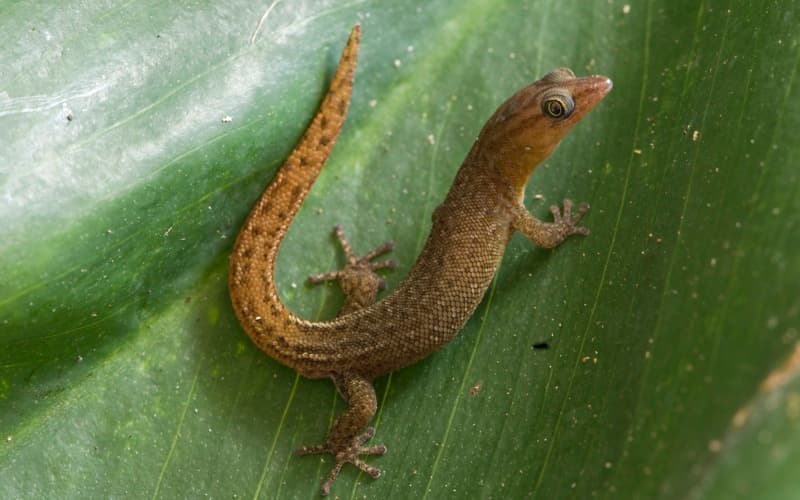
Sphaerodactylus sabanus
The Saba least gecko (Sphaerodactylus sabanus) is a small gecko species endemic to the Lesser Antilles in the Caribbean. It exhibits a range of coloration from light to dark brown, with some individuals displaying dull orange heads and dark brown stripes. This adaptable species inhabits various environments, including forests, palm groves, xeric habitats, and human settlements, and is generally considered to be of least concern for conservation.
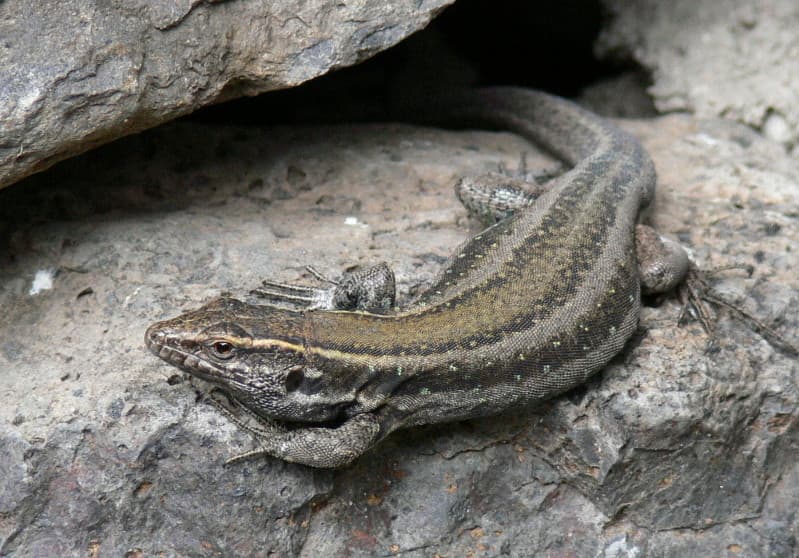
Boettger's lizard
Boettger's lizard (Gallotia caesaris) is a species of wall lizard endemic to the western Canary Islands, specifically El Hierro and La Gomera. This oviparous reptile inhabits rocky areas, shrubland, and forests, and is known for its capacity to lay multiple clutches of eggs per year. It is closely related to the Gallotia galloti species found on neighboring islands.

Florida worm lizard
The Florida worm lizard, also known as the graveyard snake or thunderworm, is a unique amphisbaenian species found primarily in Florida. It is characterized by its limbless, worm-like body, reduced eyes, and a shovel-shaped snout adapted for burrowing. This species inhabits forest and shrubland environments, spending most of its life underground and emerging only during heavy rains.